

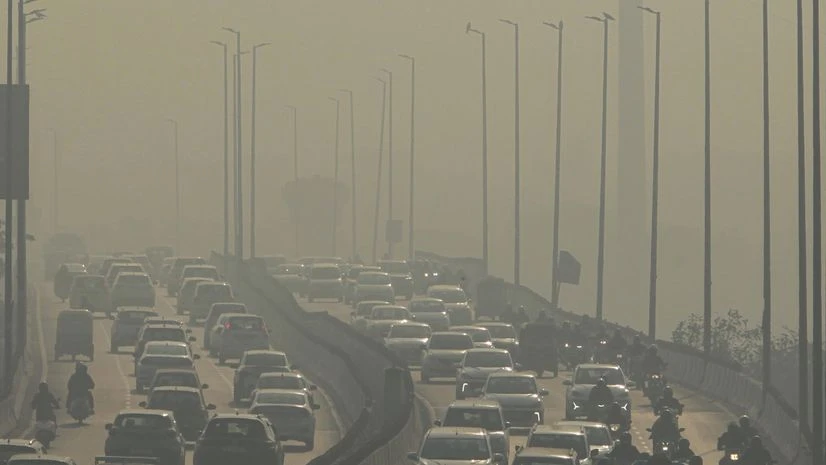

Delhi saw a slight and brief respite from its crippling air pollution crisis on Sunday morning, with the average Air Quality Index (AQI) shifting from the ‘very poor’ to the ‘poor’ category, according to the Central Pollution Control Board (CPCB). The capital recorded an AQI of 269 at 7 am, a marginal improvement from the 305 level recorded late Saturday afternoon.
The improvement, which can be attributed to better wind speeds aiding the dispersion of pollutants, follows nearly a month of hazardous air quality. However, despite the lowered average, large parts of the National Capital Territory remain shrouded in a toxic layer of smog.
Hotspots Remain in ‘Very Poor’ Zone
While the overall AQI moved into the 201-300 (‘poor’) range, several key locations continued to record dangerous levels:
- Worst Hit: Shadipur recorded the highest AQI at 335, placing it firmly in the ‘very poor’ category.
- Other Highs: Jahangirpuri (324), Nehru Nagar (319), RK Puram (307), and Dilshad Garden (303) also remained highly polluted.
- Cleanest: Mandir Marg was the only major station to register an AQI of 158, falling into the ‘moderate’ category.
Forecasts indicate that the relief may be temporary, with pollution levels likely to revert to the ‘very poor’ category in the coming days as weather conditions become less favourable for dispersion.
Political Leaders Decry ‘Murder’ and Demand Debate
The persistent health emergency has intensified the political row over the crisis. Senior Congress leader Sandeep Dikshit launched a fierce attack on the government’s handling of the situation on Saturday, likening the toxic air to “murder” of Delhi residents.
“People may measure it in AQI or any other form, but I consider it murder. Doctors have said that those living in Delhi in such an environment will see their life expectancy reduced. It is as simple as slowly poisoning somebody to death, and we are all responsible for this crime,” Dikshit told reporters.
Adding to the pressure, Leader of the Opposition in the Lok Sabha, Rahul Gandhi, has renewed his demand for an immediate, detailed debate in Parliament on the national capital’s air quality crisis, urging the Centre to produce a strict and enforceable action plan.