

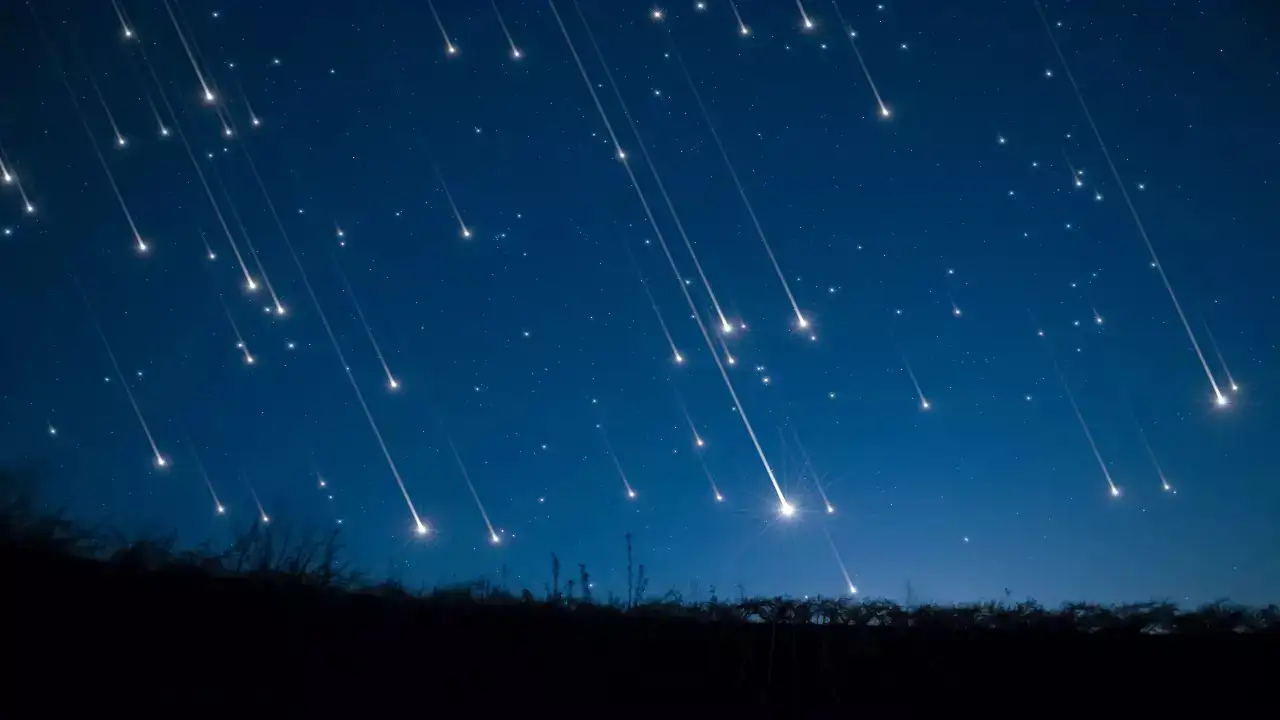

Each year, as Earth orbits the Sun, it ploughs through long trails of dust and debris shed by comets and, occasionally, asteroids. When these tiny particles collide with Earth’s atmosphere, they burn up spectacularly, producing what we recognise as meteor showers.
Between December and February, Earth crosses multiple such debris streams in quick succession. Because each stream comes from a different parent comet or asteroid, several meteor showers often overlap—creating one of the most exciting stargazing seasons of the year. Combined with clearer and longer winter nights in many parts of the world, this period is a favourite among astronomers and skywatchers.
The density of these debris trails also shifts slightly from year to year. Depending on how Earth intersects them, some winters produce dazzling displays, while others are more subdued. But 2025–26 is shaping up to be a promising season.
Major Meteor Showers This Winter
Geminids Meteor Shower — December 13–14
According to NASA, the Geminids will peak on December 13 and 14, producing up to 120 meteors per hour under ideal dark-sky conditions. Originating from asteroid 3200 Phaethon, the Geminids are known for their bright, multi-coloured streaks.
This year, the meteors will appear to radiate from a point near Jupiter in the eastern sky. Earlier on December 7, skywatchers will also witness a striking conjunction of the Moon and Jupiter.
Quadrantids Meteor Shower — Early January
NASA reports that the Quadrantid meteor shower will remain active from December 26, 2025, to January 16, 2026, with its sharp but short-lived peak expected on the night of January 3–4, 2026.
Unlike the Geminids, which provide a long window of viewing, the Quadrantids produce their best activity within a narrow timeframe. But during that peak, they can produce a dramatic burst of meteors—making the effort worthwhile for early risers.
Weaker but Ongoing Meteor Streams
Several lesser-known showers continue through January and February. Among them:
- Delta-Cancrids Meteor Shower
Active roughly from January 1 to January 24, with light activity sometimes extending from mid-December to mid-February. This is a weaker shower, usually offering only a handful of meteors per hour at peak.
While these don’t deliver the fireworks of the Geminids or Quadrantids, they contribute to the overall frequency of winter meteors.
How to Watch Meteor Showers in India
🕑 Best Time to Watch
- Geminids: Late evening to pre-dawn, with activity peaking after midnight.
- Quadrantids: Early morning hours — ideally 3 AM to 5 AM.
Best Places in India
To enjoy the best views, head to locations far from city lights.
- Rural areas, hills, deserts, and forests offer ideal dark-sky conditions.
- Major urban centres like Delhi and Gurugram suffer from heavy light pollution; even travelling 50–100 km away can dramatically improve visibility.
- Equipment Needed
None!
Meteor showers are best viewed with the naked eye, as telescopes and binoculars restrict your field of view.
💡 Viewing Tips
- Lie down and ensure you have a wide, unobstructed view of the sky.
- Allow 15–20 minutes for your eyes to adjust to darkness.
- Carry warm clothing, blankets, or a reclining chair for comfort during long observation periods.
Why Winter Meteor Watching Is Extra Special
Winter offers several natural advantages:
- Multiple overlapping debris streams, giving skywatchers more than one major shower in a short span.
- Longer nights increase viewing opportunities.
- Clearer, drier air—especially in northern and central India—enhances visibility.
- Lower humidity reduces haze, making stars and meteors appear sharper compared to monsoon or summer seasons.
For Indian stargazers, the winter sky often delivers the year’s most vivid celestial shows.