

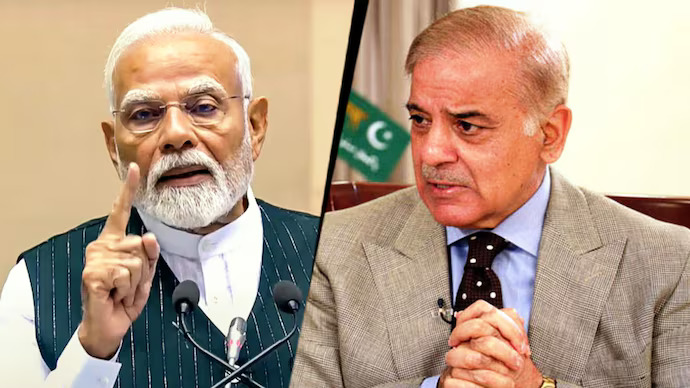

India and the European Union signed a landmark Free Trade Agreement (FTA) in New Delhi on January 27, concluding nearly 20 years of negotiations. The deal brings together two major economic blocs representing nearly a quarter of the world’s population, 25 per cent of global GDP, and a combined market of around 2 billion people.
While the agreement is being hailed in India as the “mother of all deals,” it has triggered serious concerns in Pakistan, which fears losing its long-held competitive edge in the European market.
Pakistan said on Thursday that it is in touch with European Union authorities to assess and mitigate any adverse impact on its exports following the India-EU trade pact.
Why the India-EU FTA Alarms Pakistan
For years, Pakistan enjoyed a major advantage over India in the EU market under the Generalised Scheme of Preferences Plus (GSP+), which granted zero-duty access to nearly 66 per cent of Pakistan’s export lines, particularly textiles and apparel.
In contrast, Indian exporters faced import duties ranging from 9 to 12 per cent on similar products, making Pakistani goods more price-competitive.
Despite this advantage, Pakistan’s textile exports to the EU stand at $6.2 billion, only marginally higher than India’s $5.6 billion, even though Indian goods were subject to tariffs.
The new FTA effectively eliminates this gap, granting India sweeping duty-free access to the EU market and neutralising Pakistan’s long-standing GSP+ advantage.
Adding to Pakistan’s concerns, the GSP+ status, first granted in 2014, is set to expire in December 2026, raising fears of a complete loss of preferential access if it is not renewed.
Double Blow for Pakistan’s Export Sector
The EU remains Pakistan’s largest export destination, and business leaders fear the country now faces a double challenge:
- Loss of price competitiveness against India due to the FTA.
- Uncertainty over renewal of GSP+, which could further weaken Pakistan’s export position.
Once the India-EU agreement is fully implemented, nearly 95 per cent of India’s labour-intensive exports will enjoy duty-free entry into the EU, significantly strengthening India’s position in sectors where Pakistan has traditionally dominated.
Pakistan’s Industry Sounds Alarm
Kamran Arshad, chief of the All Pakistan Textile Mills Association, said India’s deal with the EU has sharply altered the competitive landscape.
“India has become significantly more competitive in the EU market, effectively neutralising and, in several segments, overtaking Pakistan’s GSP+ advantage,” he said.
Saquib Fayyaz Magoon, chairman of the Businessmen Panel Progressive (BMPP) and vice president of the Federation of Pakistan Chambers of Commerce and Industry (FPCCI), warned that Pakistan could suffer severe export losses.
“Once India secures zero-rated access under the EU deal, Pakistan’s advantage will vanish. Losing market share in Europe would be extremely difficult to recover,” he told Dawn.
Government Response and Diplomatic Efforts
Pakistan’s Foreign Office defended the importance of GSP+, calling it a mutually beneficial framework.
“The EU GSP+ scheme for Pakistan has proven to be a win-win template for bilateral cooperation,” said Tahir Andrabi, spokesperson for Pakistan’s Ministry of Foreign Affairs, noting that affordable textile imports from Pakistan help meet European consumer demand.
He said the GSP+ issue was discussed during a strategic dialogue with the EU last year and continues to feature in engagements with both EU institutions in Brussels and individual member states.
“We are following this matter bilaterally with EU countries and collectively with the European Union,” he said.
Former Minister Warns of Job Losses
Former Pakistan Commerce Minister Dr Gohar Ejaz issued a stark warning, saying Islamabad’s “zero-tariff honeymoon” with the EU was ending.
He claimed that up to 10 million jobs could be at risk unless urgent reforms are introduced.
“The government must enable industry to compete at regional energy, tax and financing costs. Industry can no longer bear the burden of systemic inefficiencies,” he wrote in a social media post.
What the Deal Means for India
While Pakistan braces for impact, the India-EU FTA is expected to:
- Boost India’s labour-intensive exports
- Lower prices of luxury cars and wines imported from Europe
- Deepen trade and investment ties between India and the EU
For Pakistan, however, the agreement marks a turning point, forcing a reassessment of trade strategy as its preferential access to Europe faces an uncertain future.