

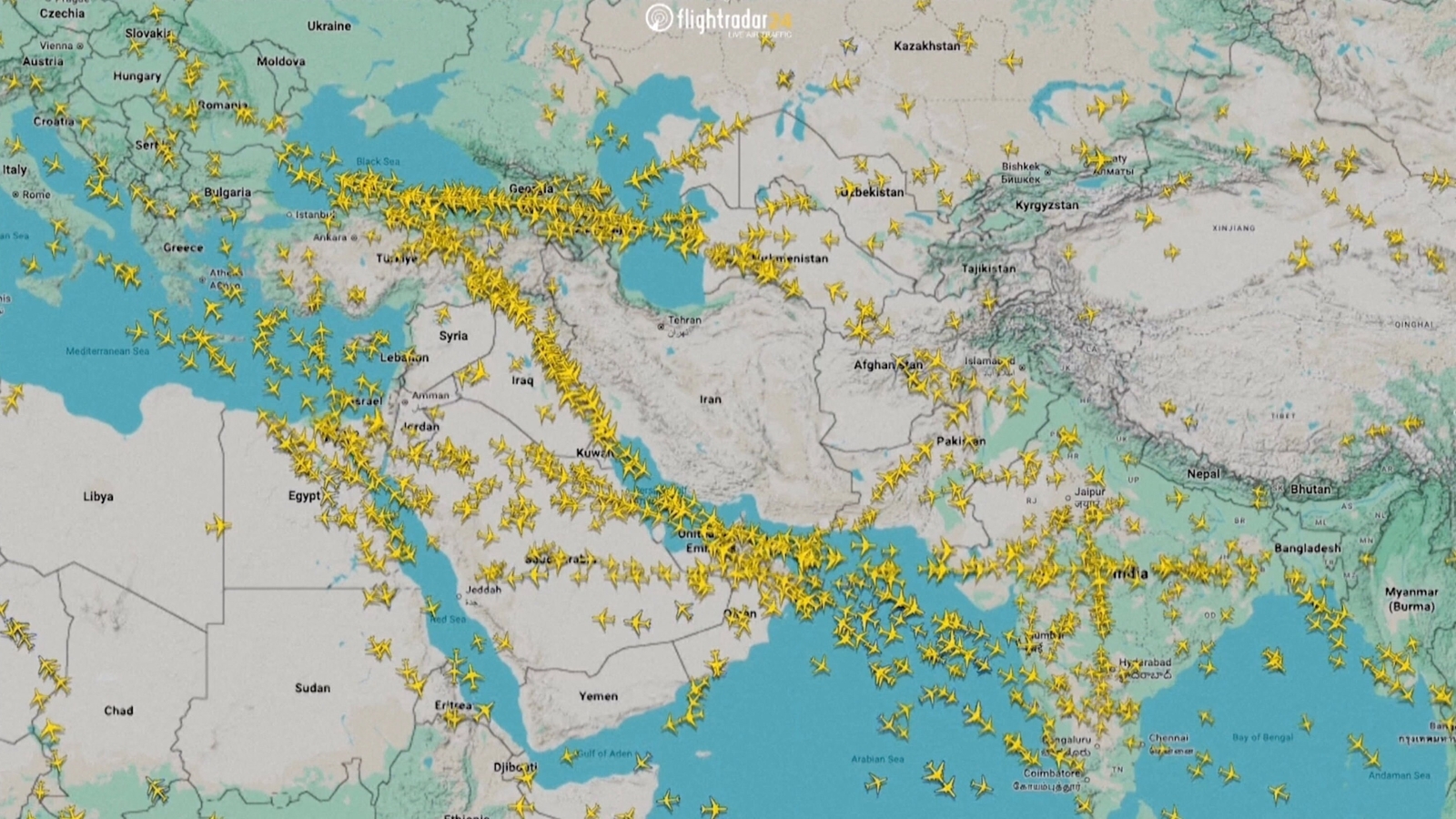

TEHRAN / WASHINGTON—Iran’s commercial airspace reopened on Thursday morning, January 15, 2026, following a chaotic five-hour closure that left global airlines scrambling to reroute flights. The unannounced shutdown of the Tehran Flight Information Region (FIR) occurred amid surging tensions with the United States and a domestic crackdown that human rights groups describe as a “massacre.”
Aviation Chaos: Why Iran’s Skies Are a Global Hub
The closure, which began in the early hours of Thursday, paralyzed a central link in the Europe-Asia air corridor. Iran’s geography makes its airspace the most direct “great-circle” route between Europe and major Asian hubs like New Delhi, Bangkok, and Singapore.
- The Impact: Rerouting around Iran can add hours to flight times and thousands of dollars in fuel costs per journey.
- Indian Airlines Hit: Air India and IndiGo issued urgent advisories, confirming that flights overflying the region were forced onto alternative routes, leading to delays and selective cancellations.
- Global Precautions: Lufthansa, flydubai, and Turkish Airlines had already reduced or cancelled services to Iran earlier in the week. Germany issued a fresh directive on Wednesday night, formally prohibiting its carriers from entering Iranian airspace through February 2026 due to the risk of “anti-aviation weaponry.”
History looms large over these decisions; in 2020, Iranian air defenses mistakenly shot down Ukraine International Airlines Flight PS752, killing all 176 people on board during a period of similar military friction.
The Crackdown: Death Toll Surpasses 3,400
The airspace was sealed just as reports of the regime’s response to nationwide protests reached a grim new milestone. What began as economic demonstrations in late December has evolved into an existential threat to the clerical government.
- Verified Casualties: According to Iran Human Rights (IHRNGO), the death toll has reached at least 3,428 people.
- Wider Estimates: Some activist networks and hospital data suggest a much higher toll, with estimates ranging from 12,000 to 20,000 deaths over the last three weeks.
- Demographics of the Dead: Reports from HRANA indicate the toll includes over 100 security personnel and at least 13 children.
- Detentions: More than 18,400 individuals have been detained. Iranian judicial officials have signaled “fast-tracked” trials and executions for those labeled as “terrorists” or “thugs.”
Trump’s Measured Pivot: “Helping” vs. Hitting
The closure came on the heels of reports that personnel at the Al Udeid Air Base in Qatar—the largest U.S. base in the Middle East—were advised to evacuate amid fears of an imminent Iranian strike on U.S. assets.
However, in a surprise statement from the White House late Wednesday, President Donald Trump appeared to dial back his threats of immediate military intervention.
“We’ve been told that the killing in Iran is stopping—it’s stopped—it’s stopping,” Trump told reporters. “And there’s no plan for executions… I’ve been told that on good authority.”
Trump’s comments followed a day after he told Iranian protesters “help is on the way.” While he did not rule out future military action, he noted the U.S. would “watch it and see what the process is.” Analysts suggest this may be a “face-saving” de-escalation for both sides as Tehran’s Foreign Minister, Abbas Araghchi, claimed calm had been restored and denied any immediate plans for executions.