

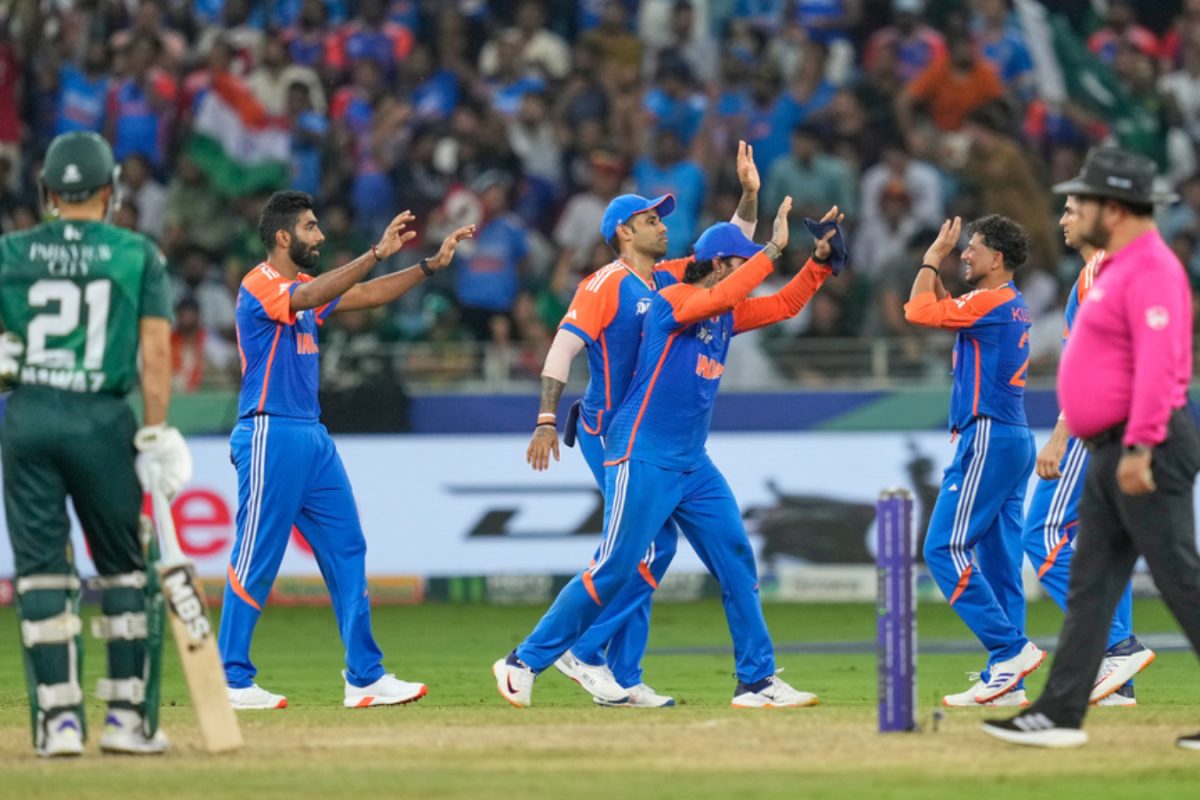

NEW DELHI — On the surface, India’s T20 World Cup defense is off to a perfect start. Two matches, two wins, and six points in the bag. However, the manner of those victories—labored at the Wankhede and chaotic at the Arun Jaitley Stadium—suggests that the world’s most formidable batting lineup is currently operating on shaky ground.
While half-centuries from Suryakumar Yadav, Ishan Kishan, and Hardik Pandya provided the necessary cushion against the United States and Namibia, the “mini-collapses” in both games have exposed a worrying lack of rhythm against slow bowling and changes of pace.
1. The Erasmus Enigma: Guile Over Speed
On Thursday in Delhi, India’s middle order was bamboozled not by a global superstar, but by the craft of Namibia’s Gerhard Erasmus. The 30-year-old skipper, primarily a batter, triggered a collapse of three wickets for 20 runs in just 29 deliveries.
- The Slinging Factor: Erasmus utilized a slinging, side-arm action reminiscent of Kedar Jadhav, making it difficult for the Indian batters to pick the length early.
- The “Long Ball”: Delivering from nearly two yards behind the popping crease, Erasmus disrupted the batters’ timing, a tactic that even forced umpire Rod Tucker to momentarily intervene.
- The Scholtz Beauty: Veteran left-arm spinner Bernard Scholtz added to the misery by getting the world’s No. 1 T20 batter, Suryakumar Yadav, stumped—a rare sight that highlighted India’s uncharacteristic struggle with flight and dip.
2. A Pattern of Instability
The collapse in Delhi wasn’t an isolated incident. In their tournament opener at the Wankhede:
- India slumped to 77 for six against the USA.
- Shadley van Schalkwyk, a 37-year-old journeyman, tore through the top order with his variations, finishing with a career-best 4 for 25.
- On Thursday, India suffered another late-innings implosion, losing five wickets for just four runs in the final 11 balls of the innings—including two run-outs.
“Neither United States nor Namibia had the belief to capitalize on these meltdowns. Pakistan won’t be as forgiving.” — Expert Take
3. The Premadasa Spin Trap Awaits
The timing of these batting jitters is particularly poor. On Sunday, February 15, India travels to Colombo’s R. Premadasa Stadium to face arch-rivals Pakistan. Unlike the surfaces in Mumbai and Delhi, the Premadasa is expected to be a traditional “turner,” playing directly into Pakistan’s hands.
Pakistan’s Five-Pronged Spin Attack: | Bowler | Type | Threat Level | | :— | :— | :— | | Shadab Khan | Leg-break | Experienced wicket-taker | | Abrar Ahmed | Leg-break | Mystery spin & flight | | Usman Tariq | Off-break (Slinger) | High (Econ: 5.93, 11 wickets in 4 games) | | Saim Ayub | Classical Offie | Disciplined powerplay option | | Mohammad Nawaz | Orthodox Left-arm | Control and drift |
4. The “Mystery” of Usman Tariq
The biggest threat to India might be the 28-year-old Usman Tariq. Similar to Erasmus, Tariq uses a slinging action but adds a deceptive “pause” in his delivery stride. Given India’s recent struggles against Erasmus’ unorthodox style, Tariq could prove to be the wildcard that turns the tides in Colombo.