

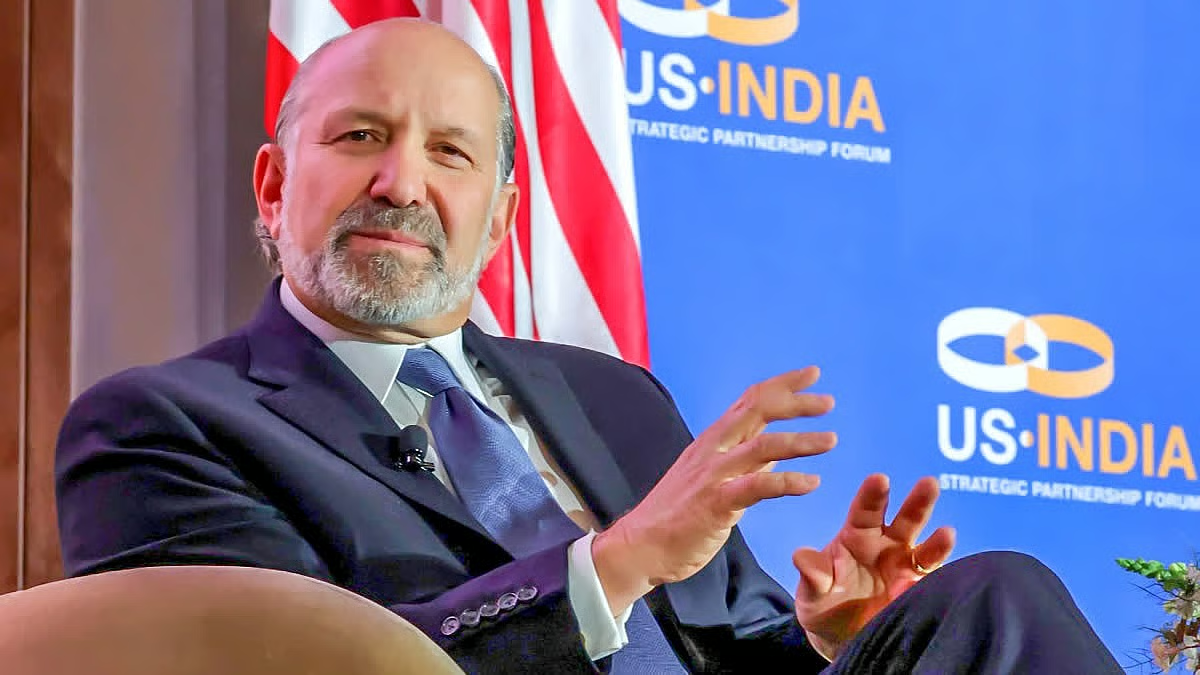

U.S. Commerce Secretary Howard Lutnick has indicated that the H-1B temporary work visa program is set to undergo a “significant number of changes” before February 2026, when the newly imposed $100,000 one-time fee for new applications is scheduled to take effect.
In an interview with NewsNation, Lutnick strongly criticized the current H-1B process, particularly for facilitating the entry of “inexpensive tech consultants and trainees” who, in his view, are undercutting American workers. “The idea of having tech consultants and trainees who are inexpensive should be eliminated,” Lutnick stated, adding, “I find it just wrong… this idea that inexpensive tech consultants should be coming into this country and bringing their families, and so it sits wrong with me.”
The Trump administration recently introduced a major overhaul to the H-1B program, including a steep $100,000 fee for new visa petitions, a massive jump from the previous $2,000–$5,000 range. While initially, there was confusion, with Lutnick himself suggesting it could be an annual fee, the White House later clarified it is a one-time fee applicable only to new H-1B petitions, not renewals or existing visa holders.
Lutnick suggested that the $100,000 fee is a stop-gap measure to deter misuse. He commented that the fee, “at least… shouldn’t be overrun with these people. But I think you’re going to see a real thoughtful change going forward. And that’s what I expect will happen.”
The Commerce Secretary also targeted the program’s reliance on a lottery system for allocation, calling it “bizarre” in his conversations with leaders of major tech companies. He noted that the current process, which he said was established in 1990 and has been “sort of butchered along the way,” is heavily oversubscribed and currently sees about 74 percent of visas going to tech consultants, with only about four percent going to professionals like doctors and educators.
Lutnick stressed that reforms should ensure the U.S. grants visas for “highly-skilled jobs to the most highly-skilled people,” prioritizing professionals such as highly-educated doctors and educators. If companies are hiring engineers, he insisted, they should be “highly paid ones.”
The Department of Labor has also launched a new enforcement initiative, ‘Project Firewall,’ aimed at rooting out fraud and abuse in the H-1B system to ensure employers prioritize qualified American workers.
The steep fee and planned reforms have sparked concern among Indian professionals, who are the largest group of H-1B visa holders, as well as startups and small businesses in the U.S. that rely on the program for skilled labor. The Indian government is reportedly studying the full implications of the recent changes.