

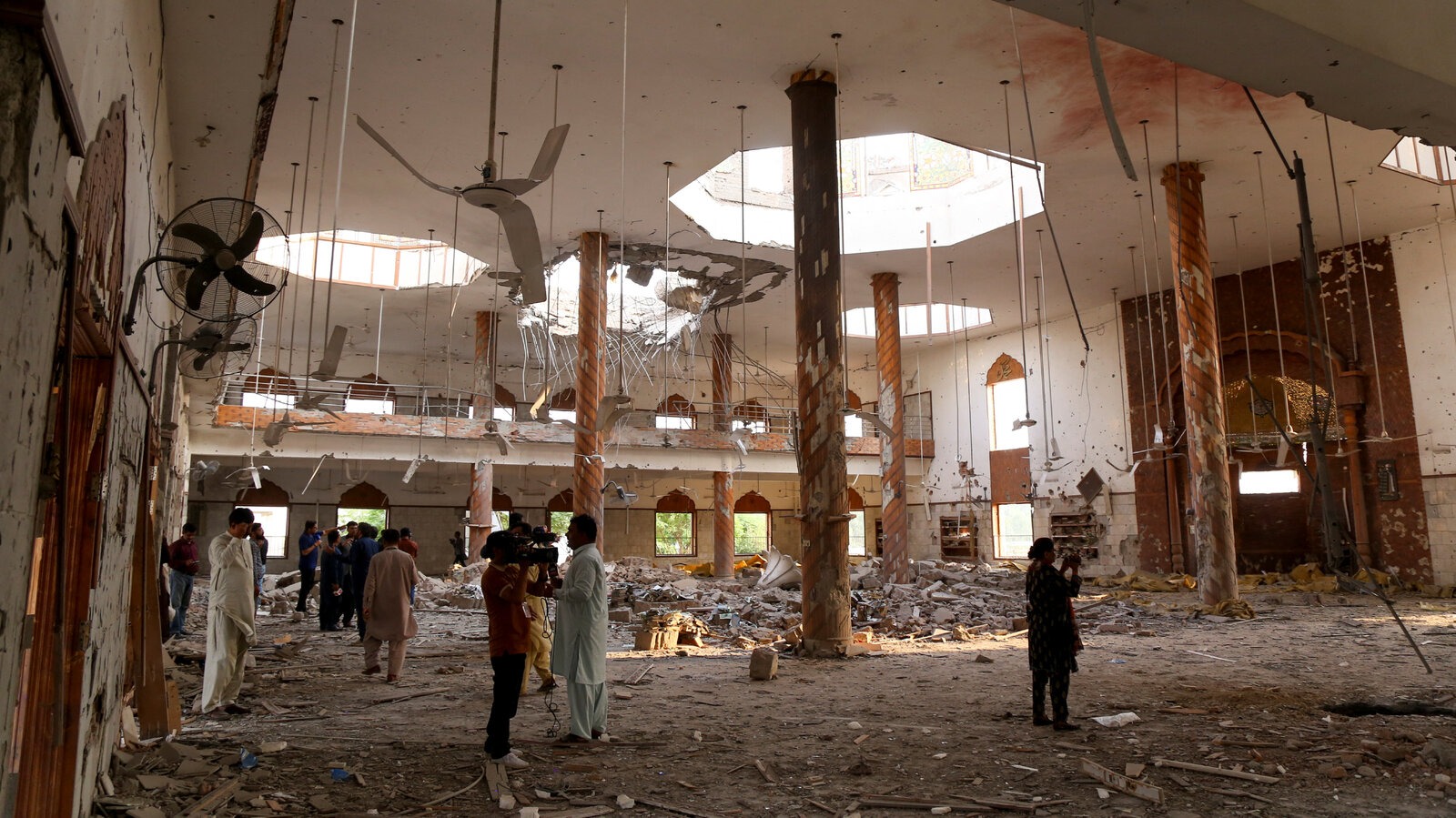

New Delhi— India’s Operation Sindoor, launched in retaliation for the April 22 Pahalgam terrorist attack in Jammu and Kashmir, has caused widespread destruction to Pakistan’s military infrastructure in the most significant Indian air assault in over five decades, according to a visual investigation by The Washington Post.
The cross-border air operation, initiated on May 7, targeted at least 11 sites deep inside Pakistan and Pakistan-occupied Jammu and Kashmir (PoJK). Analysts say these strikes represent a deliberate escalation in India’s defense doctrine by targeting high-value military infrastructure — some as far as 100 miles inside Pakistan.
Strikes Confirmed via Satellite Imagery
A review of 24 satellite images and video evidence conducted by The Washington Post, supported by defense experts, revealed damage to:
- Three aircraft hangars
- Two runways
- Two mobile command/control centers
- Radar and communication facilities
Targets included:
- Nur Khan Air Base (Rawalpindi)
- Bholari and Shahbaz Air Bases
- Mushaf and Sheikh Zayed International Airports
- Sukkur Airport (dual-use)
At Nur Khan, a vital base near Pakistan’s Strategic Plans Division (which oversees its nuclear arsenal), two mobile control centres were destroyed, leading to speculation on the strategic implications of such a strike.
Expert Views: A Strategic Shift
- Walter Ladwig, a South Asia security expert at King’s College London, said these were the “most extensive Indian air attacks on Pakistani military infrastructure since the 1971 war.”
- Christopher Clary, South Asia specialist and author, noted that India inflicted “meaningful — though not devastating — damage” across key airbases.
- William Goodhind, a geospatial analyst at Contested Ground, stated that India’s strikes were “precision strikes” designed to cripple Pakistan’s offensive and defensive air capability.
Imagery showed major structural breaches at Bholari (housing a Saab 2000 AEW&C surveillance plane) and Shahbaz, along with radar sites destroyed at Sukkur.
Casualties and Pakistan’s Response
Pakistan acknowledged the death of six air force personnel — five at Bholari and one at Mushaf. While confirming damage to infrastructure, Lt Gen. Ahmed Sharif Chaudhry, Pakistan’s military spokesperson, avoided detailing the number of sites hit.
The Dawn, a Pakistani newspaper, reported significant damage to the Royal Lounge of Sheikh Zayed Airport.
India’s Message: No Tolerance for Terrorism or Nuclear Blackmail
Prime Minister Narendra Modi, in a national address on May 13, praised Operation Sindoor as a “new benchmark” in India’s anti-terrorism doctrine. He drew parallels to previous retaliatory actions like the 2016 surgical strike and the 2019 Balakot airstrike, stating:
“If there is a terrorist attack on India, a fitting reply will be given — on our terms. We will strike at every location from where terror originates, and we will not tolerate nuclear blackmail,” Modi said.
Background: The Pahalgam Attack and Escalation
On April 22, 26 people were killed in a terrorist attack in Pahalgam, attributed to a coordinated operation by Jaish-e-Mohammed (JeM), Lashkar-e-Taiba (LeT), and Hizbul Mujahideen (HM). In response, India launched Operation Sindoor, reportedly eliminating over 100 terrorists.
Following India’s strikes, Pakistan retaliated with shelling and drone incursions, prompting further calibrated responses by India. By May 10, both nations reached a tentative ceasefire agreement, halting open hostilities.