

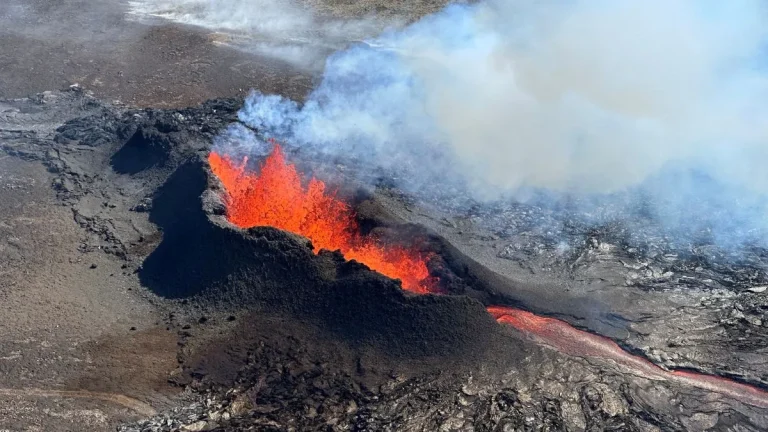

A thick cloud of volcanic ash originating from the Hayli Gubbi volcano in Ethiopia—which erupted on Sunday for the first time in recorded history—has significantly disrupted flight operations at Delhi’s Indira Gandhi International (IGI) airport and across northern India.
The ash plume, which rose to an altitude of up to 14 km (45,000 feet) and moved at speeds of 100-120 km/h, entered Indian airspace on Monday evening, reducing visibility and posing a severe threat to aircraft engines.
Flight Disruptions at IGI Airport
The most visible impact at the Delhi airport was the delay and cancellation of key international services:
- Delays: Several major international flights were delayed, including those to Hong Kong, Dubai, Jeddah, Helsinki, Kabul, and Frankfurt.
- Cancellations: According to reports, at least 7 international flights were cancelled, and more than 10 overseas flights were delayed at the Delhi airport alone.
Airlines Suspend Flights
Indian carriers acted swiftly following an advisory from the Directorate General of Civil Aviation (DGCA) to avoid ash-affected areas:
- Air India: Cancelled a total of 13 flights across Monday and Tuesday to conduct precautionary checks on aircraft that may have flown over the affected air corridors.
- Akasa Air: Cancelled all scheduled flights to Middle East destinations like Jeddah, Kuwait, and Abu Dhabi for the two days due to unsafe flying conditions.
- IndiGo and SpiceJet: Both airlines issued advisories urging passengers to check flight statuses and assured that they were closely monitoring the situation in coordination with international aviation bodies.
Ash Cloud Movement Forecast
The volcanic ash cloud moved across northwestern India on Monday night, affecting air traffic over Rajasthan, Gujarat, Maharashtra, Delhi NCR, and Punjab.
- Exit Time: The India Meteorological Department (IMD) forecasts that the ash cloud is drifting towards China and is expected to clear Indian skies by 7:30 pm on Tuesday.
- DGCA Advisory: The aviation regulator asked airlines to strictly avoid published volcanic ash-affected areas and flight levels, and to adjust flight planning, routing, and fuel considerations based on the latest advisories.