

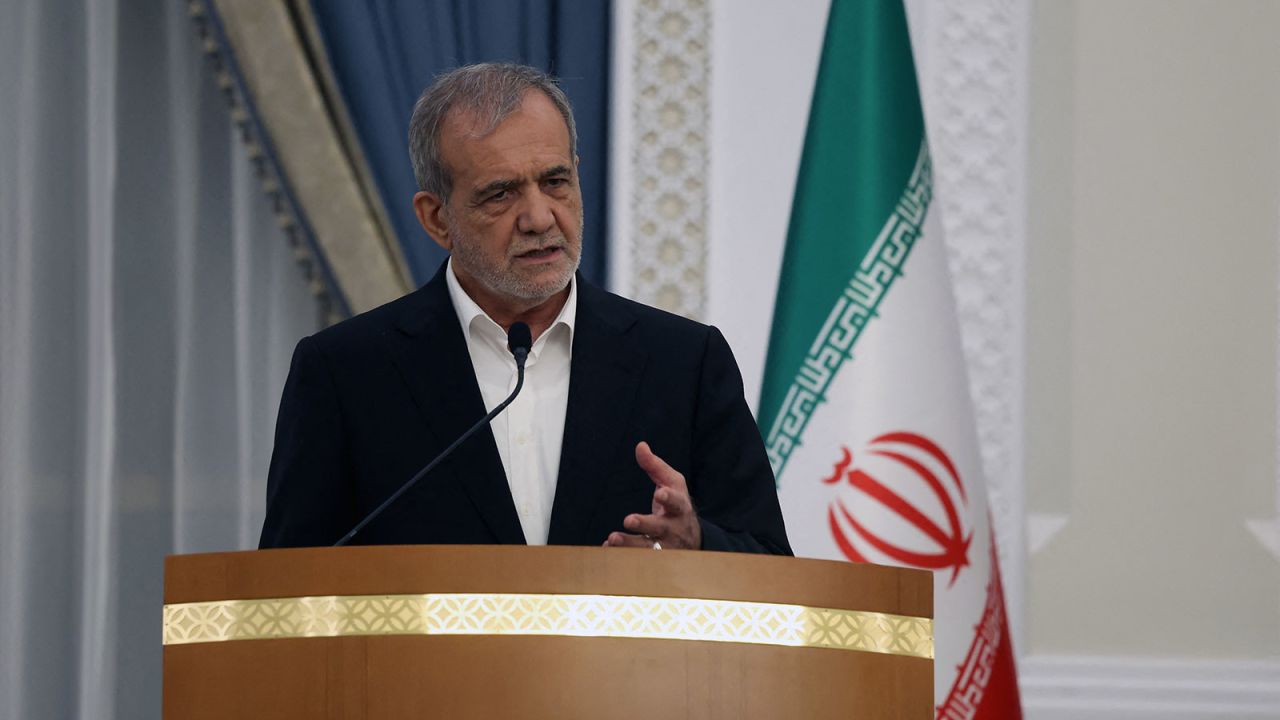

A classified report prepared by the National Intelligence Council (NIC) has concluded that Iran’s ruling system is unlikely to collapse even if it faces a large-scale military assault. The assessment, completed about a week before the ongoing US-Israeli military campaign, highlights the structural resilience of Iran’s political and security institutions.
According to a report by The Washington Post, intelligence officials believe the Iranian regime has established mechanisms that would allow the government to continue functioning even if its top leaders were killed during military strikes.
The assessment suggests that Iran’s leadership has long prepared contingency plans to maintain stability during crises, making a sudden collapse of the system highly unlikely.
Institutional Safeguards and Security Networks Strengthen the Regime
One of the key findings of the intelligence report is that Iran’s leadership structure is designed to survive major disruptions. Protocols are already in place to ensure continuity of governance even if senior figures are eliminated.
Additionally, analysts noted that opposition groups challenging the government remain fragmented and lack the unity or political strength required to take control of the country in the event of instability.
Intelligence officials also believe that a large-scale public uprising against the regime is improbable under current circumstances. Despite internal tensions and ongoing bombardment, Iran’s powerful security institutions, including the Islamic Revolutionary Guard Corps, are considered capable of maintaining order and suppressing any widespread rebellion.
Experts Say the Assessment Reflects Deep Understanding of Iran
Commenting on the findings, Iran expert Suzanne Maloney, vice president at the Brookings Institution, said the report appears to be a well-informed analysis of Iran’s political system.
She noted that Iran’s governance framework has evolved over decades and includes institutions and processes specifically designed to ensure the survival of the regime during times of crisis.
The report’s conclusions raise questions about the feasibility of plans by the administration of US President Donald Trump to dismantle Iran’s leadership structure.
Operation Epic Fury: US Strategy Against Iran
The White House has outlined a series of military objectives under the campaign known as Operation Epic Fury.
According to US officials, the operation aims to:
- Destroy Iran’s ballistic missile systems and production facilities
- Cripple the country’s naval capabilities
- Prevent Tehran from supplying weapons to proxy groups in the region
- Ensure Iran never develops a nuclear weapon
White House spokeswoman Anna Kelly stated that the Iranian regime is currently under intense pressure from the campaign, describing it as being “absolutely crushed.”
However, intelligence officials remain cautious about assuming that military pressure alone will lead to a change in Iran’s leadership.
Trump Calls for Unconditional Surrender
President Donald Trump has taken a much harder public stance, demanding what he describes as Iran’s “unconditional surrender” as the only acceptable outcome to end hostilities.
Trump has also suggested that the United States should have a say in choosing Iran’s next leader if the current leadership structure collapses.
In an interview with Axios, Trump said that the possibility of Mojtaba Khamenei—the son of the late Iranian Supreme Leader Ali Khamenei—assuming power would be “unacceptable.”
He argued that installing a leader who continues the policies of Khamenei could bring the United States and Iran back into conflict within a few years.
Leadership Transition After Khamenei’s Death
Following the reported killing of Ali Khamenei, Iranian authorities announced the formation of a three-member transitional council to temporarily manage state affairs.
The leadership transition has sparked speculation about potential successors, including his son Mojtaba Khamenei.
However, the process remains highly sensitive within Iran, with officials insisting that the country’s political future will be determined internally.
Iran Rejects Foreign Influence Over Leadership
Iranian leaders have strongly rejected the idea of external powers influencing the country’s leadership decisions.
Mohammad Bagher Ghalibaf, the speaker of Iran’s parliament, dismissed Trump’s remarks and stated that the future of Iran will be decided solely by its citizens.
In a post on X, Ghalibaf wrote that the fate of Iran would not be determined by foreign actors, emphasizing national sovereignty in the leadership transition process.
Conflict Intensifies Amid Rising Regional Tensions
While the intelligence community remains skeptical about forced regime change, the United States and Israel continue to escalate their air campaign against Iranian targets.
Trump recently referred to Tehran as the “loser of the Middle East” after Iranian President Masoud Pezeshkian apologized to neighboring countries for attacks launched during the ongoing conflict.
The US president also warned that Iran could face further military action if hostilities continue.