

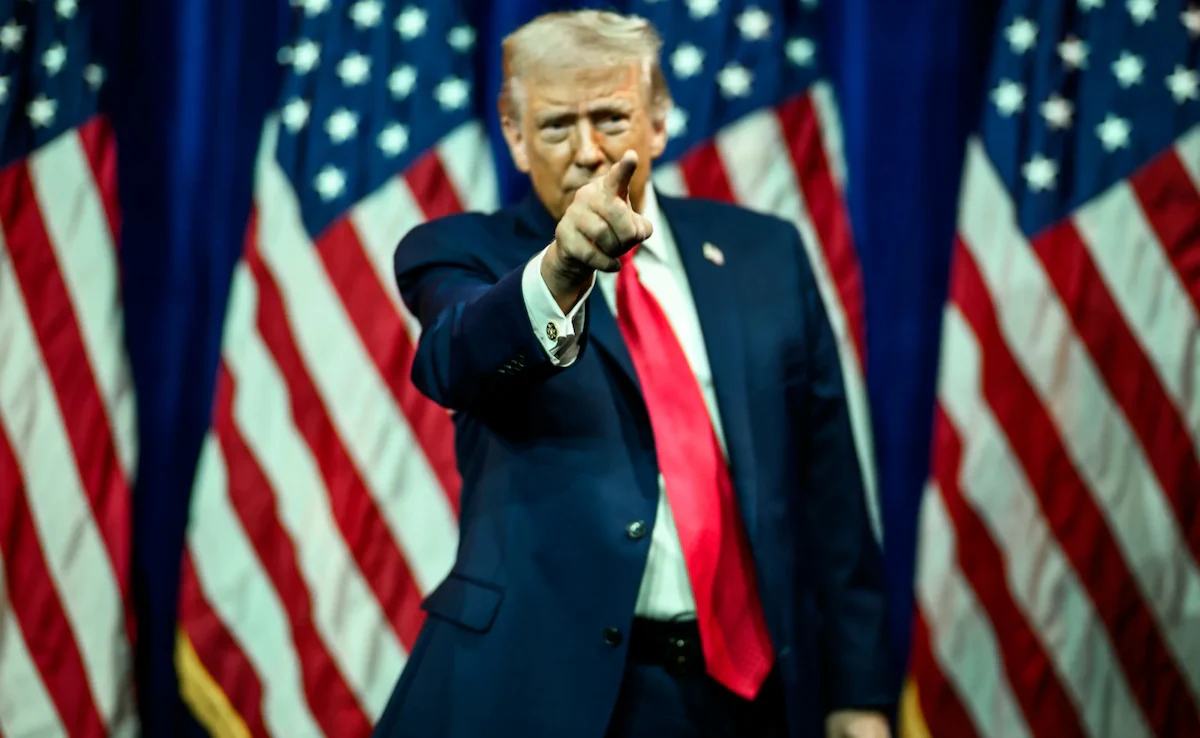

US President Donald Trump’s decision to withdraw the United States from a key Asian maritime security framework has triggered concern across the Indo-Pacific, particularly at a time when piracy, armed robbery and maritime smuggling are on the rise.
Earlier this month, Washington announced its exit from the Regional Cooperation Agreement on Combating Piracy and Armed Robbery against Ships in Asia (ReCAAP), a move that removes the US from a platform where its intelligence and operational support had bolstered regional maritime security for more than a decade.
The withdrawal, disclosed on January 7, was part of a broader decision to pull out of 66 international organisations, but its implications for maritime stability are especially significant in a region already grappling with strained shipping routes, chokepoints and expanding criminal networks.
Why the Timing of the Exit Matters
The decision comes at a particularly sensitive moment for the Indian Ocean Region (IOR). According to data from the Indian Navy’s Information Fusion Centre, piracy and armed robbery incidents in the IOR have risen sharply in recent years.
In 2025, the region recorded 207 incidents of piracy and armed robbery at sea, compared to 168 incidents five years earlier. Beyond the increase in numbers, maritime security officials are concerned about the widening geographic spread, with new hotspots emerging near critical shipping lanes.
Even more alarming is the surge in maritime smuggling. In 2021, authorities recorded 757 cases of narcotics and contraband smuggling via sea routes in the IOR. By 2025, that number had jumped to 1,156 incidents, highlighting how criminal syndicates are exploiting gaps in enforcement and coordination among coastal states.
Against this backdrop, the US decision to step away from ReCAAP leaves a visible gap in intelligence-sharing, early warning systems and coordinated maritime responses.
The United States’ Role in ReCAAP
The US joined ReCAAP in 2014, during the presidency of Barack Obama, becoming the organisation’s 20th member. While Washington’s financial contribution was relatively modest—approximately $50,000 annually, about half of India’s average yearly contribution—its strategic value far exceeded its funding level.
For more than a decade, the US contributed significantly through:
- Maritime intelligence, including satellite imagery and surveillance inputs
- Operational expertise drawn from extensive counter-piracy missions
- Capacity-building programmes, such as multinational maritime security and law-enforcement training
These inputs enhanced interoperability among regional navies and coast guards, helped standardise reporting mechanisms, and enabled quicker, coordinated responses to maritime threats.
With Washington’s exit, regional forces lose access to a key intelligence partner that often provided timely detection and actionable insights across Asia’s maritime zones.
What Is ReCAAP and Why It Matters
Founded in 2004, ReCAAP is a government-to-government, non-legally binding maritime cooperation framework that currently includes 21 member states. These include India, China, Japan, Australia, Bangladesh, Singapore, South Korea, Sri Lanka, Thailand, Norway and the United Kingdom, among others.
The agreement focuses on:
- Voluntary maritime cooperation
- Real-time information sharing
- Requests for assistance in detection, pursuit and investigation
- Capacity-building through joint training and exercises
- Adoption of protective measures aligned with International Maritime Organization (IMO) standards
All cooperation under ReCAAP is guided by principles of the United Nations Convention on the Law of the Sea (UNCLOS).
At the heart of the framework is the Information Sharing Centre (ISC) in Singapore, which analyses incident reports, identifies emerging threats, issues alerts, and maintains a common operational picture for member states. The ISC is currently headed by VD Chafekar, a former Additional Director General of the Indian Coast Guard.
The US withdrawal deprives the ISC of a participant that brought advanced situational awareness and operational depth unmatched by many regional navies.
What Comes Next for Regional Maritime Security
In the short term, the impact of the US exit is likely to be felt most acutely in early warning systems and intelligence dissemination. In the medium term, regional states may be forced to:
- Rely more heavily on national surveillance capabilities
- Deepen cooperation with India, Japan and Australia
- Explore new or expanded multilateral maritime arrangements
While ReCAAP remains operational, analysts warn that the absence of US participation could weaken the framework’s ability to respond swiftly to evolving maritime threats, especially as criminal networks grow more sophisticated and regionally interconnected.