

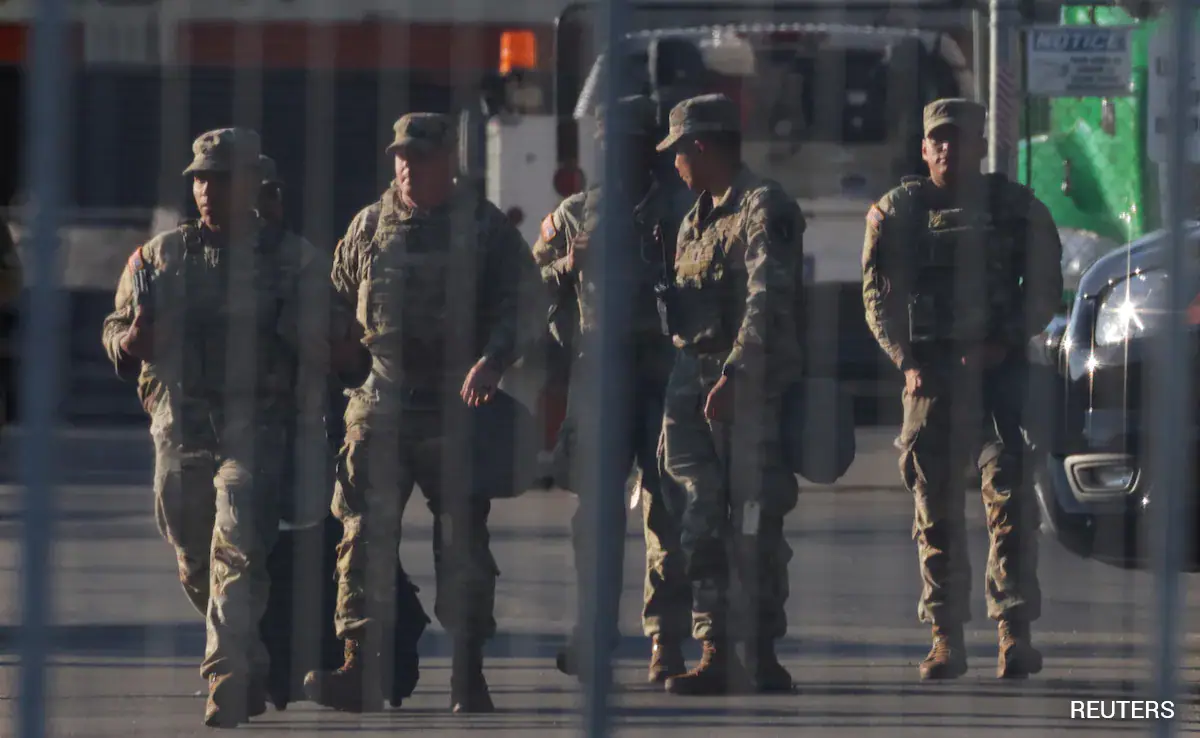

The US Supreme Court on Tuesday dealt a significant setback to President Donald Trump’s aggressive immigration crackdown by blocking the deployment of National Guard troops on the streets of Chicago.
In an unsigned order, the conservative-majority court allowed a lower court ruling to stand, which bars the federal government from deploying National Guard forces in Illinois for now. The court said the Trump administration had failed to establish a lawful basis for using the military to enforce civilian laws in the state.
“At this preliminary stage, the Government has failed to identify a source of authority that would allow the military to execute the laws in Illinois,” the court said.
Three conservative justices — Samuel Alito, Clarence Thomas and Neil Gorsuch — dissented from the decision.
Trump’s troop deployments face legal roadblocks
President Trump has already sent National Guard troops this year to three Democratic-led cities — Los Angeles, Washington, and Memphis — citing the need to protect federal property and personnel during unrest linked to immigration enforcement.
However, his attempts to deploy troops in Chicago and Portland have been repeatedly blocked by courts, with Democratic governors and mayors arguing the moves amount to federal overreach.
White House spokeswoman Abigail Jackson defended the administration’s actions following the ruling, saying Trump had activated the National Guard “to protect federal law enforcement officers, and to ensure rioters did not destroy federal buildings and property.”
She added that the Supreme Court decision did not undermine the president’s broader agenda.
Illinois leaders hail ruling as win for democracy
Illinois Governor JB Pritzker welcomed the Supreme Court’s decision, calling it a victory for the state and democratic norms.
“This is an important step in curbing the Trump Administration’s consistent abuse of power and slowing Trump’s march toward authoritarianism,” Pritzker said.
Chicago’s Democratic leadership has consistently opposed the deployment, arguing it would escalate tensions rather than restore order.
Administration warned of threats to federal agents
After two lower courts blocked the Chicago deployment, the Trump administration made an emergency appeal to the Supreme Court.
In filings, Solicitor General John Sauer argued that federal agents in Chicago were operating under “the constant threat of mob violence” and warned that blocking the deployment endangered federal personnel and property.
He claimed the lower court ruling improperly interfered with presidential authority.
Rare Supreme Court setback for Trump
The ruling marked a rare defeat for Trump at the Supreme Court, where conservatives hold a 6–3 majority. It remains unclear how the decision will affect similar legal challenges brought by Democratic-led states such as California and Oregon.
Trump had earlier sent National Guard troops to Los Angeles following protests sparked by a federal crackdown on undocumented migrants. While a district court initially ruled that deployment unlawful, an appeals court later allowed it to proceed.
At present, around 300 National Guard troops remain activated in the Chicago area but are not engaged in operational duties.