

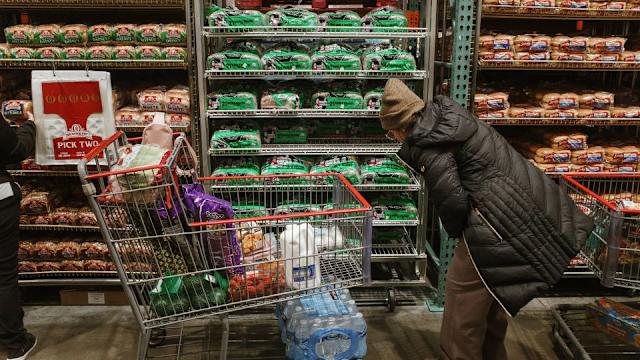

Consumer spending in the United States increased only marginally in January, reflecting a slowdown in economic momentum following weaker-than-expected growth at the end of last year.
According to new data released on Friday by the Bureau of Economic Analysis (BEA), inflation-adjusted consumer spending rose just 0.1% compared with the previous month. The modest increase highlights caution among American households amid rising prices and global uncertainty.
At the same time, the core personal consumption expenditures (PCE) price index, which excludes volatile food and energy prices and is closely monitored by the Federal Reserve, rose 0.4% in January, indicating persistent inflationary pressure.
US Economic Growth Revised Down
Another report from the BEA showed that the US economy grew at a 0.7% annualised rate in the fourth quarter, significantly lower than the initial estimate of 1.4%.
The downward revision came after weaker figures across several key areas, including:
- Consumer spending
- Business investment
- Government expenditure
- Exports
Despite the overall downgrade, economists noted that a measure of underlying demand remained relatively resilient, suggesting the economy still has some structural strength.
The quarter was also impacted by a record-long government shutdown, which disrupted economic activity and reduced federal spending during that period.
Iran War Adds New Pressure on Economy
The economic outlook has since shifted further due to geopolitical tensions, particularly the ongoing conflict involving Iran.
The war has pushed global energy prices higher, raising concerns that higher fuel costs could affect household budgets and consumer sentiment in the coming months.
Rising oil prices often translate into higher transportation and utility costs, which can reduce discretionary spending by consumers.
Some Support for Household Finances Ahead
Despite the cautious start to the year, economists believe certain factors may provide temporary relief for consumers.
Tax refunds and steady wage growth could help support spending in the near term, improving household cash flow.
However, analysts warn that several risks remain, including:
- The possibility of higher inflation due to energy costs
- Uncertainty in the labour market
- Global geopolitical instability
Heather Long, chief economist at Navy Federal Credit Union, noted that the biggest spending categories in January were essential services.
“Health care, housing and insurance were top categories for spending in January,” she said in a research note, adding that the data now feels outdated given recent economic developments.
Federal Reserve Likely to Hold Rates Steady
Financial markets widely expect the Federal Reserve to leave interest rates unchanged at its upcoming policy meeting next week.
However, if inflation continues to rise due to higher energy costs and geopolitical tensions, it could delay the central bank’s plans to resume interest-rate cuts.
This comes at a time when Donald Trump has repeatedly urged the Fed to reduce borrowing costs to support economic growth.
Markets React to Economic Data
Following the release of the economic reports, US Treasury bonds and stock futures rallied, reflecting investor optimism that weaker economic activity might reduce pressure on the Federal Reserve to maintain high interest rates.
Investors are now closely watching upcoming inflation data and global developments to gauge the future direction of US monetary policy and consumer spending.