

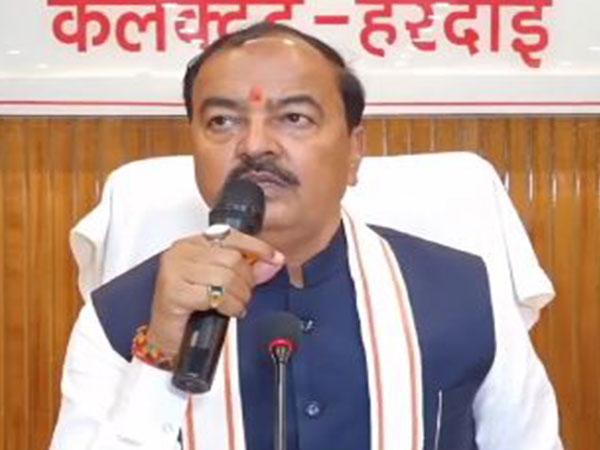

Lucknow (Uttar Pradesh), April 10: Uttar Pradesh Deputy Chief Minister Keshav Prasad Maurya took sharp aim at Samajwadi Party chief Akhilesh Yadav on Thursday, accusing him of ignoring backward castes other than his own during his tenure as Chief Minister (2012–2017).
“His government was formed with the support of backward and Dalit communities, but those very groups suffered the most under him,” Maurya said. “He committed the sin of snatching the rights of other backward castes to benefit only his own.”
Maurya also lashed out at Congress leader Rahul Gandhi for his recent criticism of the Rashtriya Swayamsevak Sangh (RSS), suggesting Gandhi should spend a year in an RSS shakha (training camp) to truly understand its values.
“Nationalism and service are taught in the RSS. Rahul Gandhi should refrain from making such baseless statements,” Maurya said.
Earlier, during a session of the All India Congress Committee in Ahmedabad, Rahul Gandhi had claimed that the RSS ideology was anti-constitutional, accusing the organization of trying to “end democracy” and “hand over the country’s wealth to Ambani and Adani.”
Meanwhile, Akhilesh Yadav, speaking from Jaunpur, launched a counter-attack on the BJP, criticising the Waqf Amendment Act as a “cover-up” for the central government’s policy failures.
“They’ve brought in such laws to distract the public from their failed schemes. The Samajwadi Party didn’t even accept this in the Lok Sabha,” Yadav stated, adding that the BJP was scared of the PDA (Pichda, Dalit, and Alpsankhyak) unity.
He also pointed to rising inflation, joblessness, and fuel prices, saying the government was “only working to benefit a few people.”
“The Chief Minister talks about zero poverty in three years. But even the Supreme Court says there is no law and order in Uttar Pradesh,” Akhilesh concluded.
🗂️ Key Themes:
- Caste-based accusations in UP politics
- Rahul Gandhi vs. RSS controversy
- SP’s criticism of BJP’s economic and legislative policies
- Looming PDA vs NDA political battle
🗳️ Context:
With the 2024 Lok Sabha elections in sight, these sharp exchanges signal intensifying political rivalries, especially in Uttar Pradesh, a crucial state for all national parties.