

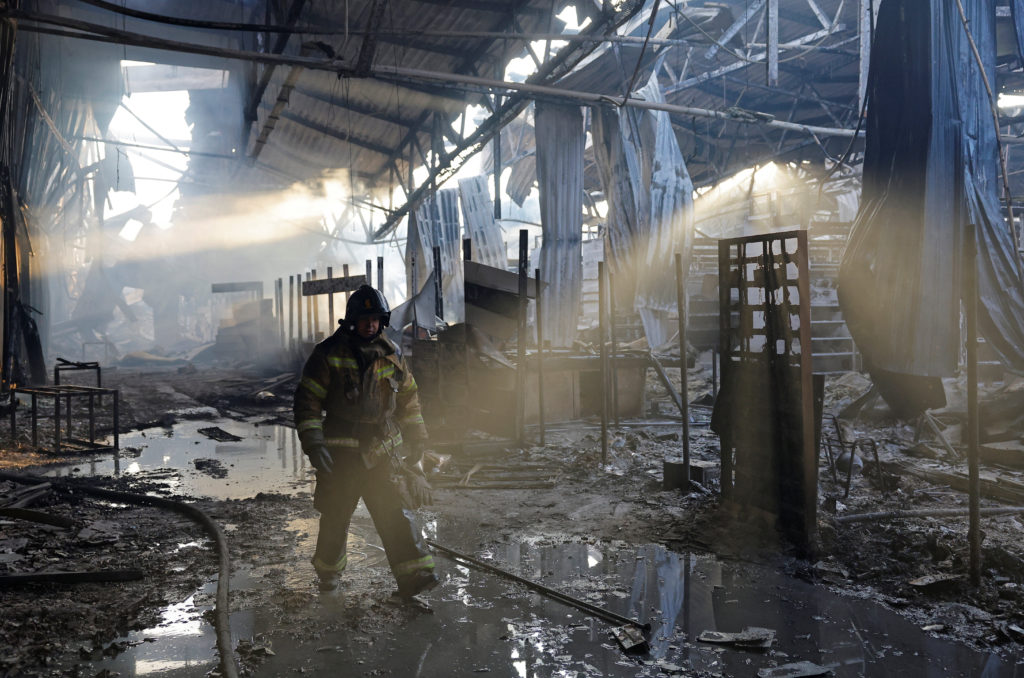

Ukraine’s electricity network is once again under immense pressure following a wave of Russian drone and missile strikes, though the assaults have so far failed to break civilian morale or weaken the country’s resolve to fight.
In Vyshhorod, a town just north of Kyiv, residents endured a fourth consecutive day without electricity after a large-scale Russian attack on the night of December 26–27 crippled power supplies across much of the Kyiv region. Inside the town hall, dozens of locals gathered around tangled bundles of charging cables, using limited power sources to recharge phones, laptops and power banks.
As has become routine during such outages, emergency generators were swiftly deployed to keep essential services operational. Public buildings and critical infrastructure, including sewage pumping stations, were prioritised to prevent a complete breakdown of basic amenities.
Despite the disruption, the broader objective behind Moscow’s sustained targeting of Ukraine’s energy system appears unmet. If the intention was to sap public morale and undermine Ukraine’s will to resist, the continued resilience of civilians and authorities suggests otherwise. Communities have adapted to repeated blackouts, relying on backup systems, local coordination and emergency responses to endure prolonged power cuts.
While the damage to infrastructure remains significant and the strain on the grid is growing, daily life in affected towns demonstrates that Ukraine’s energy resilience—though stretched—is still holding under pressure.