

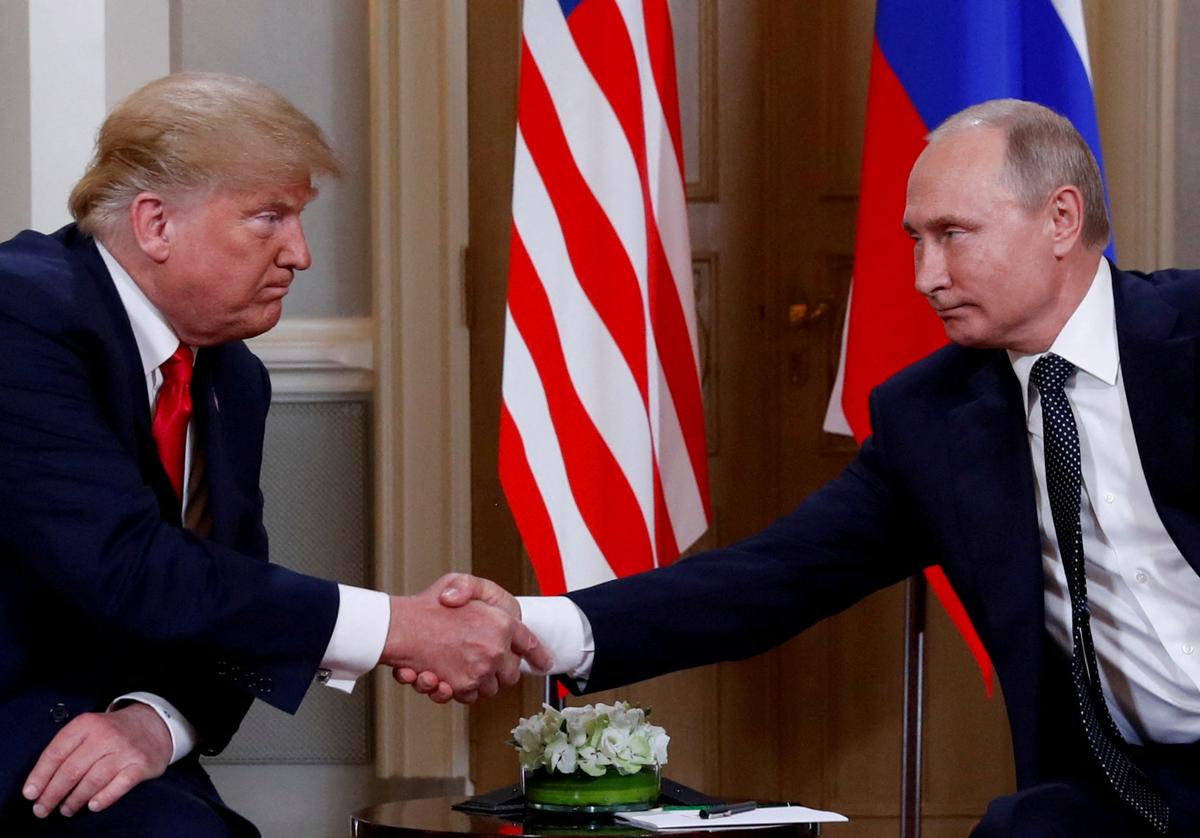

Ukraine and its European allies were scrambling on Saturday to shape counter-proposals after US President Donald Trump issued Kyiv a tight deadline to accept a peace deal that leans heavily toward Russia’s demands. The proposed 28-point plan has drawn sharp pushback from President Volodymyr Zelensky, while Russian President Vladimir Putin has openly welcomed the conditions, which include Ukraine surrendering territory, cutting the size of its armed forces and permanently renouncing its bid to join NATO.
The diplomatic push intensified on the sidelines of the G20 summit in South Africa, where French President Emmanuel Macron, German Chancellor Friedrich Merz, and British Prime Minister Keir Starmer held a closed-door meeting to discuss the next steps. According to the French presidency, a broader meeting including other European leaders was also planned in an effort to coordinate a unified response.
Starmer noted that the goal was “to look at how we can strengthen this plan for the next phase of negotiations.”
European Commission President Ursula von der Leyen stressed that Ukraine must remain central to any negotiation process, saying partners should make clear that “there should be nothing about Ukraine without Ukraine.”
US Defends the Proposal
US Vice President JD Vance defended the American plan after widespread criticism, arguing that detractors “either misunderstand the framework or misstate some critical reality on the ground.” He added that believing victory is possible simply by “giving more money, more weapons, or more sanctions” is unrealistic.
Ukraine, meanwhile, is confronting what Zelensky called “one of the most challenging moments in its history.” The president said he would present alternative proposals to Washington, and Kyiv confirmed it would send a delegation led by Zelensky’s top aide Andriy Yermak to Switzerland to begin direct talks with US officials.
On the battlefield, Russia continues to use its advantage in numbers and firepower, slowly advancing across the front line. The situation is further worsening for civilians as Ukraine heads into what officials say could be one of the toughest winters since the war began, with Russian forces launching fierce bombing campaigns against energy infrastructure.
Compounding the crisis, Kyiv is reeling from a major corruption probe involving the energy sector, sparking widespread public outrage.
Trump’s Deadline and Russia’s Response
President Trump has given Ukraine less than a week to sign the deal, calling November 27—Thanksgiving in the United States—an “appropriate” deadline, though he hinted it could be adjusted. “He’ll have to like it,” Trump said of Zelensky. “And if he doesn’t like it, then they should just keep fighting. At some point, he’s going to have to accept something.”
Under a draft seen by AFP, Russia would gain new territory, be reintegrated into the global economy and rejoin the G8. Putin said the proposal could “lay the foundation” for lasting peace, but also warned that if Ukraine walked away, Moscow would continue seizing more land.
He pointed to Russia’s claim of recapturing the Ukrainian city of Kupiansk, saying similar outcomes were inevitable across other areas of the front line. Ukraine has denied that Russia has regained control of the city.
A Difficult Choice for Kyiv
The US plan includes recognising Moscow-controlled areas as “de facto” Russian, ordering Ukrainian forces to withdraw from parts of the Donetsk region, and capping Ukraine’s military at 600,000 troops. It also requires Kyiv to formally rule out joining NATO and ban foreign NATO troops from its soil.
In exchange, Ukraine would receive “reliable security guarantees” and access to a reconstruction fund financed partly through frozen Russian assets abroad.
Zelensky warned that the pressure on Ukraine had reached its highest level yet. “Ukraine may face a very difficult choice: either the loss of dignity or the risk of losing a key partner,” he said.
This week, the war’s brutality was underscored once again when Russia launched one of its deadliest attacks of the year, striking the western city of Ternopil with cruise missiles and killing 32 people.