

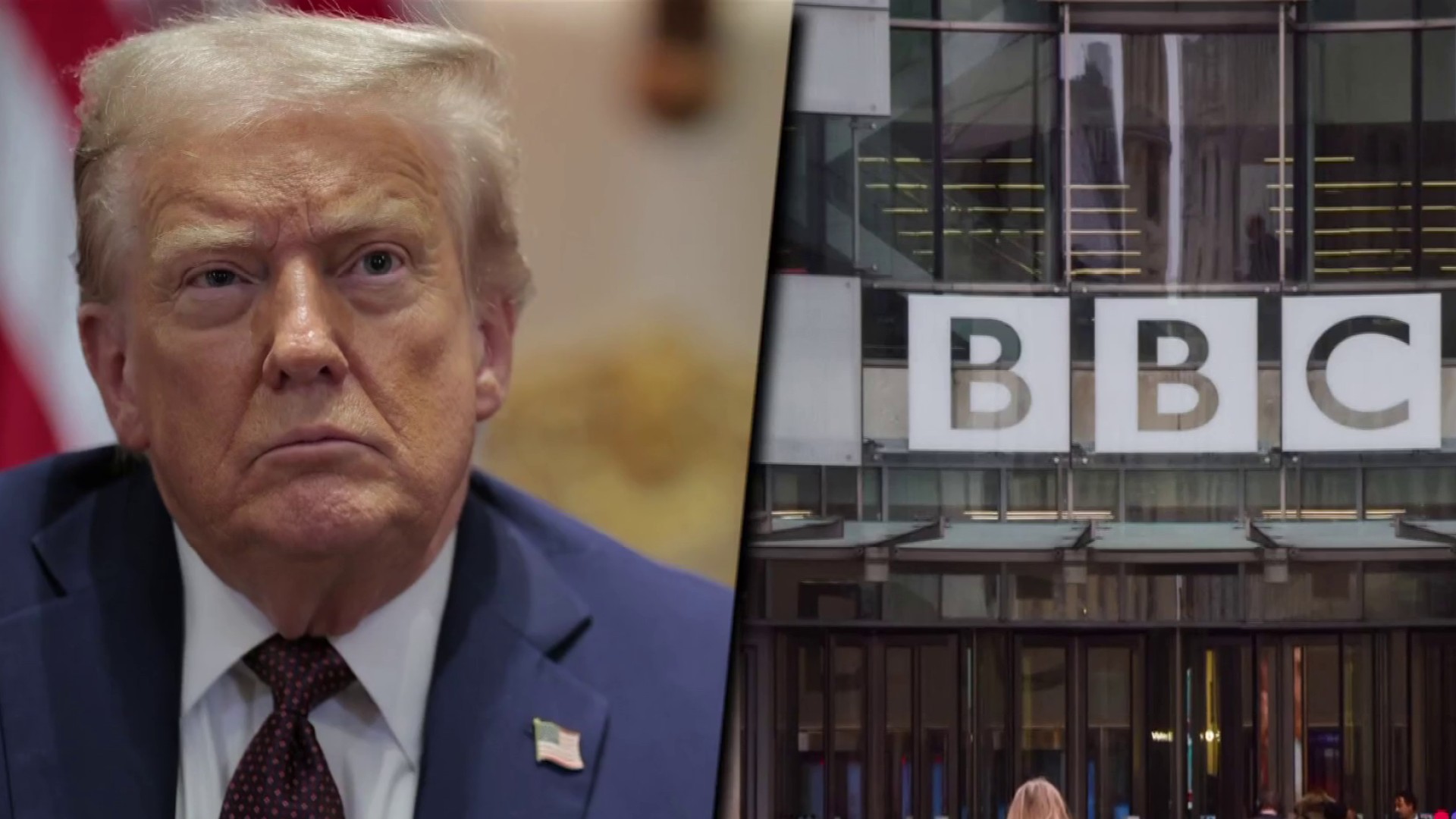

The media crisis engulfing the British Broadcasting Corporation (BBC) has escalated into an international legal confrontation, with President Donald Trump confirming his intent to proceed with a massive defamation lawsuit seeking damages between $1 billion and $5 billion.
The legal threat comes despite the BBC’s acknowledgment of an “error of judgement” in a Panorama documentary clip that misleadingly edited a 2021 speech made by Trump prior to the Capitol riot. The scandal has already led to the resignations of BBC Director-General Tim Davie and Head of News Deborah Turness this week.
“I Have an Obligation to Do It”
Speaking to reporters aboard Air Force One, President Trump doubled down on his pursuit of legal action, dismissing the BBC’s apologies as insufficient because the network refused to offer financial compensation.
Donald Trump: “We’ll sue them for anywhere between $1 billion and $5 billion, probably sometime next week. I think I have to do it, I mean they’ve even admitted that they cheated. They changed the words coming out of my mouth.”
Trump stated he felt an “obligation” to sue, arguing the network “defrauded the public” and that a lawsuit is necessary to prevent similar misrepresentations from happening again.
The Controversial Edit
The core of the dispute lies in an episode of the BBC’s current affairs program, Panorama, which aired a week before the 2024 U.S. presidential election. The documentary spliced together three short excerpts from two sections of Trump’s speech, delivered nearly an hour apart. The resulting edit gave the “mistaken impression” that the President was making a direct and continuous call for violent action at the Capitol, omitting portions where he urged supporters to demonstrate “peacefully and patriotically.”
BBC Chairman Samir Shah sent a personal apology to the White House, but the corporation has maintained a firm stance against paying compensation, stating, “We strongly disagree there is a basis for a defamation claim.”
Major Legal Hurdles Ahead
Legal experts across the U.S. and U.K. have expressed skepticism about the strength of the President’s case, particularly given the legal standards required in American courts for a public figure to win a defamation suit.
To succeed, Trump’s team would need to prove “actual malice”—that the BBC knew the edit was false and defamatory but proceeded anyway. Furthermore, the BBC is expected to argue that: