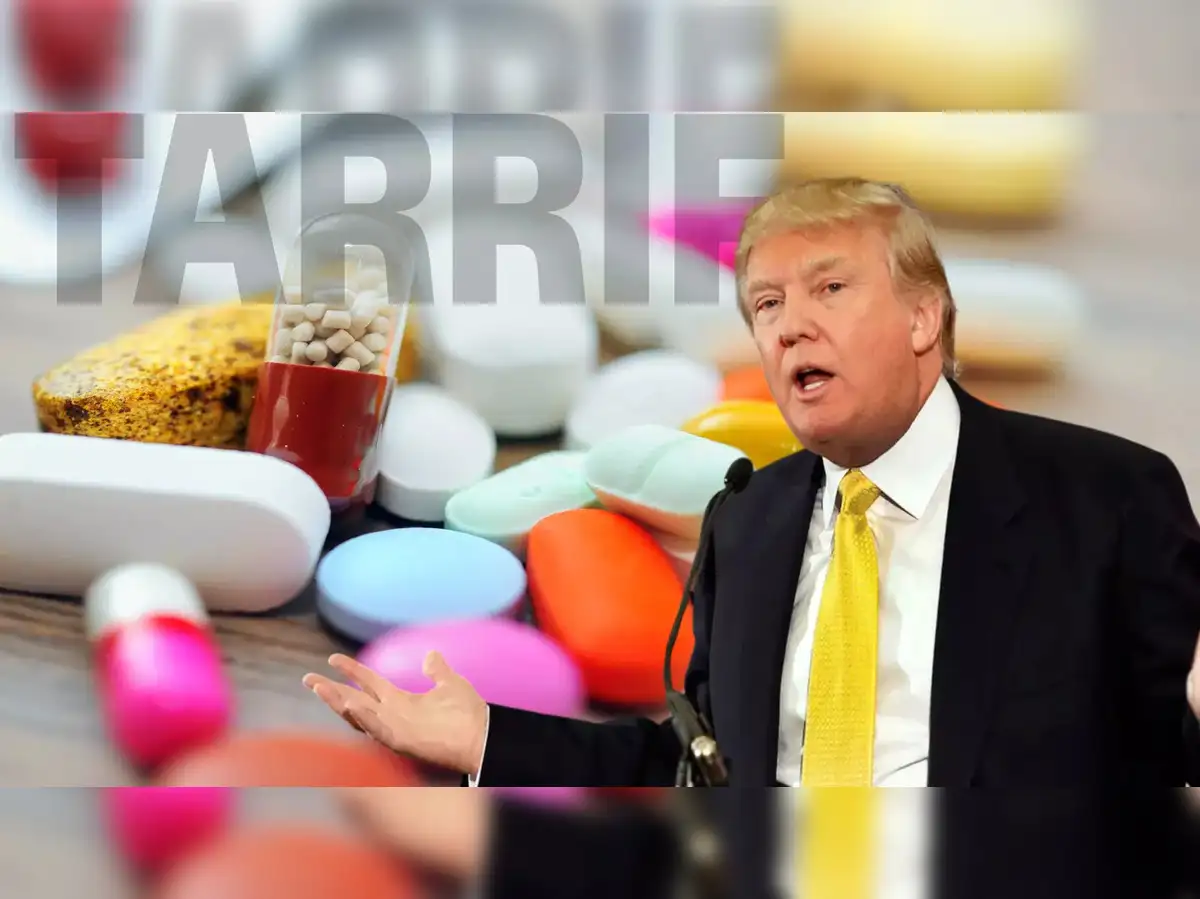
Washington, DC (AFP): US President Donald Trump has stunned the global pharmaceutical industry by announcing a 100% tariff on all imported branded and patented medicines unless manufacturers begin building production plants in the United States.
With just five days before the new measures take effect, analysts and governments are scrambling to determine which nations, companies, and drugs will be hit hardest.
What Trump Announced
On Thursday night, Trump declared:
“Any branded or patented Pharmaceutical Product” will face a 100% tariff unless the company has started construction on a US manufacturing plant by October 1.
Generic drugs, however, will be exempt. While generics account for 90% of prescriptions in the US, they represent only 10% of total spending, meaning the economic impact of the tariffs will largely fall on branded medicines.
Which Drugs Are at Risk?
Experts say several blockbuster drugs, including weight-loss treatments Wegovy and Mounjaro, as well as cancer therapies produced in Europe, could be directly affected.
Last year, the US imported nearly $252 billion worth of pharmaceutical products, making drugs the second-largest US import after vehicles.
Countries in the Crosshairs
European Union (EU): Officials insist a July trade deal shields the bloc from Trump’s new tariffs. EU trade spokesman Olof Gill said the agreement sets a 15% tariff ceiling, calling it an “insurance policy.”
Switzerland: Home to pharma giants Roche, Novartis, and AstraZeneca, but outside the EU, making it highly vulnerable.
Denmark: Faces major exposure due to Novo Nordisk, producer of Ozempic and Wegovy.
Ireland: Exports to the US account for 12% of GDP, prompting urgent calls for talks.
UK: Said it is “actively engaging” with Washington to avoid fallout.
Asia: Japan and South Korea are likely protected by trade deals, while India mostly exports generics. Singapore, which specializes in high-value patented drugs, faces the biggest risk in the region.
Industry Reaction
The European Federation of Pharmaceutical Industries and Associations (EFPIA) warned tariffs would “create the worst of all worlds” by raising costs, disrupting supply chains, and denying patients life-saving treatments.
Pharma multinationals have already pledged around $300 million in new US investments in recent months to counter Trump’s protectionist policies. Still, Trump has made it clear that “building” means actual groundbreaking on construction sites, not just pledges.
Novartis said it expects to announce five new US construction sites before year-end.
Bayer is still “assessing the situation.”
Several other firms have yet to comment.
The Bigger Picture
This is Trump’s harshest move yet in his escalating global trade war, which has already targeted steel, autos, and technology. The pharmaceutical tariffs threaten to shake a $1 trillion industry, with ripple effects across Europe, Asia, and emerging markets.
Trump Slaps 100% Tariffs On Imported Branded Drugs, Pharma Industry On Edge