

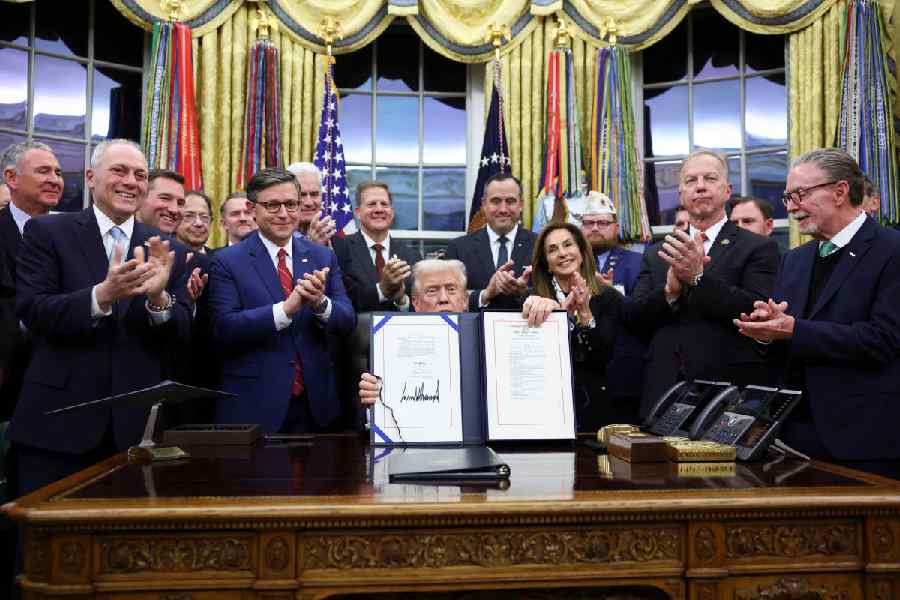

Washington / New Delhi: Ending weeks of financial turmoil and political gridlock, US President Donald Trump on Wednesday signed a government funding bill that officially ended the nation’s longest-ever shutdown — 43 days. The move restores operations across multiple federal agencies and ensures back pay for hundreds of thousands of government employees who had gone without salaries since October 1.
Before putting pen to paper, Trump addressed reporters in the Oval Office, flanked by senior Republican lawmakers, declaring:
“Today we are sending a clear message that we will never give in to extortion.”
His statement drew applause from party members, marking a symbolic close to one of the most contentious budget stand-offs in US history.
Shutdown’s End After House, Senate Approval
The signing came just two hours after the Republican-led House of Representatives passed the bill by a 222-209 vote, following its clearance in the Senate earlier this week.
According to Reuters, the legislation enables federal workers to return to duty as early as Thursday, restoring operations across airports, food programs, and public services that had been heavily disrupted for over six weeks.
Funding Extension Through January 30
The bill provides temporary funding through January 30, ensuring government agencies continue operating while lawmakers negotiate a longer-term budget plan.
The measure includes a reversal of federal worker terminations that occurred during the shutdown and guarantees protection from further layoffs through January.
It also mandates full compensation for missed paychecks once normal operations resume.
According to the Associated Press, the Agriculture Department’s share of the funding means key food assistance programs will remain operational through the fiscal year, preventing disruptions for millions of families.
Additionally, the package allocates $203.5 million for enhanced security for lawmakers and $28 million to safeguard Supreme Court justices — reflecting a growing emphasis on the safety of top government officials amid rising threats.
Economic and Social Impact
The 43-day shutdown — the longest in US history — caused widespread strain on the nation’s workforce and services. Federal employees were forced to rely on food banks, while airport disruptions soared, with more than 10,000 flight delays and 3,200 cancellations reported during the crisis.
With the shutdown now over, air travel and essential services are expected to stabilize, offering relief ahead of the Thanksgiving travel rush just two weeks away.
The resumption of food aid programs could also provide an economic lift, as lower-income households redirect savings toward holiday season spending.
In addition, government statistical agencies will soon resume releasing key economic data, which analysts say is vital for financial markets and policymaking.
Political Reactions
Political observers see Trump’s decisive tone as a bid to reassert control and project strength ahead of renewed budget talks. While Republicans praised his resolve, critics argue that the prolonged shutdown damaged public trust and added billions in economic losses.
With the temporary funding set to expire in January, Washington faces yet another deadline-driven standoff unless a bipartisan solution is reached.