

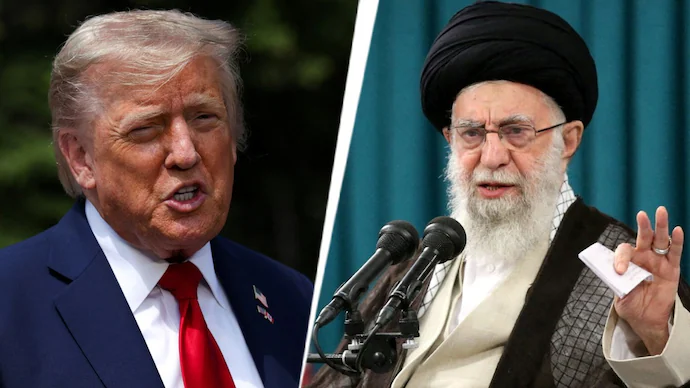

Washington, D.C. – US President Donald Trump on Tuesday declared that he does not seek regime change in Iran, warning it would bring “chaos” to the region. The comment followed his announcement of a ceasefire that ended the 12-day war between Iran and Israel, during which the US also bombed Tehran’s nuclear facilities.
“ISRAEL is not going to attack Iran. All planes will turn around and head home, while doing a friendly ‘Plane Wave’ to Iran. Nobody will be hurt, the Ceasefire is in effect! Thank you for your attention to this matter,” Trump wrote on Truth Social.
While ruling out regime change, Trump also vowed that Iran would never possess nuclear weapons, claiming that Tehran will not be able to rebuild the nuclear sites destroyed during the conflict.
Speaking to reporters aboard Air Force One en route to the NATO summit in The Hague, Trump said he received a call from Russian President Vladimir Putin, who offered to help with Iran during the escalating crisis.
Trump’s comments came just hours after Iran publicly stated it had “taken the necessary measures” to continue its nuclear programme, despite the bombardments. A senior aide to Supreme Leader Ayatollah Ali Khamenei said the conflict was “not over” and that Iran still holds enriched uranium stockpiles.
During the conflict, Trump made a striking revelation, saying the US knew the exact location where Khamenei had been hiding, and demanded Iran’s complete surrender. The remark followed reports that Israel had threatened to assassinate the Iranian supreme leader.
The war began when Israel launched strikes on Iran’s nuclear facilities, alleging that Tehran was building a nuclear bomb. Iran maintains its uranium enrichment is solely for peaceful purposes.
The United States later joined the hostilities, hitting three Iranian military sites, while Iran retaliated by targeting US bases in Qatar and Iraq with missile strikes.
Trump’s NATO Remarks:
Separately, Trump stirred fresh debate on global security when he declined to clearly commit to NATO’s Article 5, the alliance’s collective defence clause.
“There are numerous definitions of Article 5. You know that, right? But I’m committed to being their friend. You know, I’ve become friends with many of those leaders, and I’m committed to helping them,” Trump told reporters.
When asked directly if he would defend NATO allies in the event of an attack, Trump responded that it “depends on your definition” of the article, avoiding a direct affirmation of the alliance’s mutual defence commitment.
As global attention remains fixed on the aftermath of the Iran-Israel war and the shifting balance in NATO, Trump’s statements continue to shape perceptions of US strategic priorities.