

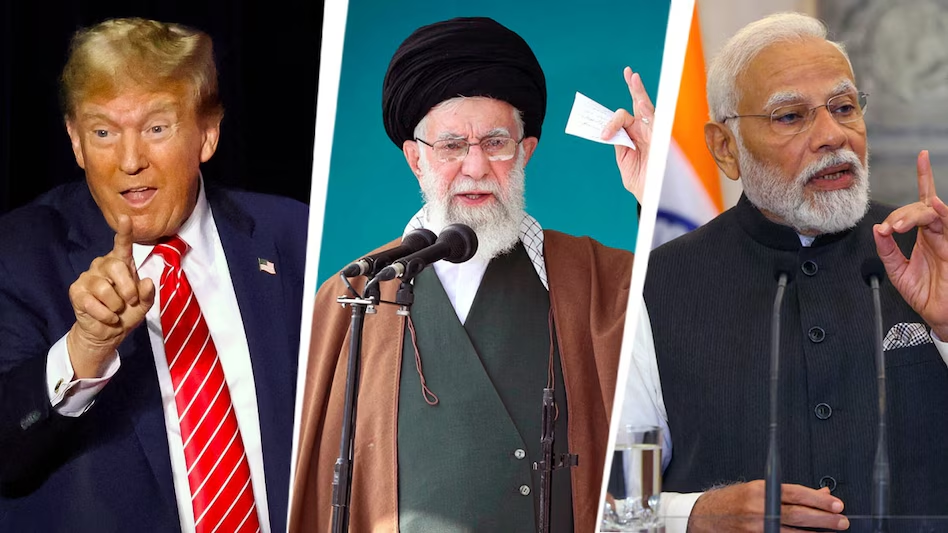

US President Donald Trump has announced a sweeping new trade measure, declaring that any country doing business with Iran will face a 25 per cent tariff on all trade with the United States. The decision, unveiled amid escalating anti-government protests in Iran, is expected to have implications for several of Tehran’s key trade partners — including India.
In a post on Truth Social, Trump said the tariff would apply “effective immediately” and described the order as “final and conclusive”. The move comes as the US administration weighs stronger action against Iran, with Trump warning that Tehran’s response to nationwide protests may cross a “red line”. According to reports, protests have erupted across all 31 Iranian provinces, with hundreds of casualties reported so far.
Why India is affected
India is among Iran’s major trading partners, alongside China, Iraq, the UAE and Turkey. As per data from the Indian Embassy in Tehran, India-Iran bilateral trade stood at $1.68 billion in 2024–25. Of this, India exported goods worth $1.24 billion to Iran, while imports from Tehran amounted to $0.44 billion.
India’s key exports to Iran include basmati rice, cereals, tea, sugar, fruits and pharmaceuticals. Imports from Iran largely consist of organic chemicals, apples, pistachios, dates, mineral fuels and stone-based products.
With Trump’s announcement, any continuation of India-Iran trade could expose Indian exporters to an additional 25 per cent tariff on their business with the US. This comes on top of existing US tariffs of up to 50 per cent on certain Indian goods, imposed earlier over India’s purchase of Russian oil.
Trade and diplomatic challenges
The fresh tariff threat could further complicate India’s trade position at a time when New Delhi and Washington have been negotiating a bilateral trade deal. While US ambassador-designate Sergio Gor recently stressed that “no partner is more essential than India” and indicated progress on a trade agreement, the Iran-related tariff move adds new uncertainty.
For India, the challenge lies in balancing its strategic and economic ties with Iran — especially in sectors like food exports and chemicals — while managing trade relations with the US, one of its largest export markets.
What lies ahead
Experts believe India may need to reassess trade flows, explore alternative markets, or seek exemptions as geopolitical tensions rise. Much will depend on how strictly Washington enforces the tariffs and whether diplomatic channels can soften their impact on key partners like India.