

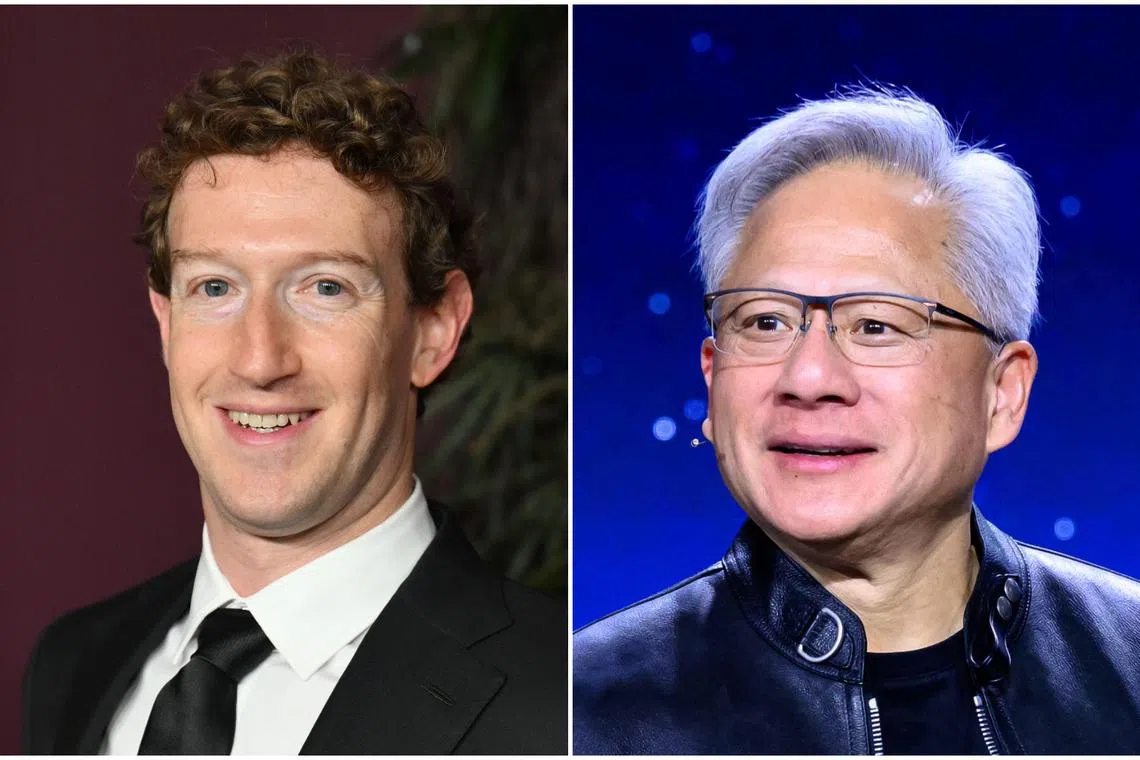

US President Donald Trump has appointed some of the biggest names in the technology industry to the President’s Council of Advisors on Science and Technology (PCAST), signalling a strong push to position the United States as a global leader in artificial intelligence.
The newly formed council includes Mark Zuckerberg, founder of Meta Platforms, and Sergey Brin, co-founder of Google, among other influential tech leaders.
Who’s Leading the Council
The advisory body, commonly known as President’s Council of Advisors on Science and Technology (PCAST), will be co-chaired by David Sacks, Trump’s AI and crypto adviser, and Michael Kratsios, who previously served as the United States’ chief technology officer.
The council also features prominent industry figures such as:
- Larry Ellison, head of Oracle
- Marc Andreessen, Silicon Valley investor
- Jensen Huang of Nvidia
- Lisa Su of AMD
Focus on AI Leadership and Innovation
Reacting to his appointment, Mark Zuckerberg said the US has a significant opportunity to lead the world in artificial intelligence.
“I’m honoured to join the president’s council and work with other industry leaders to help make this happen,” he said in a statement.
The council is expected to advise the president on critical areas such as AI development, emerging technologies, and innovation strategy.
Role and Legacy of PCAST
The President’s Council of Advisors on Science and Technology has been in existence since the era of Franklin D. Roosevelt. It functions as a purely advisory body, offering recommendations and reports on topics assigned by the president, without any regulatory or enforcement authority.
Historically, PCAST has contributed to discussions on major issues including pandemic preparedness, quantum computing, and clean energy.
Growing Ties Between White House and Silicon Valley
These appointments reflect the deepening relationship between the Trump administration and Silicon Valley, marking a shift from his earlier tenure in office.
However, the increasing influence of Big Tech in policymaking has sparked political debate. Recent public sentiment suggests concerns over the growing clout of major technology companies in Washington, alongside rising unease about the rapid advancement of artificial intelligence.
As the US gears up for crucial midterm elections, the intersection of technology, policy, and public trust is likely to remain a key issue.