

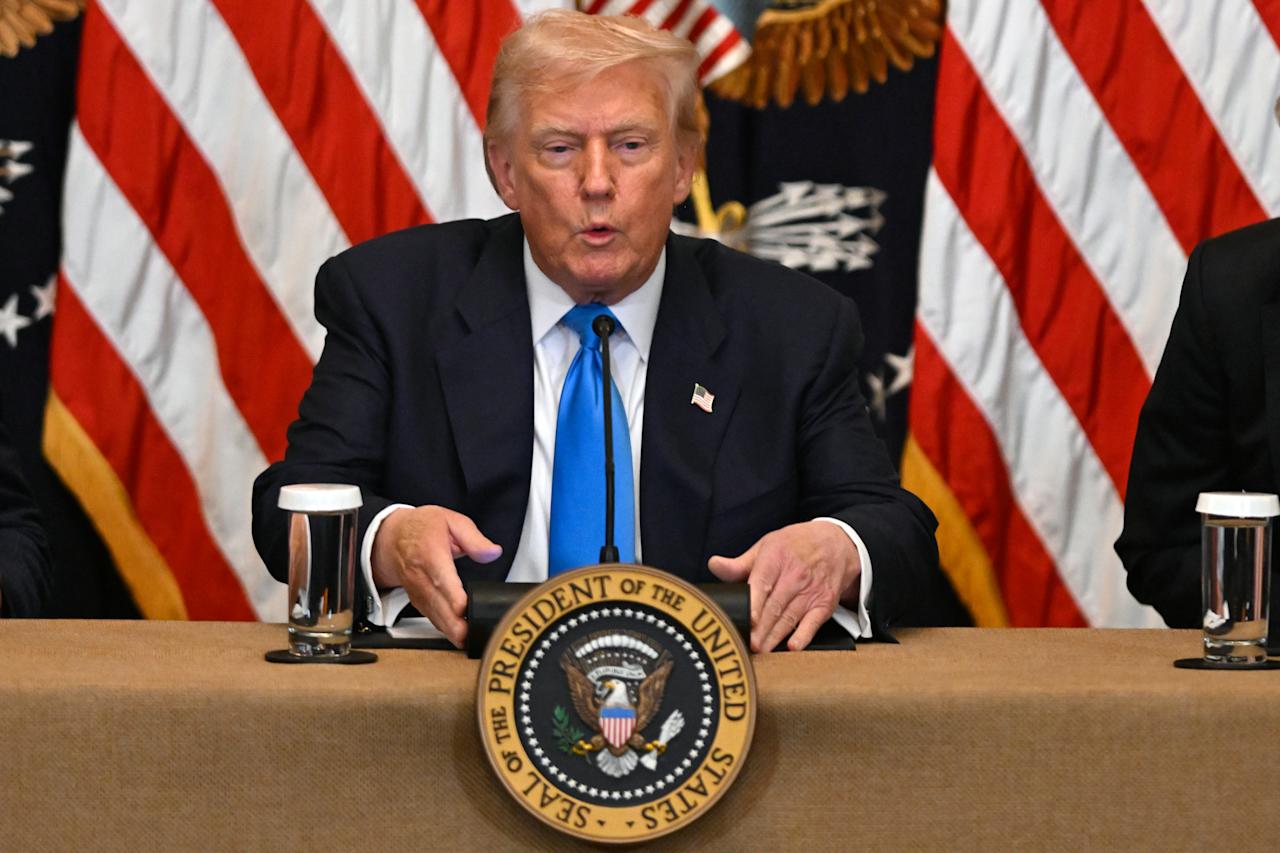

WASHINGTON – President Donald Trump has initiated a sweeping new round of tariffs, signing an executive order that will impose duties on imports from dozens of trading partners, effective seven days from the announcement. The move, which comes ahead of a key trade deal deadline, applies to 69 trading partners, including 68 nations and the European Union.
The tariffs, which vary from a 10% default rate to a high of 41% for some nations, are part of the administration’s strategy to address what it calls “imbalances” in U.S. trade relationships. Among the most notable tariffs announced were a 35% duty on many Canadian goods, 50% on Brazilian exports, 25% on Indian products, 20% on Taiwanese goods, and 39% on items from Switzerland.
The executive order explicitly states that some countries, despite engaging in negotiations, have not offered terms that “sufficiently address imbalances” or have “failed to align sufficiently with the United States on economic and national-security matters.” A separate, more pointed directive was issued to Canada, raising tariffs on its goods from 25% to 35% in response to what the administration claims is a failure to cooperate in curbing the flow of fentanyl into the United States.
While many countries are facing new or increased duties, some have received a more favorable outcome. Mexico, for example, was spared a tariff hike following a “very good” phone call between President Trump and Mexican President Claudia Sheinbaum. The two countries agreed to an extension that prevents a 30% tariff on most non-automotive and non-metal exports, provided they meet USMCA rules.
A U.S. official, speaking on the condition of anonymity, indicated that some nations have successfully negotiated deals to either avoid or reduce the tariffs. The official stated, “We have some deals,” but did not provide further details, noting that the president would be the one to announce them. Countries with the steepest tariffs include Syria (41%), Laos (40%), Myanmar (40%), and Switzerland (39%).
The implementation of these tariffs is expected to have a wide-ranging impact on global trade, affecting supply chains and potentially raising costs for American consumers. The move has been met with mixed reactions, with some nations expressing disappointment and others, like Mexico, celebrating a temporary reprieve.