

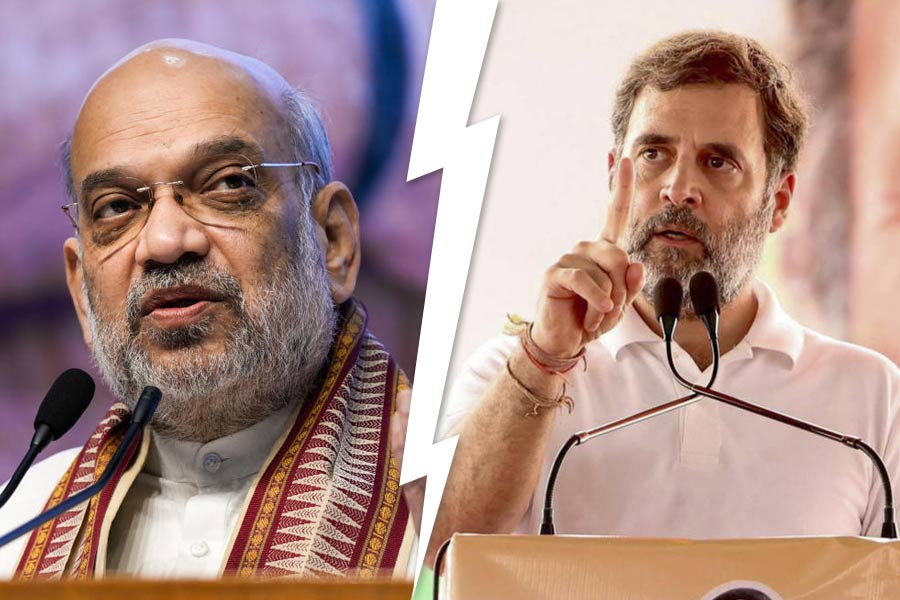

The political heat over the India-US Trade Framework intensified on Sunday, February 15, 2026, as Leader of Opposition Rahul Gandhi and Home Minister Amit Shah exchanged sharp barbs. At the heart of the dispute is the impact of the deal on India’s agricultural sovereignty and the livelihoods of its farmers.
Rahul Gandhi’s “Five Simple Questions”
In a targeted post on X, Rahul Gandhi alleged that the deal is a “betrayal” of Indian farmers and posed five specific queries to Prime Minister Modi:
- The DDG Mystery: What does importing Dried Distillers’ Grains (DDG) mean for Indian cattle? Will they be fed byproduct from GM American corn, making Indian dairy dependent on US industry?
- Soy Farmer Crisis: If India allows GM soy oil imports, how will farmers in Madhya Pradesh, Maharashtra, and Rajasthan survive the inevitable price shock?
- The “Additional Products” Trap: What is hidden under the label of “additional products”? Is this a backdoor to eventually open pulses and other crops to US imports?
- Non-Trade Barriers: Does removing “non-trade barriers” mean India will be pressured to loosen its stance on GM crops or weaken MSP (Minimum Support Price) and procurement systems?
- The Slippery Slope: How will the government prevent this “door” from opening wider every year, putting more and more crops on the table in future deals?
The Government’s Rebuttal: “Lies and Fabrication”
Union Home Minister Amit Shah and Commerce Minister Piyush Goyal have mounted a fierce defense, dismissing the Opposition’s concerns as “laughable” and “stage-managed.”
- Amit Shah’s Jab: Speaking in Gandhinagar, Shah accused Gandhi of being a “habitual liar” and running a “lie manufacturing factory.” He insisted that the interests of farmers, fishermen, and cattle-rearers are 100% safeguarded in the deals with the US, UK, and EU.
- The “Protective Shield”: Minister Goyal clarified that sensitive sectors like wheat, rice, pulses, and dairy have been kept out of the deal. He argued that the import of DDG was requested by the Indian animal husbandry sector itself to provide better quality, high-protein feed.
- The Apple Quota: Responding to specific fears, Goyal noted that imports like apples are strictly regulated with a Minimum Import Price (MIP) of ₹80/kg plus a 25% duty to ensure domestic farmers aren’t undercut.
What’s at Stake?
The debate highlights the delicate balance India is trying to strike between market access and domestic protection:
| Oppostion Concern | Government Clarification |
| GM Contamination | GM food products are officially prohibited; processed oil (like soy oil) has GM traces removed. |
| Dairy Dependency | No direct import of US milk, cheese, or poultry has been permitted. |
| Textile Threat | Govt claims the deal opens huge US markets for Indian cotton and garments, boosting local demand. |
The Next Milestone: The formal Bilateral Trade Agreement (BTA) is expected to be signed by late March 2026, which will contain the final legally binding text and specific commodity lists.