

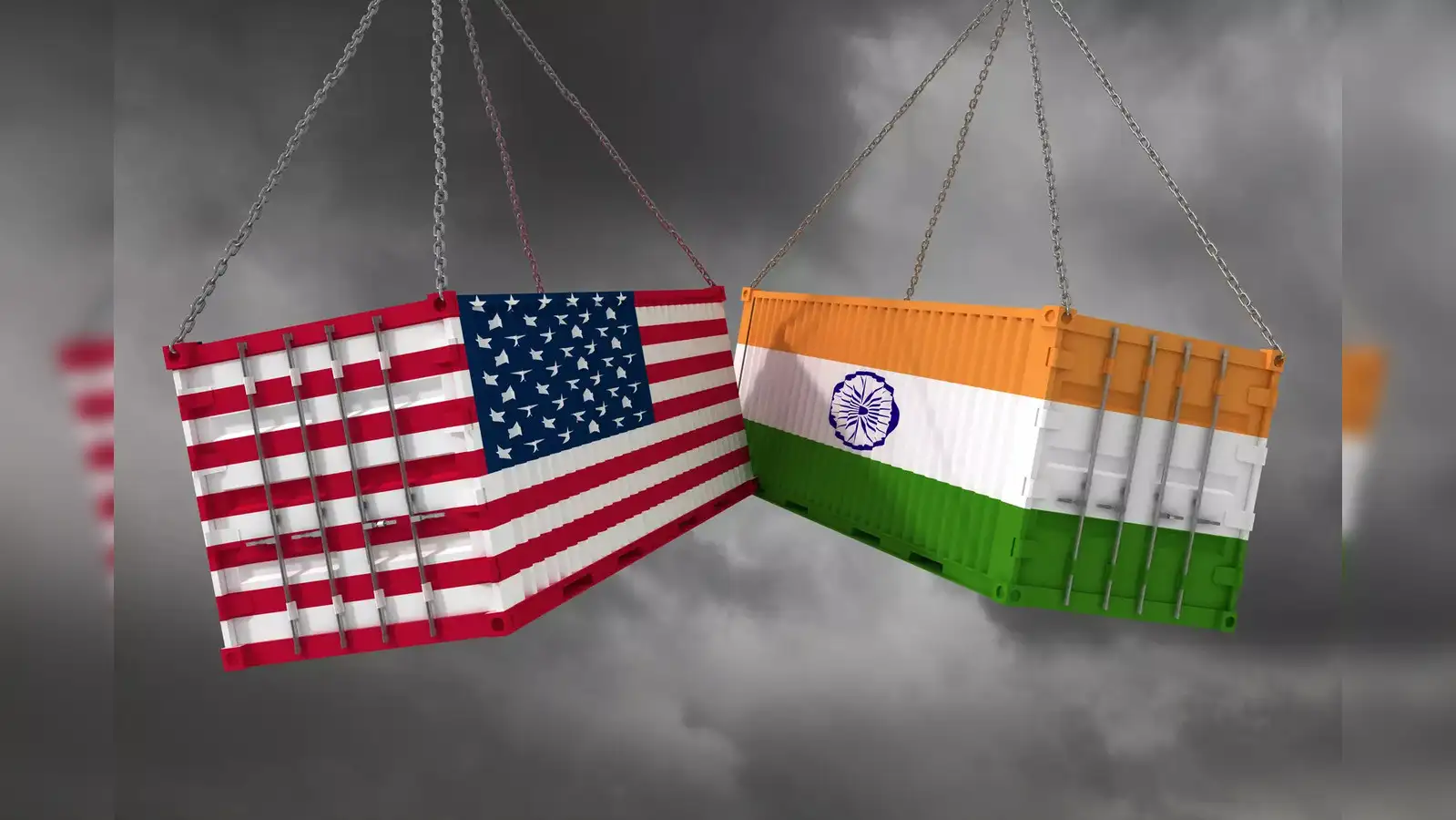

Washington, D.C. – Donald Trump, the President of the United States, recently announced a 25% duty on Indian goods. This has caused a lot of talk in the global trade community. However, early reports suggest that the real effect on India’s exports may not be as widespread as first thought, and more than half of its shipments to the United States may not be affected at all.
News agency PTI says that important Indian export categories, such as necessary medicines, a wide range of important minerals, and a wide range of technological items, will likely not be affected by these new tariffs. PTI was told by sources close to the situation that only about $48 billion worth of India’s total exports to the US would be affected by the new tariffs because of a unique provision called the Section 232 exemption.
Important Categories That Are Not Subject to Penalties
It is said that the list of products that are not subject to the law is long. It has important medications and a lot of energy goods, like crude oil, refined fuels, natural gas, coal, and electricity. Also, important minerals and a wide range of electronics and semiconductors, including laptops, tablets, smartphones, and display screens, are expected to avoid the tariff increase.
It’s important to note that President Trump also hinted at further, undisclosed punishment for India on top of the 25% tariffs. This punishment is said to be connected to India’s continued buying of oil and military gear from Russia. But so far, no precise information about this possible penalty has been made public, so we don’t know what it is or how it will be carried out.
What sectors are most affected by tariffs
A lot of India’s exports to the US may not be affected by the tariffs, but a few important sectors would still have to deal with the 25% levy. These are:
Textiles: Exports worth about $10.3 billion.
Gems & jewelry: About $12 billion worth of goods are sent to other countries.
Shrimp: Exports worth a lot, $2.24 billion.
Leather and shoes make up around $1.18 billion.
Animal Products: About $2 billion.
Chemicals cost about $2.34 billion.
Electrical and mechanical machines are worth about $9 billion.
The shrimp export business is especially at risk because about 48% of its total exports go to the US market. Rahul Guha, Senior Director at Crisil Ratings, talked about the big problem that Indian shrimp exporters are having right now. These affected sectors have quickly asked the Indian government to step in and deal with their problems, which is not surprising.
What the Future Holds for Trade Between India and the US
Donald Trump signed executive orders on Friday that put in place reciprocal tariffs on a number of trading partners. These levies range from 10% to 41%. This is part of a bigger move to defend American businesses, which includes a 25% tax on goods coming from India.
Even if these problems are happening right now, the story of commerce between India and the US is far from done. Reports say that talks are still going on for a full bilateral trade agreement (BTA). However, insiders say that India is still firm on its “red lines” and won’t back down on sensitive areas like dairy, agricultural products, and genetically modified (GM) items. This strong position shows how serious India is about defending its farmers’ jobs and businesses.
Both countries are working hard to negotiate a trade deal between them, and they hope to finish the first phase of this accord by the end of the year. The ongoing talks show that both sides understand how important a strong trade relationship is to their long-term goals, even though tariffs may be a short-term problem. They are still working to get a long-term solution that works for both sides.