

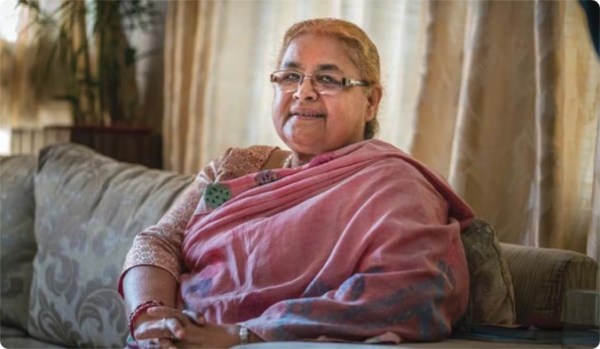

KATHMANDU – After a week of huge student-led rallies, it seems that the “Gen Z” protest movement has picked Sushila Karki, Nepal’s former Chief Justice, to lead an interim administration. The decision was said to have been made during a virtual meeting of the movement on Wednesday. This is happening because Nepal is in a political crisis after Prime Minister KP Sharma Oli quit on Tuesday. Because of the instability, the Nepal Army is now in charge of law and order. There is a statewide curfew and other restrictions in place.
A list of possible candidates included Karki, 73, as well as Balendra Shah, the mayor of Kathmandu, and Kulman Ghising, the former head of the power board. A secretary for the Supreme Court Bar Association told media that the Gen Z movement wants Karki to be the temporary prime minister.
Who is Karki Sushila?
Sushila Karki was the first woman to be Chief Justice of Nepal. She held the position from July 2016 until June 2017. During her time in office, there was a strict zero-tolerance stance against corruption.
Karki was born on June 7, 1952, in Biratnagar. He is a well-known lawyer. After finishing her law school in 1979, she started working as a lawyer. She got her BA from Mahendra Morang Campus in 1972, her MA in political science from Banaras Hindu University in 1975, and her law degree from Tribhuvan University in 1978. In 2009, she was made an ad-hoc judge of the Supreme Court, and in 2010, she became a regular judge.
In April 2017, MPs filed an impeachment motion against her, saying that she had made a biased decision about the resignation of a strong anti-corruption leader. She was temporarily suspended. Later, the motion was taken back.
Karki’s Thoughts on India and Prime Minister Modi
Sushila Karki told media in an interview a while ago that she had a good relationship with India. “I say hello to Modi ji. She stated, “I have a good impression of Modi ji,” and she hoped that the two countries will be able to talk to each other more easily. She talked about how “very good” the relationship is between the people of Nepal and India and remembered how much she enjoyed studying in India, especially at Banaras Hindu University.
“We have so much goodwill and love,” she remarked. She added that while government-to-government interactions may not always be smooth (“When utensils are kept together in the kitchen, they do make some sound”), the bond between people remains strong. She also promised that Indians in Nepal would be safe and said that the army was striving to bring order back to the country.