

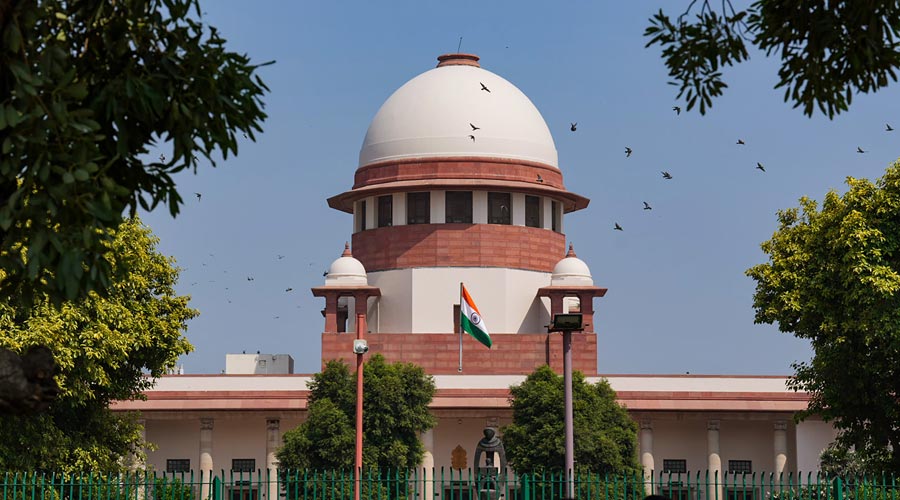

In a move that could fundamentally alter the rights of millions of employees across India, the Supreme Court announced on Monday, February 16, 2026, that it will constitute a nine-judge Constitution Bench to finalize the legal definition of an “industry.”
Led by Chief Justice Surya Kant, the bench is set to begin hearings on March 17, 2026. This high-stakes legal battle aims to resolve a 48-year-old debate over which organizations—ranging from hospitals and NGOs to government welfare schemes—should be governed by industrial labour laws.
The Legacy: Revisiting the “Triple Test” (1978)
The core of the dispute is the 1978 landmark judgment in Bangalore Water Supply & Sewerage Board vs. A. Rajappa. In that case, Justice Krishna Iyer established the “Triple Test” to determine if an organization is an “industry”:
- Systematic Activity: The entity must engage in a structured operation.
- Organised Cooperation: There must be a clear relationship between employer and employee.
- Production/Distribution: The focus must be on goods or services that satisfy human wants.
The Impact: This broad definition brought hospitals, universities, clubs, and research bodies under the Industrial Disputes Act, allowing their staff to form unions and engage in collective bargaining.
Why a 9-Judge Bench?
The road to this hearing has spanned over two decades of judicial skepticism:
- 2005: A five-judge bench first doubted the 1978 ruling, suggesting it was too broad.
- 2017: A seven-judge bench ruled that since the original Bangalore Water Supply case was decided by seven judges, only a nine-judge bench has the legal authority to modify or overrule it.
- 2026: The current bench (including Justices Joymalya Bagchi and Vipul Pancholi) confirmed the administrative notification for the 9-judge panel is now imminent.
Key Issues to be Resolved
The Constitution Bench will address three critical questions:
- Validity of the Triple Test: Is a 1970s-era test still applicable to the modern, service-oriented 21st-century economy?
- Government Welfare vs. Industry: Should social welfare schemes and government departments be treated as “industries,” or do they fall outside the scope of labour regulations?
- New Labour Codes: How do the Industrial Relations Code of 2020 and the un-notified 1982 amendments affect the current definition?
Timeline for the Final Showdown
The Supreme Court has signaled its intent for a “swift and definitive” resolution:
- February 28, 2026: Deadline for all parties to file final written submissions.
- March 17, 2026: Hearings commence.
- Strict Limits: Petitioners have been granted only three hours for main arguments and one hour for rejoinders to ensure the case is concluded within a tight two-day window.