

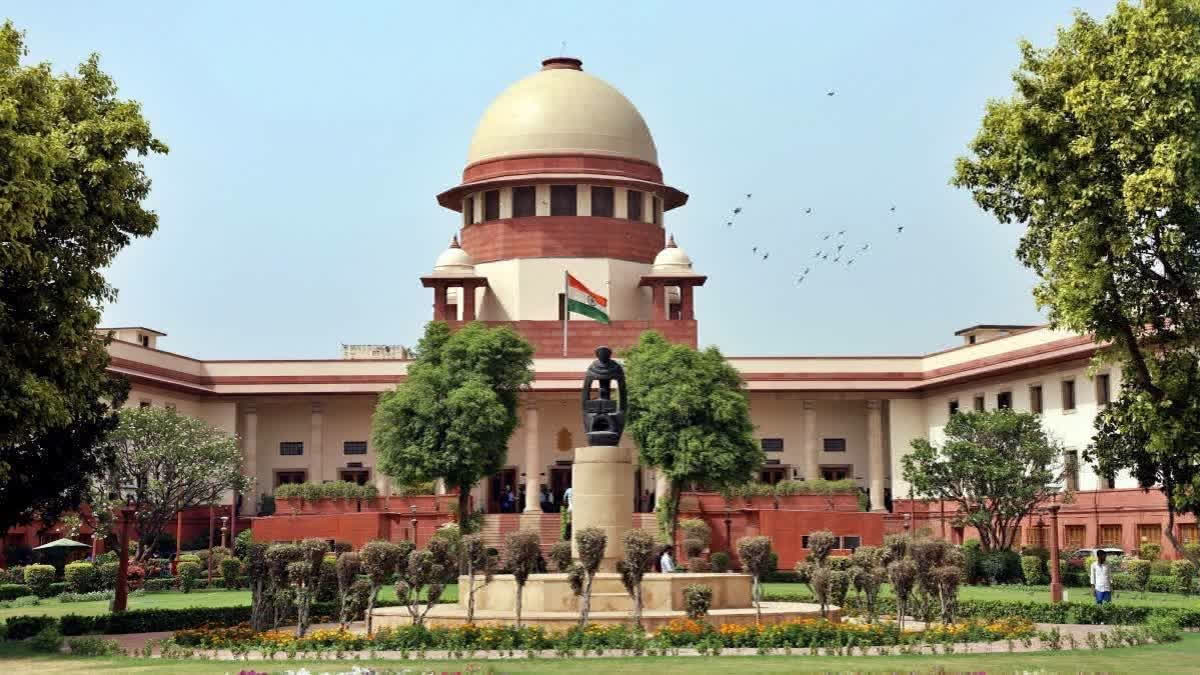

The Supreme Court of India today delivered a significant interim order on the contentious Waqf (Amendment) Act, 2025, declining to stay the entire law but putting on hold some of its most debated provisions. The decision, pronounced by a bench led by Chief Justice of India (CJI) Bhushan R. Gavai and comprising Justice AG Masih, represents a partial victory for petitioners who had challenged the constitutionality of the new law.
The Court’s decision comes after a series of hearings and reserved judgment on a batch of petitions challenging the act on grounds of discrimination and violation of fundamental rights. The central focus of the Supreme Court’s order was to balance the government’s aim of transparency with the constitutional rights of the Muslim community to manage its religious properties.
Provisions Put on Hold:
- Collector’s Power to Classify Property: The most significant part of the ruling stayed the provision that empowered district collectors to make a final determination on whether a property claimed as Waqf actually belongs to the government. The Court ruled that any such determination must be subject to the adjudication of Waqf tribunals and the concerned high courts, reaffirming the judicial process over administrative authority.
- “Practising Muslim” Clause: The Court also suspended the provision that mandated a person must be a “practising Muslim” for at least five years to create a Waqf. The bench clarified that this requirement would only take effect after state governments frame specific rules and a mechanism to determine a person’s adherence to Islam, a safeguard against arbitrary exercise of power.
- Property Rights during Disputes: The court directed that until a final determination on a property’s title is made by the tribunal and high court, the Waqf board cannot be dispossessed of the property, and no third-party rights can be created. This provides a crucial interim relief to protect disputed Waqf properties.
Provisions Upheld:
- Mandatory Digital Registration: The Supreme Court did not interfere with the provision for mandatory registration of all Waqf properties on a new centralized portal, called UMEED (Unified Waqf Management, Empowerment, Efficiency, and Development). The court noted that keeping an inventory of Waqf properties has been a part of the legal framework for over a century.
- Board Composition: While the court did not stay the inclusion of non-Muslim members on Waqf boards, it did introduce a crucial cap. It directed that the Central Waqf Council should not have more than four non-Muslim members and state Waqf boards should not have more than three. It also suggested that the Chief Executive Officer of the board should “preferably” be a Muslim, though the law does not explicitly mandate this.
Background of the Case:
The Waqf (Amendment) Act, 2025, passed by the Parliament and assented to by the President, was designed to address issues of mismanagement and lack of transparency in the administration of Waqf properties. According to the Centre, the new law aims to create a streamlined, technology-driven framework and prevent the encroachment of Waqf land.
However, petitioners, including senior advocates Kapil Sibal, Rajeev Dhavan, and Abhishek Manu Singhvi, argued that the law discriminates against Muslims and infringes upon their fundamental right under Article 26 to administer their own properties. They contended that the new law effectively punishes the community for the state’s failure to conduct proper surveys since 1954 and risks extinguishing properties historically recognized as Waqf through usage or oral tradition.
The Supreme Court’s interim order is a temporary relief for the petitioners, but the final judgment is still pending. The verdict will ultimately decide the constitutionality of the new law and its impact on the administration of Waqf properties in India.