

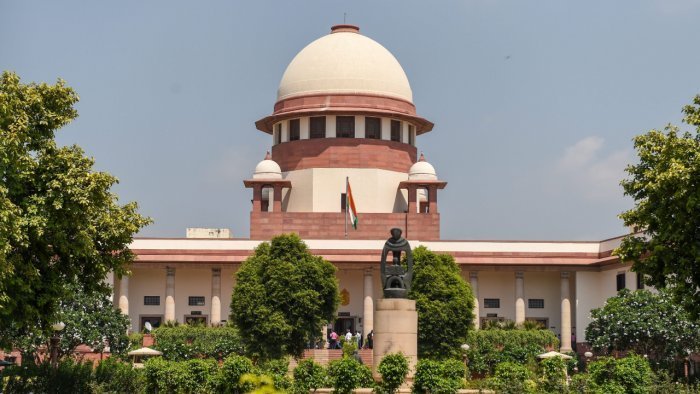

NEW DELHI – On Tuesday, the Supreme Court of India told all state governments to find out if any prisoners are still in jail after their sentence has ended. The court made it plain that these prisoners should be set free right now and don’t need to ask for a separate order for remission.
The decision was made when Sukhdev Yadav, a convict in the well-known 2002 Nitish Katara murder case, submitted an appeal. In 2016, the Supreme Court changed his life sentence to a set 20-year sentence with no chance of parole. Yadav finished this term on March 9, but the Delhi government turned down his request for a break. After that, he went to the highest court, which gave him a break on June 26 and told him to go free on July 29.
Unlawfully imprisoning someone and violating their rights
A panel of judges, BV Nagarathna and KV Viswanathan, wrote a long decision outlining why Yadav should be let free. The bench said, “After serving 20 years of his sentence, it was completely unnecessary to seek remission because he was not entitled to any remission during that time.” The court also said that Yadav’s continuous imprisonment after March 9 was illegal, as they had already said in July.
The judges were worried that the Delhi government’s legal interpretation would be influencing other prisoners in the same situation. The court said, “prisoners are languishing behind bars even after being acquitted or serving their time.” The court has ordered that a copy of its decision be sent to all home secretaries of states and union territories to deal with this. They are to “find out if any accused or convicted person has stayed in jail longer than their sentence and, if so, give orders for their release if they are not wanted in any other case.”
Clarification on Life Sentences and Remission
The bench said that Article 21 of the Constitution protects life and liberty, and that in all cases when a convict has finished their jail term, they must be released right away if they are not required in any other case. The court also told the National Legal Services Authority (NALSA) to send the list of these convicts to the legal services authorities in each state and district so that they could carry out the verdict.
The ruling also made it clear that if a person is given a life sentence with a certain duration without remission (for example, 20 years), they should be let out after that term is finished. In these situations, the court said that the criminal does not need to ask for a pardon because the fixed-term punishment has taken the place of the life sentence.
Nilam Katara, the person who complained in the Nitish Katara case, was against Yadav’s release since witnesses have been living in dread. The court’s decision, on the other hand, puts the legal meaning of the punishment and the prisoner’s basic rights above anything else.