

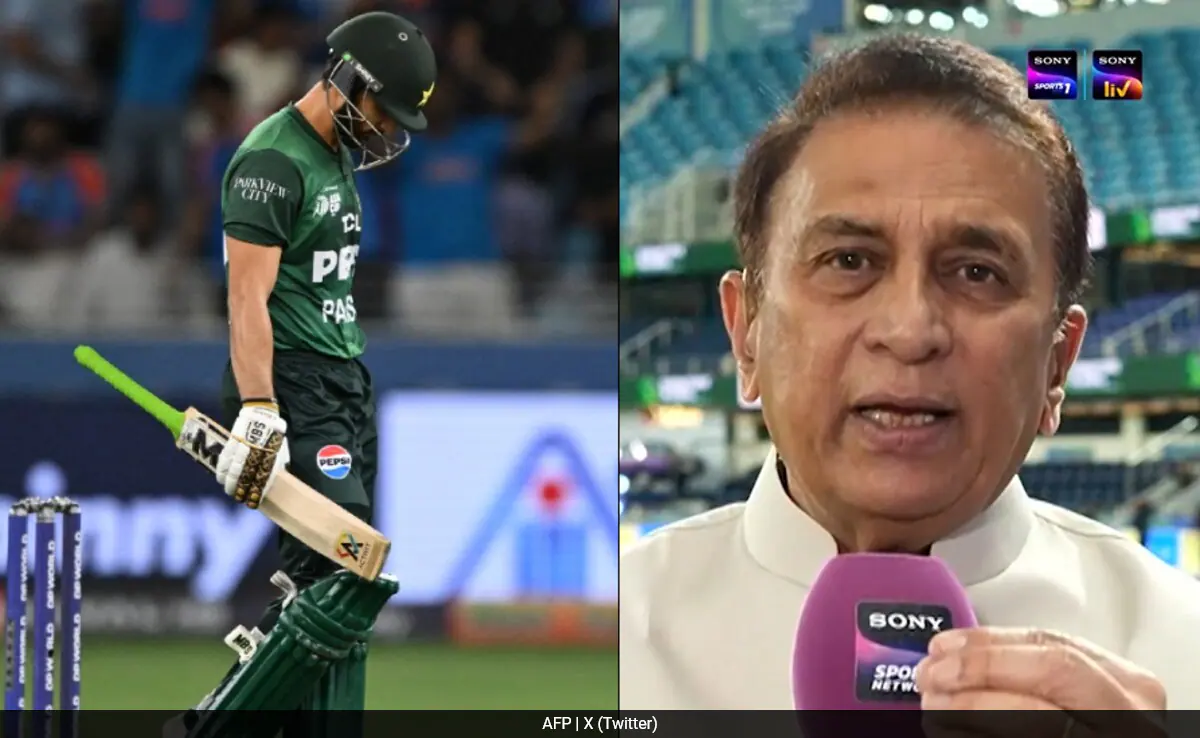

DUBAI — On Sunday, the long-standing rivalry between India and Pakistan in cricket took a new turn when India’s decisive seven-wicket victory in the Asia Cup 2025 match drew strong criticism from one of the game’s finest. Sunil Gavaskar, a famous Indian cricketer noted for his sharp commentary, called the current Pakistan side “Popatwadi,” which is a slang term from Mumbai for a weak or bad team.
Gavaskar told the announcer after the game that he was unhappy with how Pakistan played. He said, “I’ve been following the Pakistan team since the 1960s.” “But today is the first time I thought this isn’t a Pakistan team. This is a Popatwadi team. Gavaskar’s statements show that more and more people think that the on-field rivalry has become one-sided, with India always beating their opponents.
But there was also a controversial moment off the field that marked the match. After India won, skipper Suryakumar Yadav and Shivam Dube left the field right away without shaking hands with the Pakistani players, which is what usually happens after a game. The Pakistani squad was shocked by the gesture, and their captain, Salman Agha, refused to do the TV interview after the game in protest.
The Pakistan Cricket Board (PCB) said in a statement that the Indian players’ behavior was “unsporting and against the spirit of the game.” They also said that team manager Naveed Cheema had filed a formal complaint.
Suryakumar Yadav, on the other hand, presented a clear reason for his team’s actions: they dedicated the win to the military forces and the victims of the recent Pahalgam terror assault. “We called the team. We had merely come to play. “We had told them what we thought,” Yadav stated. “Some things go beyond being a good sport. We give this win to our troops who fought in “Operation Sindoor” and stand with the families of the people who died in the Pahalgam terror incident.
The incident makes the already tense relationship between the two teams and their cricket boards much worse. The focus has shifted from the on-field rivalry to the political and social factors that shape the relationship.