

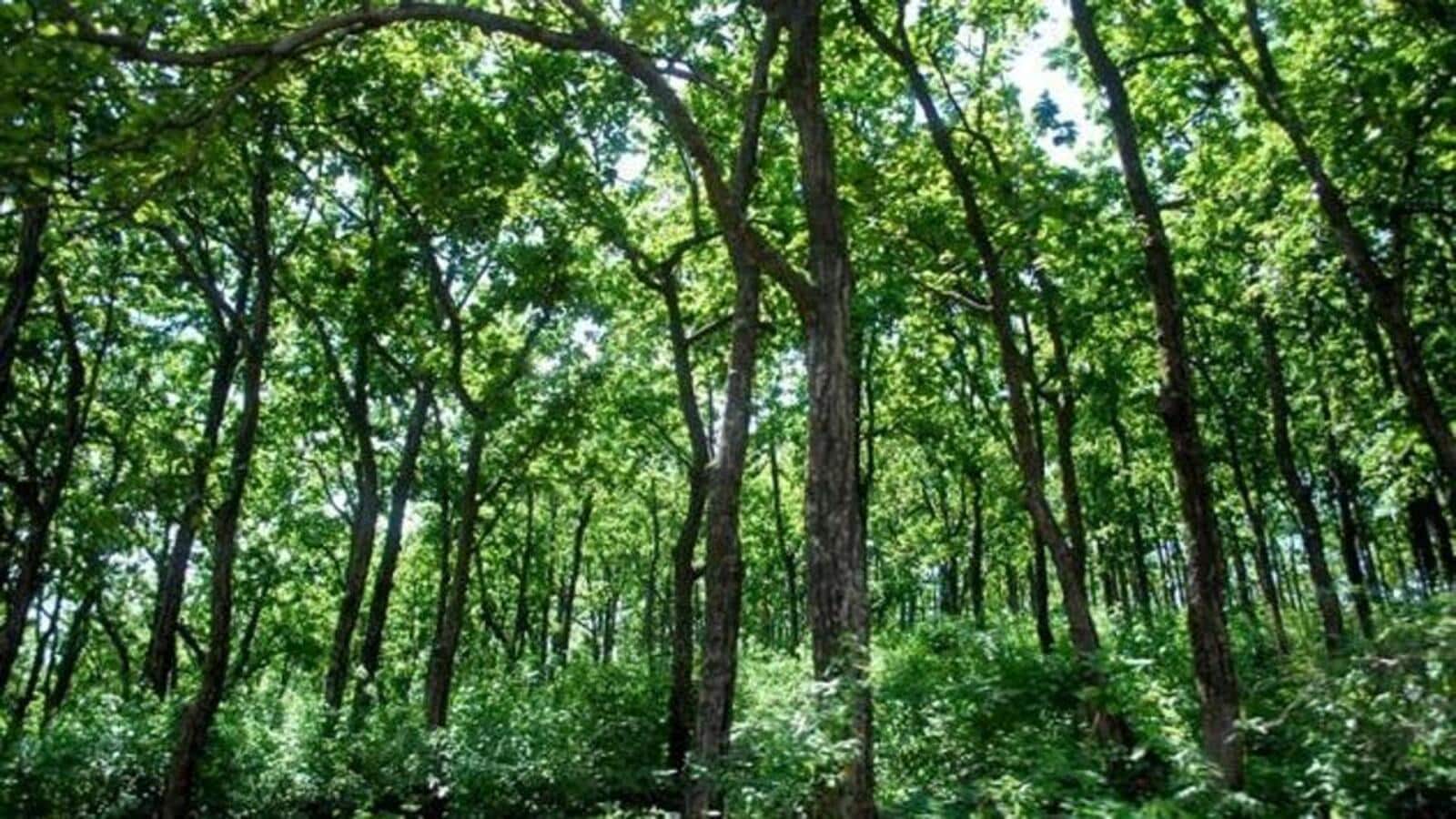

Kolkata – A new study by scientists at the Indian Institute of Technology (IIT) Kharagpur has revealed a worrying paradox: while India’s overall green cover is increasing, the health of its forests is in steady decline. The study, published in ScienceDirect, found that the “Ecosystem Photosynthetic Efficiency” (EPE) of Indian forests has dropped by 5% between 2010 and 2019 compared to the previous decade.
Photosynthetic efficiency measures how effectively plants convert sunlight into chemical energy for growth. The study, titled “Weakening of forest carbon stocks due to declining Ecosystem Photosynthetic Efficiency under the current and future climate change scenarios in India,” was led by Jayanarayanan Kuttippurath and Rahul Kashyap from the Centre for Ocean, River, Atmosphere and Land Sciences at IIT Kharagpur.
The decline in forest health is most pronounced in the pristine forests of the Eastern Himalaya, Western Ghats, and the Indo-Gangetic Plain. The researchers attribute this degradation primarily to global warming, which causes reduced soil moisture and higher air temperatures. Other contributing factors include wildfires, landslides, deforestation, mining, and other developmental activities.
The findings contrast with reports like the India State for Forest Report of 2023, which show an overall increase in the country’s tree green cover. However, the IIT Kharagpur study clarifies that this “greening” is largely due to the expansion of irrigated croplands, while the forests themselves are becoming weaker.
According to the scientists, this degradation poses serious threats to biodiversity, timber production, the livelihoods of forest dwellers, and long-term climate resilience. They warn that climate change and human interventions could lead to an even more significant decline in the future, potentially causing the “savannisation” of Indian forests.
To address these critical issues, the study recommends a series of urgent measures, including the preservation of indigenous forests, the implementation of sustainable forest management practices, scientific afforestation programs, a substantial reduction in carbon emissions, and the adoption of advanced carbon capture technologies. The researchers stress that these steps are crucial for India to achieve its goal of net-zero emissions by 2070.