

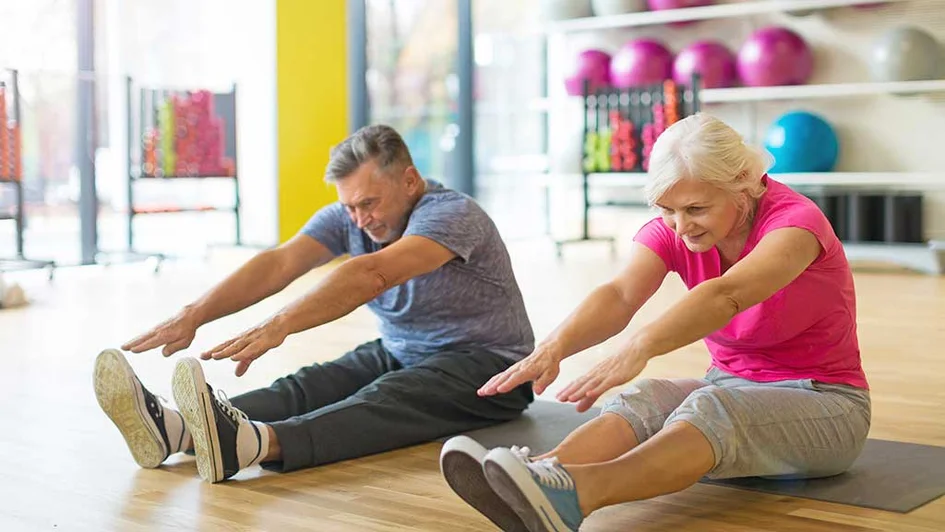

Strength training exercises are physical activities designed to improve muscle strength and endurance by making muscles work against resistance such as body weight, resistance bands, or light weights. According to the UK’s National Health Service (NHS), strength exercises can be safely performed at home and play a crucial role in improving overall health, mobility, and independence.
Common strength-training movements include squats, push-ups, rows, deadlifts, and overhead presses, all of which engage major muscle groups. For seniors, strength training is especially beneficial as it not only preserves muscle mass but also improves bone density, reducing the risk of fractures in vulnerable areas like the hips, spine, wrists, and ankles.
Below are effective and senior-friendly strength training exercises that can support bone health, stability, and everyday movement.
Strength Training Exercises for Seniors
1. Sit-to-Stand Squats
The sit-to-stand squat mimics everyday actions such as rising from a chair. It targets the hips, thighs, and legs, helping to improve bone density in the lower body.
Start seated in a sturdy chair with feet hip-width apart. Slowly stand up using your leg strength while keeping your back straight, then sit back down in a controlled manner.
Repetitions: 8–12
This exercise applies gentle stress to bones, strengthening them without requiring any equipment.
2. Wall Push-Ups
Wall push-ups are a beginner-friendly way to strengthen the chest, shoulders, arms, and spine.
Stand at arm’s length from a wall, place your hands shoulder-width apart at chest level, bend your elbows to lean in, and push back to the starting position.
Repetitions: 10
This movement improves upper-body strength and stability, helping reduce the risk of falls.
3. Seated Leg Lifts
Seated leg lifts focus on strengthening the hips and thigh bones, making them particularly helpful for seniors at risk of hip fractures.
Sit upright in a chair, extend one leg straight out, hold for 3–5 seconds, then lower slowly.
Repetitions: 10 per leg
This controlled, weight-bearing action encourages bone cells to build denser tissue and also improves balance.
4. Bridge Pose
The bridge pose strengthens the glutes, lower back, and spine by lifting the pelvis against gravity.
Lie on your back with knees bent and feet flat on the floor. Lift your hips while squeezing your glutes, hold for 5 seconds, then lower slowly.
Repetitions: 8–10
This exercise enhances spinal bone strength and core stability, supporting better mobility.
5. Resistance Band Rows
Resistance band rows target the upper back and posture muscles, which helps counter forward slouching common with ageing.
Sit or stand holding a resistance band at waist height. Pull the band toward your ribs while squeezing your shoulder blades, then release slowly.
Repetitions: 10–12
This pulling movement supports shoulder and spinal bone health while improving posture and fracture resistance.
6. Chair Heel Raises
Heel raises strengthen the calf muscles, ankles, and lower legs, areas crucial for balance and fall prevention.
Stand behind a chair for support, rise onto your toes by lifting your heels, hold briefly, then lower down.
Repetitions: 12–15
The repeated loading stimulates bone formation in the tibia and femur.
7. Overhead Arm Raises
Overhead arm raises improve bone density in the shoulders and wrists using light dumbbells or even water bottles.
Sit or stand with weights held at shoulder height, palms facing forward. Press arms upward without locking elbows, then lower slowly.
Repetitions: 8–10
This vertical loading mimics everyday reaching movements and reduces osteoporosis-related risks.
8. Single-Leg Stands
Single-leg stands challenge stability muscles and strengthen ankle and hip bones.
Hold onto a chair for support and stand on one leg for 20–30 seconds before switching sides.
Repetitions: 3 rounds per side
This exercise improves balance and lowers the risk of fractures from everyday slips or stumbles.