

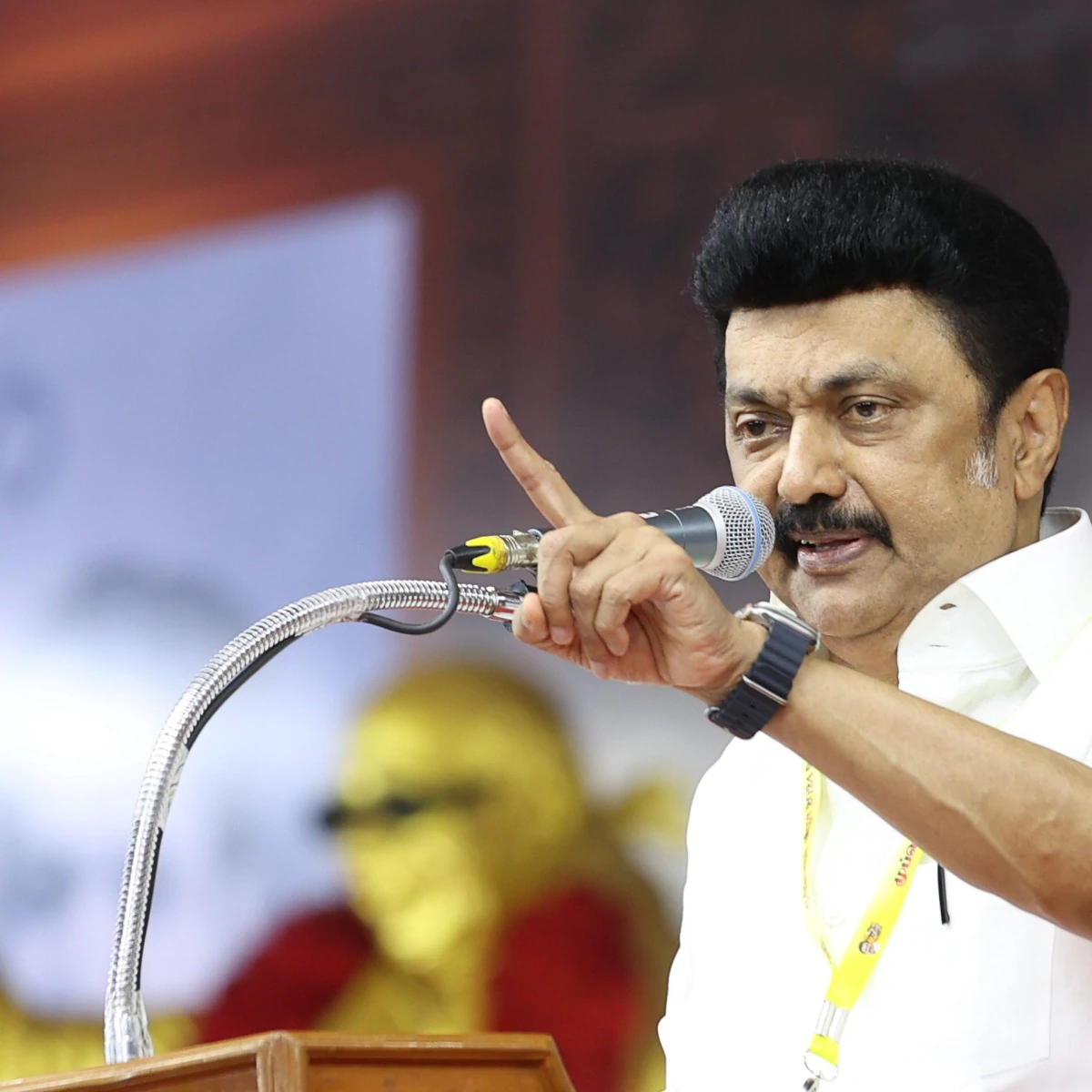

Chennai (Tamil Nadu) [India]: Tamil Nadu Chief Minister MK Stalin on Tuesday reiterated his demand to stop the alleged “imposition” of Hindi in Tamil Nadu and other southern states, arguing that these states have never asked northern states to learn their languages.
Stalin pointed out that the ‘Dakshin Bharat Hindi Prachar Sabha’ was established to promote Hindi in southern states, but there was never an ‘Uttar Bharat Tamil Prachar Sabha’ in the northern part of the country to encourage learning Tamil or any other South Indian language.
A century has passed since the Dakshin Bharat Hindi Prachar Sabha was set up to make South Indians learn Hindi.
— M.K.Stalin (@mkstalin) March 4, 2025
How many Uttar Bharat Tamil Prachar Sabhas have been established in North India in all these years?
Truth is, we never demanded that North Indians must learn Tamil or… pic.twitter.com/mzBbSja9Op
In a post on X (formerly Twitter), Stalin wrote:
“A century has passed since the Dakshin Bharat Hindi Prachar Sabha was set up to make South Indians learn Hindi. How many Uttar Bharat Tamil Prachar Sabhas have been established in North India in all these years? Truth is, we never demanded that North Indians must learn Tamil or any South Indian language to ‘preserve’ them. All we ask is to #StopHindiImposition on us. If BJP-ruled states want to teach 3 languages or even 30, let them! Just leave Tamil Nadu alone!”
Stalin’s Opposition to the Three-Language Formula
On March 3, CM Stalin argued that if students in Northern India are taught two languages properly, there should be no need for Southern students to learn a third language.
In a post on X, he questioned:
“Some guardians of lopsided policies, wailing in great concern, ask, ‘Why are you denying Tamil Nadu students the opportunity to learn a third language?’ Well, why don’t they first say which third language is being taught up north? If they had just taught two languages properly there, where’s the need for us to learn a third?”
Udhayanidhi Stalin’s Strong Warning
Tamil Nadu Deputy Chief Minister Udhayanidhi Stalin on Sunday issued a strong warning against the central government’s alleged attempts to impose Hindi on the state. He declared that Tamil Nadu would never accept the New Education Policy (NEP) and Hindi imposition in any form.
He emphasized that the state’s Chief Minister, MK Stalin, has made it clear that Tamil Nadu rejects the NEP, delimitation, and Hindi imposition. He accused the central government of trying to “impose Hindi sideways” and through the NEP.
Centre’s Response: NEP’s Stand on Languages
Meanwhile, Union Education Minister Dharmendra Pradhan defended the National Education Policy (NEP) 2020 by stressing the importance of promoting Indian languages uniformly. Speaking in Haridwar, Uttarakhand, Pradhan said that the NEP’s three-language policy does not impose Hindi as the sole language, countering concerns raised by Tamil Nadu.
Pradhan clarified:
“National Education Policy (NEP) 2020 should give importance to Indian languages… All Indian languages have equal rights, and all should be taught in the same way. This is the objective of the NEP. Some people in Tamil Nadu are opposing it for political purposes. We have not said anywhere in the NEP that only Hindi will be taught,” he said.
Key Points of Conflict:
- Imposition of Hindi:
- Tamil Nadu government accuses the Centre of imposing Hindi through the NEP’s three-language formula.
- CM Stalin argues for the right of Tamil Nadu to follow its own two-language policy (Tamil and English).
- National Education Policy (NEP) 2020:
- Tamil Nadu has strongly opposed the implementation of NEP 2020.
- Union Education Minister defends NEP, stating it promotes all Indian languages equally.
- Political Tensions:
- Accusations of politicizing language issues by both the Tamil Nadu government and the Centre.
- Udhayanidhi Stalin’s remarks highlight the escalating language conflict between the state and central governments.
Outlook:
The language debate is expected to intensify as Tamil Nadu continues to resist the implementation of NEP 2020. With both sides firm on their stance, the conflict over the imposition of Hindi in Tamil Nadu seems far from resolution.