

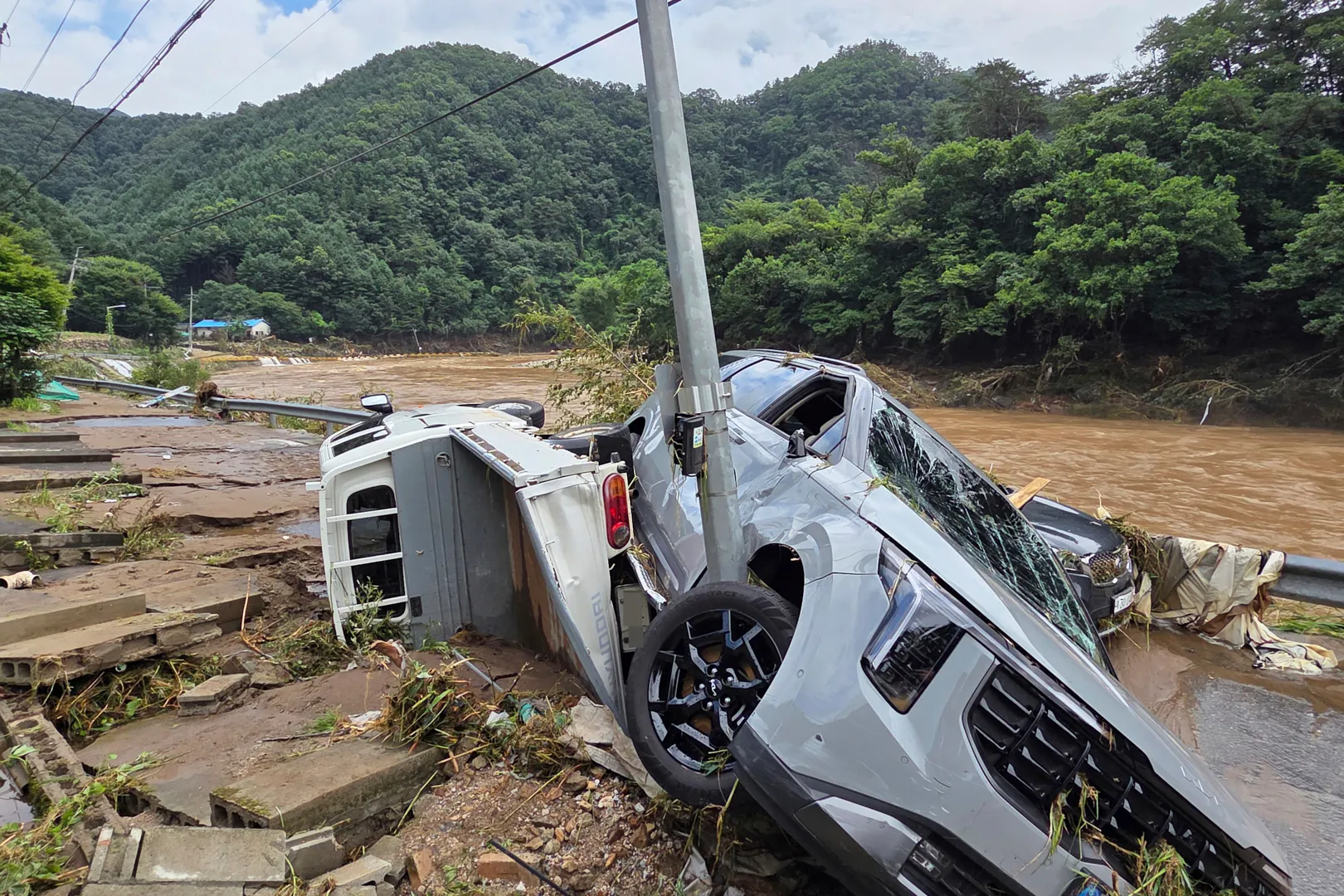

Seoul [South Korea], July 20: South Korea is grappling with deadly flash floods and landslides triggered by record-breaking rainfall, with at least 14 people confirmed dead and 12 still missing, according to Al Jazeera. The most heavily impacted region is Sancheong County, where over 800 mm of rain has fallen since Wednesday.
🔴 Worst-Hit Areas and Casualty Count
- Sancheong County: 8 dead, 6 missing
- Hapcheon: 699 mm of rainfall
- Hadong: 621.5 mm of rainfall
- Gwangju (SW city): 2 reported missing
Sancheong, a rural community with about 33,000 residents, bore the brunt of the disaster. The total number of displaced residents has climbed to 12,921 people across 14 cities and provinces.
🛠️ Widespread Damage and Infrastructure Collapse
South Korea’s interior ministry and the Yonhap news agency have reported:
- 1,920 incidents of public infrastructure damage (roads, landslides, facilities)
- 2,234 reports of private property damage (homes, farms, buildings)
- Power outages and service disruptions, particularly in Sancheong and Gapyeong
- Around 90% of mobile networks and 98% of landline services have since been restored
🌧️ Unprecedented Rainfall and Climate Warning
The deluge comes during South Korea’s typical July monsoon season, but this year’s rains have been particularly severe, with some of the highest hourly totals ever recorded, according to national weather authorities.
Experts attribute the intensifying monsoon patterns to climate change, which has been linked to increasingly extreme and unpredictable weather events worldwide. A similar tragedy in 2022 saw at least 11 deaths from flooding in Seoul.
🛑 Emergency Response
Authorities have mobilized emergency services for search-and-rescue operations in affected areas, while temporary shelters have been set up for evacuees.
📢 What’s Next?
With rain forecast to continue in some parts of the country, officials are urging citizens to remain alert and follow evacuation guidance. Scientists and officials stress the urgent need for climate-resilient infrastructure to mitigate future disasters.