

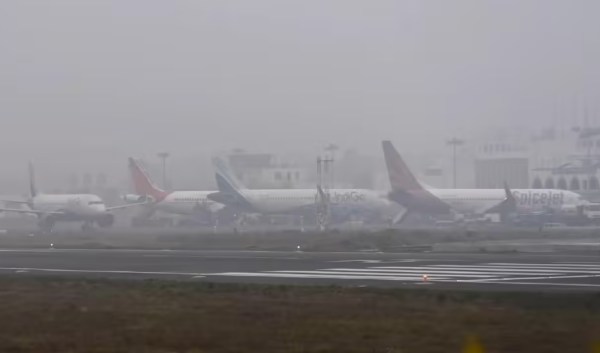

A thick and toxic layer of smog blanketed New Delhi on Monday morning, causing visibility to plummet and directly impacting flight operations at the Indira Gandhi International (IGI) Airport.
The severity of the crisis is reflected in the official figures: the Air Quality Index (AQI) in the national capital stood at a ‘severe’ 454 at 7:05 AM, according to data from the Central Pollution Control Board’s (CPCB) Sameer app. This follows an AQI reading of 461 on Sunday, which marked the second-worst December air quality day on record.
Airport and Airline Advisories
Amid the severe pollution conditions, the Delhi airport issued a travel advisory on Monday morning, cautioning passengers about potential flight disruptions:
“Due to dense fog [smog], flight operations may experience disruptions. We are working closely with all stakeholders to minimise inconvenience to passengers. For the latest flight updates, passengers are advised to contact their respective airlines. We sincerely regret any inconvenience caused.”
Airline carrier IndiGo, which has faced significant flight disruptions recently, also issued an advisory on social media, requesting passengers to monitor their flight status closely:
“Low visibility and fog over #Delhi will impact flight schedules. We’re keeping a close watch on the weather and doing our best to get you where you need to be, safely and smoothly… Be assured, our teams are here to assist you at every step and ensure support,” the airline posted on X.
IndiGo further urged travelers to allow additional time for their journey to the airport, anticipating that road traffic would be slower due to the hazardous haze.
Smog Blankets the Capital
The thick layer of toxic air was visible across various parts of Delhi, with AQI readings hovering near the maximum danger level of 500:
- Akshardham: AQI stood at 493.
- Barakhamba Road: AQI recorded 474.
- Barapulla flyover: AQI was 433.
(Note: An AQI between 401 and 500 is classified as ‘severe’, posing serious health risks.)
GRAP Stage IV Measures in Effect
The deteriorating air quality forced the Commission for Air Quality Management (CAQM) to invoke Stage IV of the Graded Response Action Plan (GRAP) on Saturday, representing the strictest measures available under the air pollution control plan. These measures include:
- A ban on all construction and demolition activities in the Delhi-NCR region.
- Directives for 50 per cent of staff in government and private offices to work from home.
- Orders for all schools until Class 11 (excluding Class 10) to conduct classes in a hybrid mode (both physical and online).