

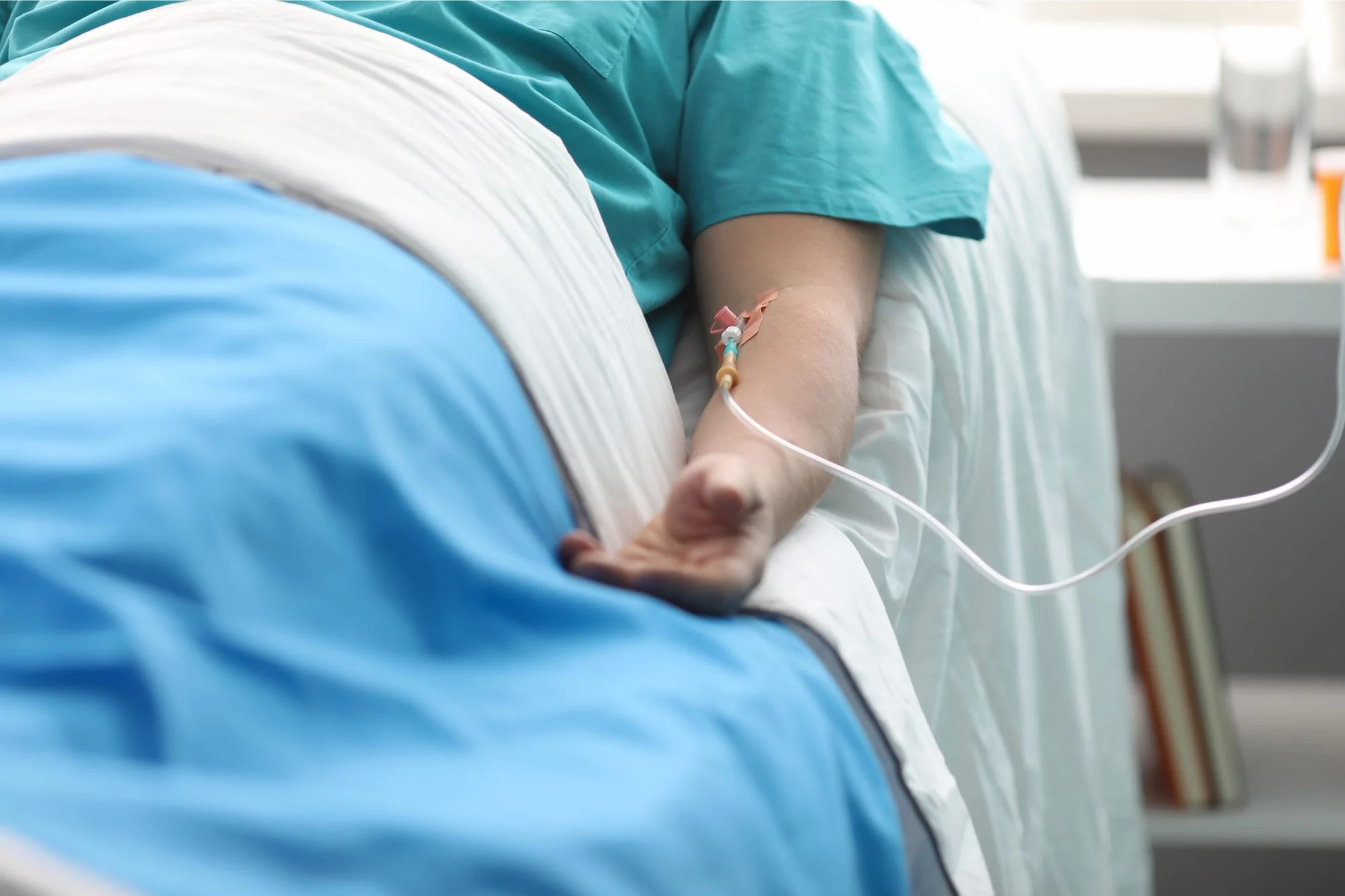

New York City [US]: New research from Columbia University and NewYork-Presbyterian suggests that examining brain waves indicative of normal sleep patterns may help identify unresponsive brain-injury patients with hidden consciousness who are likely to recover in the long term. Over the past decade, studies have indicated that up to a quarter of unresponsive patients with recent brain injuries might have a hidden level of consciousness that remains unnoticed by both families and physicians.
“We’re at an exciting crossroad in neurocritical care where we know that many patients appear to be unconscious, but some are recovering without our knowledge. We’re starting to lift the lid a little bit and find some signs of recovery as it’s happening,” said Jan Claassen, associate professor of neurology at Columbia University Vagelos College of Physicians and Surgeons, who led the study.
Claassen, who also serves as the chief of critical care and hospitalist neurology at NewYork-Presbyterian/Columbia University Irving Medical Center, previously developed techniques to identify hidden consciousness by analyzing EEG recordings of patients responding to commands. However, these methods can be complex and prone to false negatives.
The new approach focuses on sleep patterns, particularly looking for sleep spindles—bursts of fast frequencies that signify organized brain activity. These spindles suggest that the circuits between the thalamus and cortex, essential for consciousness, are intact.
“I’m always thinking about how my work can be best implemented and used in the real world, and looking at sleep made sense practically and scientifically,” Claassen explained. “Sleep brain waves are easy to record and do not require intervention from the care team.”
In the study, researchers analyzed EEG recordings of overnight brain activity in 226 comatose patients. They discovered that patients displaying sleep spindles were more likely to regain consciousness and achieve functional independence. Among patients with both sleep spindles and cognitive motor dissociation, 76% showed evidence of consciousness by hospital discharge, and 41% recovered neurological function a year later. In contrast, only 29% of patients without these markers regained consciousness by discharge, and a mere 7% recovered neurological function a year later.
Claassen noted that while the findings are promising, they currently apply only to patients with recent injuries and not those with long-term disorders of consciousness. The appearance of normal sleep spindles was typically observed within days of the injury.
“I see these spindles as a way to direct more sophisticated testing to the patients most likely to benefit,” Claassen said, emphasizing that more research is needed before these techniques can be implemented in clinical practice.
The study also raises the possibility that improving the sleep environment in intensive care units—typically loud and disruptive—might enhance recovery outcomes.
“If you think about the ICU environment, it is rather disruptive for a good night’s sleep. There is noise everywhere, alarms going off, clinicians touching them, 24/7. This is all for a good reason, but it’s hard to sleep in that environment,” Claassen added.
The researchers caution that the predictors are not foolproof, as some patients without sleep spindles or cognitive motor dissociation did regain consciousness. Further studies are expected to refine these predictive methods.