

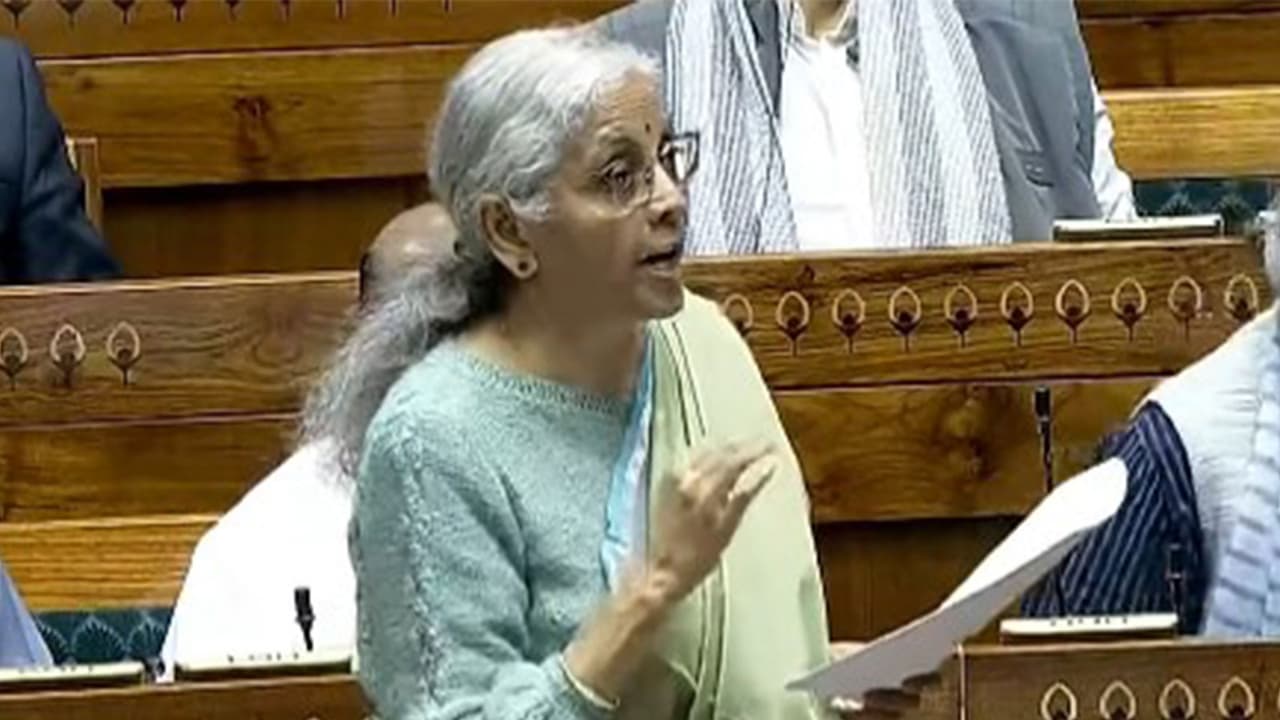

NEW DELHI — In a fiery 90-minute rebuttal in the Lok Sabha on Wednesday, February 11, 2026, Union Finance Minister Nirmala Sitharaman delivered a point-by-point response to Leader of Opposition (LoP) Rahul Gandhi. Rejecting his claims that the India-US trade deal “mortgaged” India’s future, Sitharaman alleged it was actually the Congress that “surrendered” India’s sovereign policy space at the World Trade Organization (WTO) in 2013.+1
The debate, which saw frequent interruptions from the Opposition, centered on food security, data sovereignty, and the “weaponization” of global finance.
1. The WTO “Surrender” vs. The 2014 Recovery
Sitharaman revisited the 2013 Ninth Ministerial Conference (MC9) in Bali, accusing the then-UPA government of signing a deal that would have ended India’s Public Distribution System (PDS) by 2017.
- The Bali Pact: She alleged that the 2013 agreement on the “peace clause” was a sell-out of farmers, as it lacked a permanent solution for public stockholding, potentially making MSP procurement illegal under WTO rules after four years.
- The Modi Intervention: Sitharaman highlighted her own role as Commerce Minister in 2014, where the new government refused to ratify the Trade Facilitation Agreement until the peace clause was made perpetual.
- The Result: “If we had not fought and secured the peace clause, we would not have been able to provide free ration to 80 crore people during the pandemic,” she asserted.
2. Budget 2026: Fortifying Against “Weaponized” Finance
Addressing Rahul Gandhi’s concerns about the “weaponization of energy and finance” by global superpowers, the Finance Minister pointed to specific buffers in the ₹53.47 lakh crore Budget.
| Provision | Allocation (FY27) | Purpose |
| Economic Stabilization Fund | ₹50,000 Crore | Buffer for global volatility and unanticipated shocks. |
| Technology Security Fund | ₹9,800 Crore | Counters the weaponization of tech and finance. |
| Food Subsidy | ₹2.27 Lakh Crore | Ensures food security for 800 million citizens. |
| India AI Mission | ₹1,000 Crore | Supports domestic AI and data center infrastructure. |
3. Data Sovereignty and Employment
The FM dismissed Gandhi’s “data currency” argument, stating that the government is not allowing Indian data to flow abroad unchecked.
- Data Centers: The Budget provides incentives for setting up cloud and data centers in India to ensure data localization.
- Employment: By storing data locally, the government aims to create “new-age” jobs for Indian youth rather than exporting raw data assets.
4. Capital Expenditure and Federal Devolutions
Sitharaman reiterated that the Budget prioritizes infrastructure-led growth while maintaining fiscal discipline.
- Total Expenditure: Estimated at ₹53.47 lakh crore, a 7.7% increase over the previous year.
- Capex: Set at ₹12.22 lakh crore (3.1% of GDP), which rises to an “effective” capex of ₹17.1 lakh crore when including state assistance.
- SASCI: Capital expenditure loans for states have been increased to ₹2 lakh crore for 50 years to support regional development.