

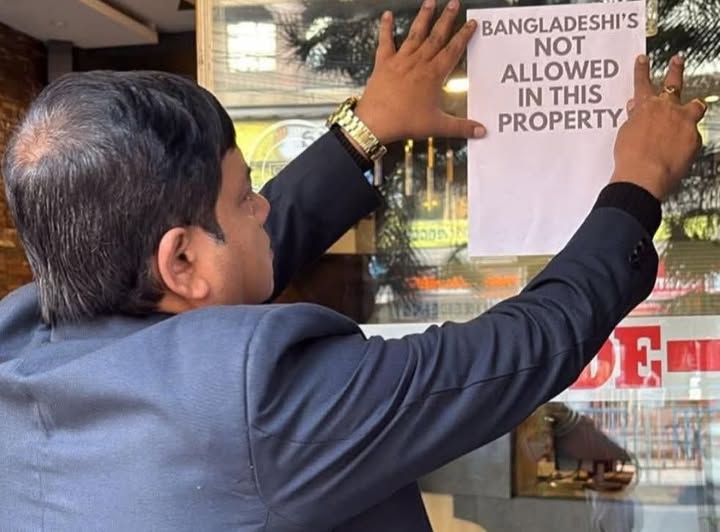

The hospitality sector in Siliguri, West Bengal, has taken a firm stand as the year draws to a close. Hotel owners in the key transit hub have announced an extension of their boycott against Bangladeshi nationals, confirming that the ban will remain strictly in place through the New Year festivities. The decision comes as a direct response to recent anti-India campaigns and reported atrocities against minority communities across the border.
“Country First, Business Later”: Association Stands Firm
The Greater Siliguri Hotel Welfare Association has been vocal about the motivations behind this drastic measure. Unlike previous years where humanitarian exceptions were made, the current stance is absolute.
Ujjwal Ghosh, the association’s Joint Secretary, emphasized that the boycott is no longer selective. “No Bangladeshi nationals are being allowed to stay in any hotel this time,” Ghosh stated. He noted that even individuals traveling on student visas or those seeking urgent medical treatment—groups previously granted leniency—are now being turned away.
“The anti-India statements being made by Bangladesh must be restrained. First comes the country’s identity, then business. Business cannot be given priority by hurting the country’s identity,” Ghosh added.
A Unified Front Across the City
This sentiment is echoed by the broader hotelier community in Siliguri. Sandip Kumar, Secretary of the Association, highlighted that the movement has gained traction even among hotel owners who are not official members of the organization. According to Kumar, the community is united in its refusal to provide facilities to those seen as disparaging India.
Hotel managers on the ground are already enforcing the mandate. Tanmay Mani, a local hotel manager, recalled that during the last New Year period, relaxations were offered to students and patients. “But now,” Mani confirmed, “we are totally boycotting Bangladeshi nationals.” Posters announcing the ban have become a common sight in hotel lobbies across the city.
Political Friction and Security Concerns
The boycott in Siliguri mirrors a tightening of rhetoric at the national level. During a recent visit to West Bengal, Union Home Minister Amit Shah addressed the escalating concerns regarding the state’s porous borders.
Shah pointedly criticized Chief Minister Mamata Banerjee, accusing her administration of obstructing national security efforts. “It is the West Bengal government which is not allotting land to establish border fencing along Bangladesh,” Shah claimed during a press conference.
He further argued that while states like Assam and Tripura have successfully curtailed illegal entry, West Bengal remains a primary point for infiltration. According to the Home Minister, this is a strategic move by the state government to alter regional demographics for political gain—a claim that adds a layer of political urgency to the local boycott in Siliguri.
Ongoing Regional Unrest
The decision by Siliguri’s hoteliers is deeply rooted in the broader geopolitical climate. Reports of violence against Hindus in Bangladesh, including recent reports of a lynching in Mymensingh, have sparked protests across India. Even leaders like Asaduddin Owaisi have weighed in, noting that such acts of violence contradict the constitutional values of any democratic nation.
As Siliguri enters its busiest tourism season, the hotel industry’s message remains clear: until there is a perceived shift in the neighboring country’s attitude toward India, the doors to Siliguri’s hospitality will remain closed.