

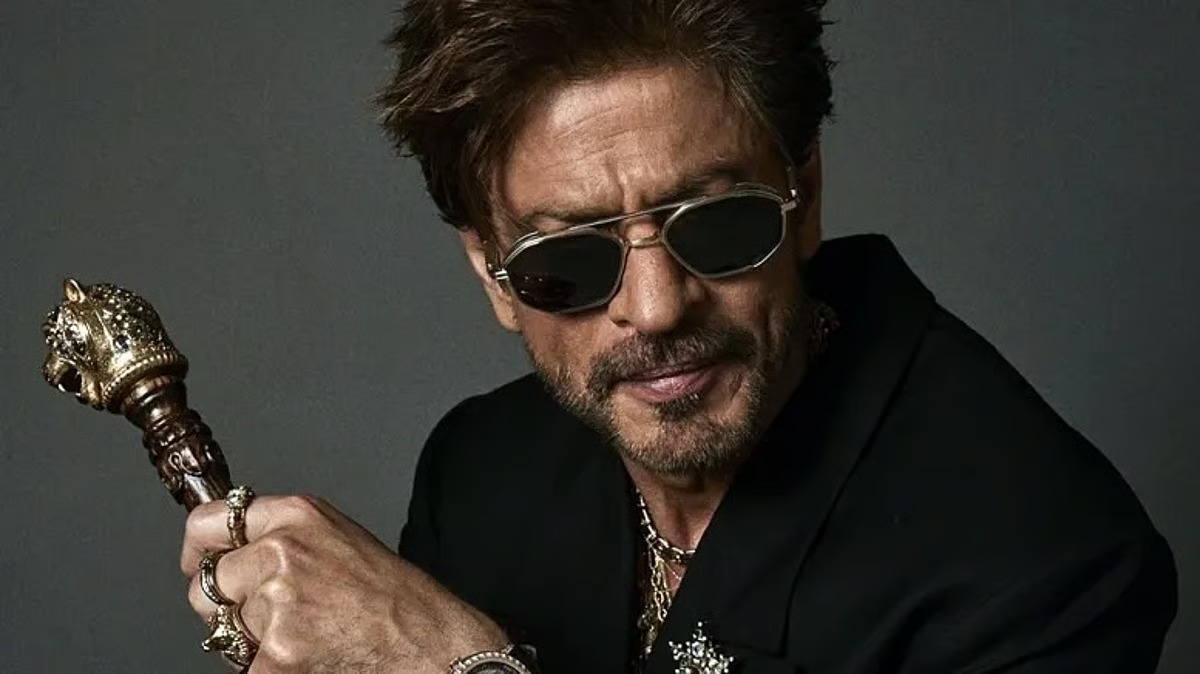

NEW DELHI – In a momentous occasion for Indian cinema, superstar Shah Rukh Khan has finally won his first National Film Award for Best Actor for his powerful performance in the blockbuster film Jawan. The prestigious honor, announced today at the 71st National Film Awards, marks a significant milestone in a career that has spanned over 33 years. He shares the award with actor Vikrant Massey, who was also honored for his role in the film 12th Fail.
The National Film Awards, the highest honor in Indian cinema, have long eluded the iconic actor, despite numerous critically acclaimed performances. Throughout his career, Shah Rukh Khan delivered roles that were both commercially successful and artistically profound, yet the top prize remained out of reach.
For instance, his restrained portrayal of an NRI reconnecting with his roots in Swades (2004) was widely praised but lost the Best Actor award to Saif Ali Khan for Hum Tum. Similarly, his quietly intense role as a disgraced hockey coach in Chak De! India (2007) earned the film the National Award for Best Popular Film, but the acting honor went to Hrithik Roshan for Dhoom 2. In 2010, his nuanced performance as a man with Asperger’s Syndrome in My Name Is Khan earned him global praise and several international accolades, but the National Award was given to Amitabh Bachchan for Paa.
With Jawan, directed by Atlee, Shah Rukh Khan captivated audiences in a dual role as a vigilante father-son duo fighting against corruption and social injustice. The film’s critical and commercial success, combined with the actor’s magnetic performance, finally culminated in this long-overdue recognition. The film was celebrated for its blend of action, social commentary, and emotional depth, all anchored by Khan’s powerful screen presence.
The award is a testament to what many fans and critics have long believed: that Shah Rukh Khan is not just a beloved superstar but a formidable actor. This victory adds to his already extensive list of accolades, which includes the Padma Shri from the Government of India and two of France’s most prestigious civilian honors, the Ordre des Arts et des Lettres and the Legion of Honour.
This achievement not only validates his craft but also stands as a celebratory moment for Indian cinema, recognizing one of its most influential and enduring figures.