

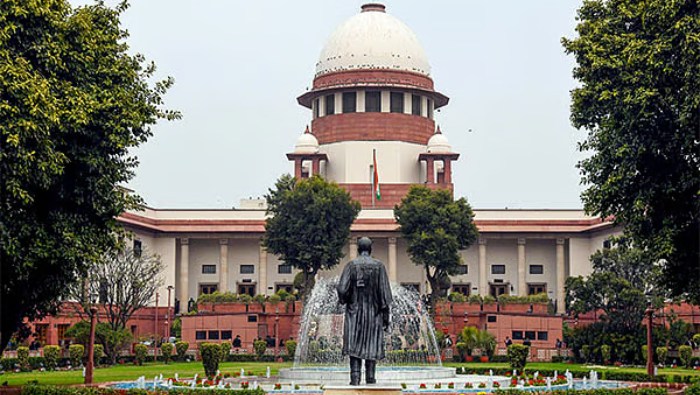

NEW DELHI – In a significant judgment defining the boundaries of Section 107 and Section 306 of the Indian Penal Code (IPC), the Supreme Court has ruled that a surviving partner in a mutual suicide agreement is criminally liable for the death of the other. The bench, comprising Justices Rajesh Bindal and Manmohan, held that such pacts “directly facilitate” suicide through mutual encouragement and psychological reinforcement.
The ruling comes as the final chapter in a saga spanning over two decades. The court affirmed a two-year jail sentence for Gudipalli Siddhartha Reddy, who survived a 2002 suicide attempt that claimed the life of his partner, actress Prathyusha.
The “Catalyst” of Mutual Resolve
Justice Manmohan, authoring the judgment, articulated that abetment is not limited to providing the physical means of death. The court observed that in a suicide pact, the commitment of one partner acts as a psychological catalyst for the other.
“A suicide pact involves mutual encouragement and reciprocal commitment to die together,” the bench noted. “Each participant’s resolve is reinforced by the other’s participation. Withdrawal by one could deter the other; therefore, the survivor’s presence acts as a catalyst.”
The court emphasized the State’s fundamental interest in preserving life, asserting that any assistance in ending a life—even through mutual agreement—is a crime against the State.
Background: The 2002 Tragedy
Prathyusha, a rising star in the South Indian film industry, and Reddy, then an engineering student, had been in a decade-long relationship. Their plans to marry were met with fierce opposition from Reddy’s family, culminating in his mother allegedly threatening to take her own life if the marriage proceeded.
On February 23, 2002, the couple consumed a soft drink laced with Nuvacron, an organophosphate pesticide purchased by Reddy shortly before the incident. While both were hospitalized, Prathyusha succumbed to the poison, while Reddy survived and was discharged a month later.
Dismissal of Murder and Rape Allegations
The court also addressed the long-standing controversy surrounding the case, which was fueled by an initial post-mortem report suggesting manual strangulation and sexual assault. These claims, made public before forensic results were finalized, led to a CBI probe and widespread public outcry.
However, the Supreme Court categorically ruled out homicide. The bench cited:
- Medical Testimony: Prathyusha was conscious upon hospital admission and told doctors she had consumed poison.
- Forensic Evidence: Reports confirmed the presence of pesticide in the internal organs of both the deceased and the accused.
- Lack of Trauma: Multiple witnesses testified to the absence of injuries consistent with strangulation or assault.
The bench criticized the “erroneous” and premature publication of the initial post-mortem opinion, warning that justice should not be dictated by “majority sentiment or public pressure.”
Final Verdict
While the sessions court had originally sentenced Reddy to five years, the Andhra Pradesh High Court reduced it to two years in 2011. The Supreme Court has now upheld that two-year term, dismissing an appeal by Prathyusha’s mother for harsher charges.
Reddy has been granted four weeks to surrender to the authorities to serve the remainder of his sentence.