

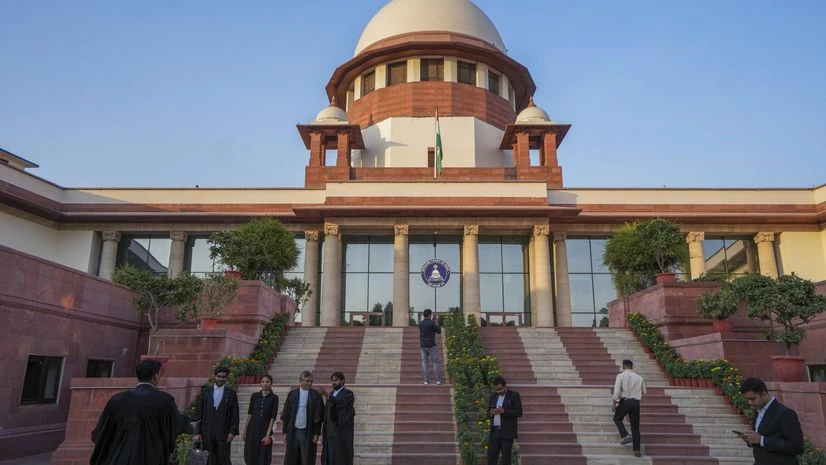

New Delhi: The Supreme Court of India on Friday refused to entertain a petition seeking the establishment of uniform, pan-India guidelines to govern how social media intermediaries handle the suspension and blocking of user accounts. The guidelines, as sought by the petitioners, aimed to ensure “due process, transparency, and proportionality” in such actions.
A bench of Justices Vikram Nath and Sandeep Mehta allowed the two petitioners to withdraw their plea, advising them to pursue any other suitable legal remedy before an appropriate forum.
The counsel representing the petitioners brought the grievance before the apex court, explaining that their WhatsApp account—which they had used for the past 10 to 12 years to communicate with clients for their clinic and polydiagnostic centre—had been blocked without any prior notification or reason.
“There are other communication applications, you can use that,” Justice Nath observed during the hearing, before questioning why the petitioners’ WhatsApp account was blocked. When the counsel confirmed that no reason had been provided by the platform, the bench posed a fundamental question to the petitioners: “What is your fundamental right to have access to WhatsApp?”
The bench then raised doubts about the petitioners’ decision to approach the Supreme Court directly with a petition under Article 32 of the Constitution, which deals with the enforcement of fundamental rights.
Furthermore, when the petitioners’ counsel argued that their account was blocked without an opportunity to respond, the bench questioned the basic premise of the plea: “Is WhatsApp or the intermediary, a state?”
Upon receiving a negative reply, the court observed that even a writ petition—which is generally used to seek judicial review against a state or public body—might not be maintainable before a High Court. The judges ultimately suggested that the petitioners could consider filing a civil suit to address their grievance against the private messaging platform. The court also made a passing remark that an indigenous messaging application has recently been created, which the petitioners were free to use for client communication.