

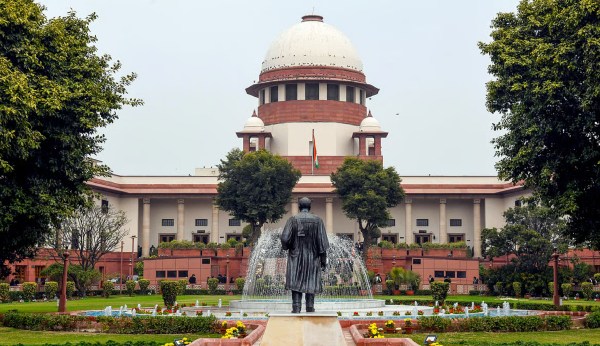

New Delhi: The Supreme Court of India told all States and Union Territories (UTs) on Wednesday that they must pay compensation for deaths caused by manual scavenging within three weeks of the incidence.
While keeping an eye on the implementation of its full judgment dated October 20, 2023, which asked for all necessary actions to end the “inhuman practice of manual scavenging,” a bench made up of Justices Aravind Kumar and NV Anjaria passed the order.
Payments and amounts of compensation right away
The court’s most recent order was mainly about giving victims’ families immediate help while waiting for more information on the right amount of compensation.
Minimum Payment Required: The court said that even while its 2023 decision raised the payment for cleaning sewers or drains from ₹10 lakh (which has been in effect since 1993) to ₹30 lakh, it is still not clear if the higher amount applies to past work as well. The bench ordered:
“This court has already ordered compensation and a quantum, but the question of whether ₹10 lakh or ₹30 lakh should be paid is still open. We don’t see any reason why states and UTs shouldn’t pay at least ₹10 lakh.”
Deadline and Penalty: The court said this minimum amount must be paid in three weeks. If they don’t follow the rules, the public works department’s secretary will have to go to court.
Hint on New Quantum: The SC intimated that the state or UT in question will probably have to pay the full enhanced amount of ₹30 lakh set by the top court if someone dies after the 2023 ruling.
Paying for injuries and rehabilitation
The order also made it plain how much money sewer workers should get for injuries they got on the job:
Disability: If a sewer victim has a disability, the State/UT must pay them at least ₹10 lakh in compensation.
Permanent Disability: If the disability is permanent, the minimum amount of money that must be paid is ₹20 lakh.
The 2023 ruling also said that officials in every state and UT have to do things to help the victims and their families get back on their feet. This includes giving the victims’ family members scholarships and training to help them learn new skills.
Legal Background and Failure to Implement
Balram Singh filed a Public Interest Litigation (PIL) in court, asking for the effective enforcement of existing laws, such as the Employment of Manual Scavengers and Construction of Dry Latrines (Prohibition) Act, 1993, and the Prohibition of Employment as Manual Scavengers and their Rehabilitation Act, 2013.
The court pointed out that implementation has primarily stayed “on paper,” even if these rules are in place. The Supreme Court had already told the Union government to take the right steps and tell all of its statutory bodies—like businesses, railways, cantonments, and other agencies—to make sure that manual sewer cleaning is completely stopped in stages.
The ruling brought attention to the terrible numbers, saying that at least 347 persons died while cleaning sewers and septic tanks in India in the five years leading up to July 2022. Uttar Pradesh, Tamil Nadu, and Delhi were responsible for 40% of those deaths.
As amicus curiae in the case, senior counsel K. Parameshwar helped the court a lot.