

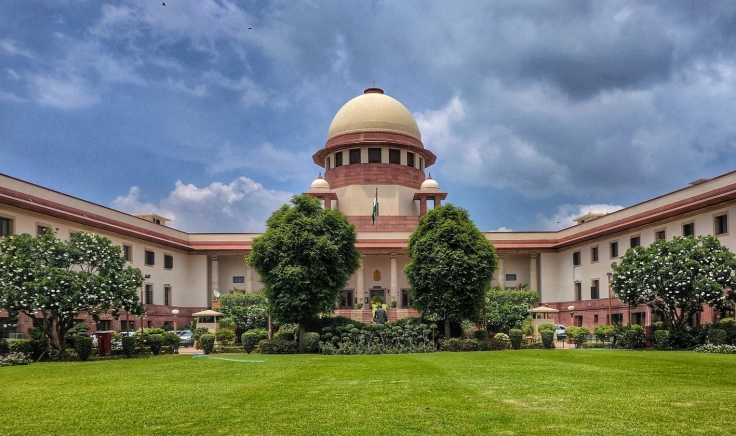

A five-judge Constitution bench of the Supreme Court, headed by Chief Justice of India (CJI) Bhushan R Gavai, will begin hearings on July 22 on the presidential reference concerning the legality of prescribing timelines for the President and state governors to act on bills passed by state legislatures.
The eagerly awaited hearing will be conducted by a bench comprising the three most senior judges of the court — CJI Gavai, Justice Surya Kant, and Justice Vikram Nath, along with Justices PS Narasimha and Atul S Chandurkar.
Notably, the bench includes four current or future Chief Justices of India, with Justice Surya Kant set to take over in November 2025, followed by Justices Vikram Nath in February 2027 and Justice Narasimha in October 2027.
The decision to refer the matter to a five-judge Constitution bench followed an internal debate within the apex court. It was concluded—after examining precedents and Supreme Court rules—that advisory matters under Article 143 must be directly heard by a Constitution bench, even for issuing preliminary notices.
“After going through the precedents and the pertinent provisions under the Constitution and the Supreme Court rules, it was suggested that it would be in fitness of things for a five-judge bench to take up the matter even for a preliminary hearing,” said a person involved in the process.
“There was an unequivocal view that since the advisory jurisdiction under Article 143 involves a substantial question of constitutional law, it must be heard by a Constitution bench right from the beginning,” the person added.
The reference, invoked by President Droupadi Murmu on May 13, seeks the Supreme Court’s advisory opinion on 14 legal questions that emerged from the April 8 judgment, which had laid down specific timelines for governors and the president to act on state bills.
That ruling, delivered by Justices JB Pardiwala and R Mahadevan, marked the first time the court set deadlines, including a three-month limit for the President to act on bills and an expectation for governors to act within one month. It also declared the governor’s inaction as “illegal”, invoking Article 142 to deem pending bills as having received assent.
The presidential reference has raised key constitutional concerns, including:
- Whether deemed assent is constitutionally valid.
- Whether the President and governors must follow judicially prescribed timelines, despite the Constitution being silent on the matter.
- Whether executive inaction before a bill becomes law is justiciable in courts.
- Whether Article 142 can override express constitutional provisions.
- Whether the President’s discretion under Article 201 is subject to judicial review.
- Whether Article 361 (constitutional immunity) bars such review.
- Whether disputes of this nature should be addressed under Article 131, or through writ jurisdiction.
“The questions go to the heart of Centre-State relations, the federal structure, and the limits of judicial and executive powers,” said a government official familiar with the drafting process.
“This is not just about one judgment, but the architecture of how laws are made and how constitutional roles are performed.”
The questions were framed after consultations between Attorney General R Venkataramani, Solicitor General Tushar Mehta, and the Union Law Ministry. The process began following the receipt of the Supreme Court’s April 8 ruling and concluded with the final submission to the President’s secretariat by May 7.
Since Independence, Article 143 has been invoked at least 14 times, mostly to seek advice on complex constitutional questions of national importance. While not binding, the court’s advisory opinions have traditionally played a significant role in shaping constitutional law.