

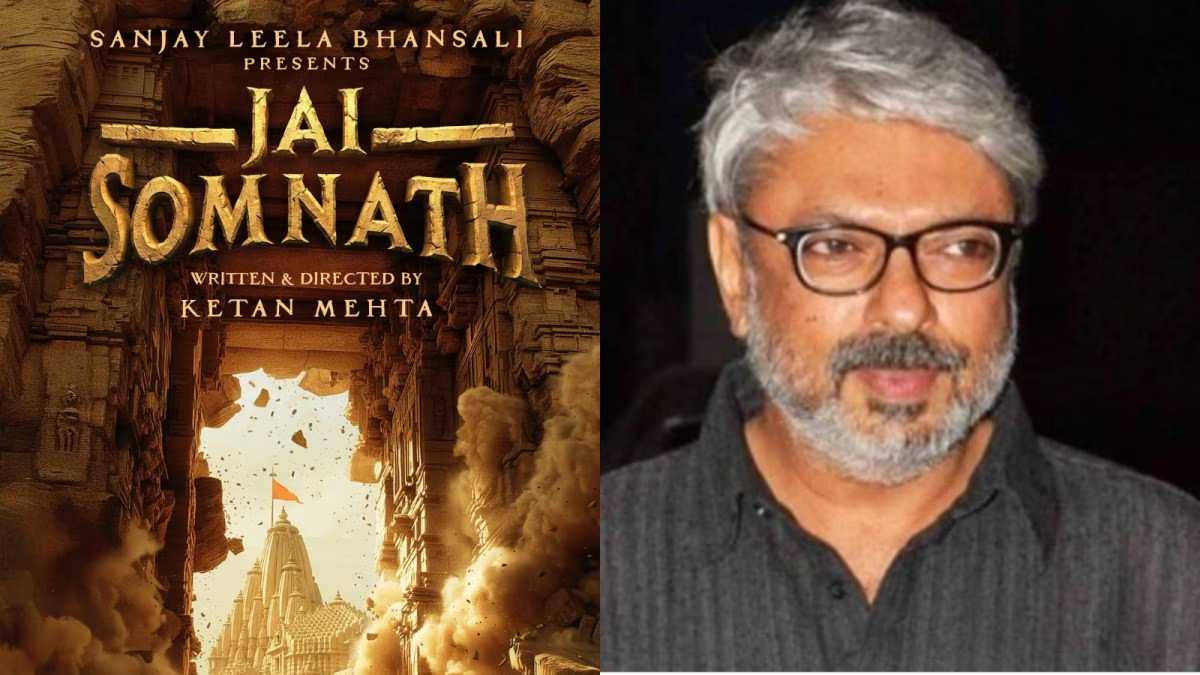

In a major cinematic announcement on the occasion of Maha Shivratri (Sunday, February 15, 2026), filmmaker Sanjay Leela Bhansali revealed his next grand project, Jai Somnath.
Breaking from his usual role as director, Bhansali will produce this historical magnum opus, while the critically acclaimed Ketan Mehta (Mirch Masala, Mangal Pandey: The Rising) will take the helm as writer and director. The film is slated for a worldwide theatrical release in 2027.
A Tale of Resilience: The Plot
Jai Somnath is being described as a “seminal tale of Indian civilisation.” The film will revisit one of the most pivotal and dramatic chapters in Indian history:
- The Setting: The story is set around 1025–1026 CE.
- The Conflict: It centers on the historic invasion and looting of the Somnath Temple in Gujarat by Mahmud of Ghazni.
- The Theme: Rather than just a story of destruction, the makers emphasize that it is a saga of resilience and rebirth—marking nearly 1,000 years since the temple’s restoration and symbolizing the “unbreakable spirit” of India.
Why the Collaboration is Significant
Both Bhansali and Mehta hail from Gujarat, adding a layer of personal and cultural connection to the project.
“I’ve always been a huge fan of Ketan Mehta’s cinema. His Mirch Masala is one of my ten favorite Indian films of all time. We’ve been toying with the idea of working together, and this project seems the best way to collaborate on something special.” — Sanjay Leela Bhansali
| Feature | Details |
| Director | Ketan Mehta (Known for research-heavy historicals). |
| Producer | Bhansali Productions & Maya Movies (Ketan Mehta’s banner). |
| Music Partner | Saregama (Indicating a massive musical scale). |
| Release Window | 2027 (Marking a long production cycle for high VFX/Scale). |
Current Bhansali Projects
While Jai Somnath begins its journey, Bhansali is currently occupied with:
- “Love & War”: Starring Ranbir Kapoor, Alia Bhatt, and Vicky Kaushal. Its release was recently postponed to late 2026/early 2027 to follow the release of Ramayana: Part 1.