

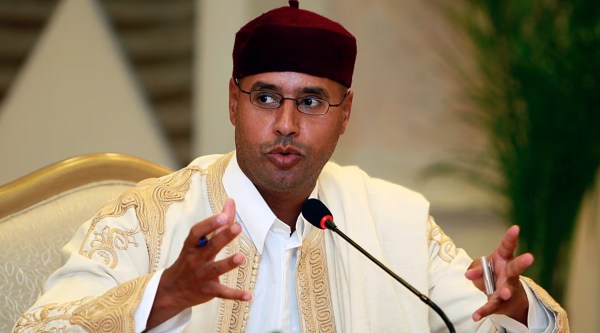

TRIPOLI — Saif al-Islam Gaddafi, the most prominent son and one-time successor to the late Libyan dictator Muammar Gaddafi, was assassinated on Tuesday, February 3, 2026. The 53-year-old was killed during a targeted armed raid at his high-security residence in the western city of Zintan, where he had lived under the protection of local militias for over a decade.
The Libyan Attorney General’s Office confirmed on Wednesday morning that forensic examinations determined the cause of death to be multiple gunshot wounds sustained during a “direct confrontation” with the assailants.
1. The Assassination: A “Four-Man Commando” Operation
According to statements from his political advisor, Abdullah Othman Abdurrahim, and his lawyer, Khaled el-Zaydi, the attack was highly coordinated:
- The Breach: At approximately 12:00 PM (Noon) on Tuesday, four masked gunmen storming the residence first disabled all surveillance cameras at the site.
- The Confrontation: A brief but violent gun battle ensued between the assassins and Saif al-Islam’s personal security.
- The Outcome: Saif al-Islam was “executed” at the scene. The attackers fled and remain at large.
- Security Warnings: His French lawyer, Marcel Ceccaldi, revealed that Saif had been warned of security breaches just days prior but had reportedly refused additional tribal reinforcements.
2. Potential Suspects and Denials
The killing has triggered a wave of denials from Libya’s powerful military factions, each fearing the assassination could be used as a pretext for a new civil war.
- The 444 Combat Brigade: One of the most powerful armed groups in western Libya “categorically” denied any involvement in the incident.
- Zintan’s Role: While Saif had been a guest/prisoner of the Abu Bakr al-Sadiq Brigade in Zintan since 2011, the city’s complex web of loyalties has recently shifted, with some factions favoring the Tripoli-based Government of National Unity (GNU).
3. The Life and Legacy of the “Reformer-Turned-Architect”
Saif al-Islam’s death marks the end of a turbulent political journey that mirrored Libya’s own descent from autocracy to anarchy.
| Era | Role | Key Actions |
| Pre-2011 | The “Western Face” | Negotiated the Lockerbie compensation and the end of Libya’s WMD program. |
| 2011 Uprising | The Hardliner | Famously warned of “rivers of blood” and called rebels “rats.” |
| 2011–2017 | Captive | Held in Zintan after being captured in the desert disguised as a Bedouin. |
| 2021–2026 | Political Ghost | Attempted a presidential run in 2021, which became a primary factor in the election’s collapse. |
4. Impact on Libya’s Political Future
The assassination removes one of the most polarizing figures from the Libyan chessboard:
- Electoral Vacuum: His death effectively ends the “Gaddafist” bid for power, which had been gaining traction among those nostalgic for the relative stability of the pre-2011 era.
- Tribal Backlash: Security experts warn that Gaddafi-loyalist tribes, particularly in central and southern Libya, may see this as a “betrayal” by Zintan, potentially reigniting tribal warfare.
- ICC Implications: His death permanently closes the International Criminal Court (ICC) case against him for crimes against humanity.