

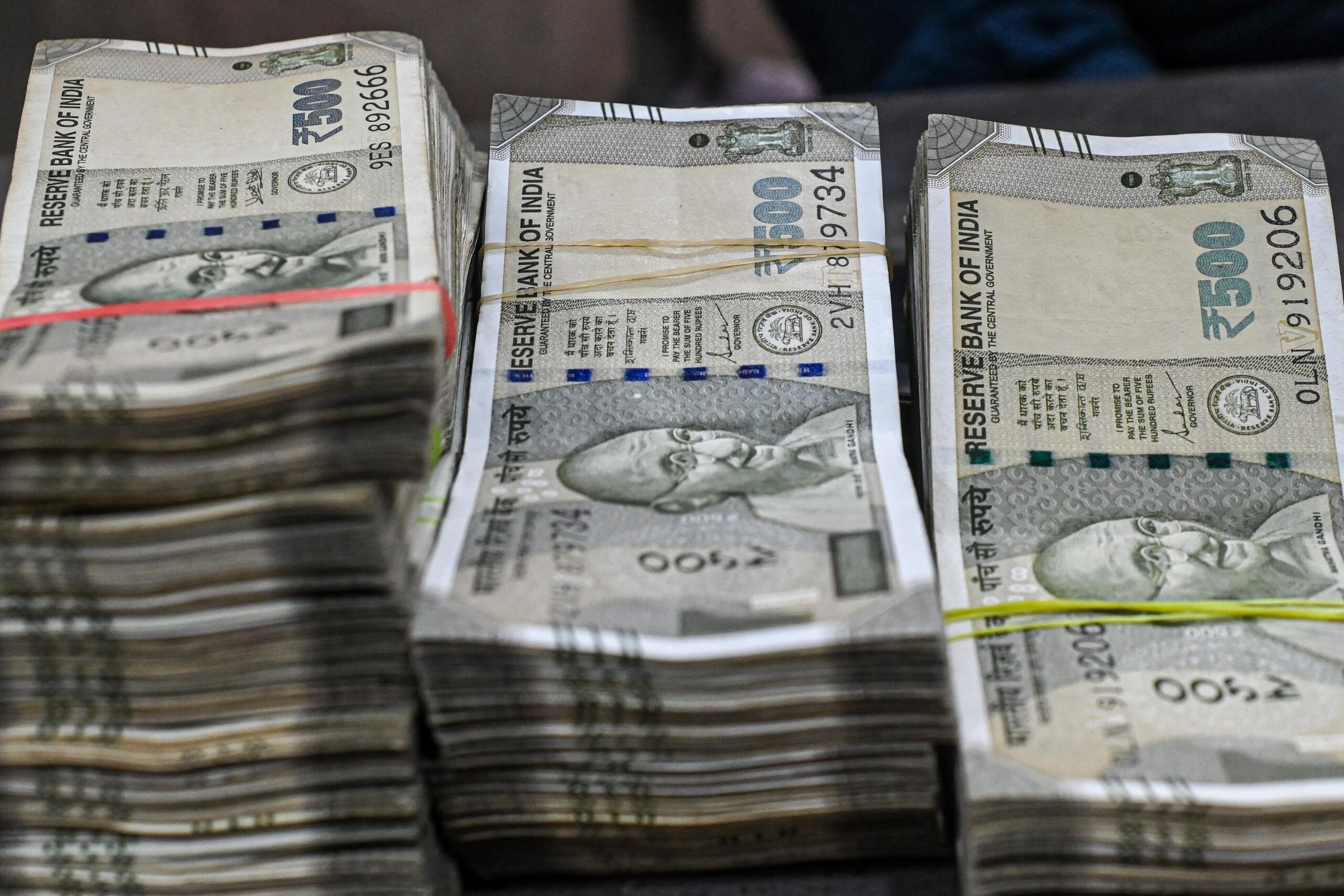

The Indian Rupee (INR) weakened significantly on Wednesday, breaching the psychologically critical 90 per US Dollar mark, driven by persistent foreign outflows and delayed progress on a crucial India-US trade deal. The depreciation solidifies the Rupee’s position as Asia’s worst-performing currency this year, having declined by 4.9% so far.
The Rupee hit a low of 90.13 per US Dollar in morning trade, eclipsing its previous all-time low of 89.9475 hit just one day prior. The currency was last trading down 0.3% on the day.
Market Pressures and RBI Intervention
Analysts point to high dollar demand from importers and a reluctance by exporters to sell dollars aggressively, combined with a perceived lack of forceful intervention from the Reserve Bank of India (RBI), as primary factors for the rapid slide.
“Exporters are not selling dollars aggressively since the rupee is depreciating, while the dollar demand from importers remains high,” Ritesh Bhansali, deputy chief executive officer at Mecklai Financial Services, told Bloomberg News.
Currency experts are urging the RBI to step in more decisively to curb speculative pressures. Anindya Banerjee, a currency analyst at Kotak Securities Ltd., warned, “If they allow the rupee to close above 90, we could see further speculative bets and the possibility of the rupee heading to 91.”
LKP Securities VP Research Analyst Jateen Trivedi noted that the recent slide is “hard to justify on a fundamental basis,” and that a move back above 89.80 is essential for any meaningful recovery.
Trade Deal Delay Weighs Heavily
The sustained currency weakness comes despite official data showing that India’s economy expanded at its fastest pace in six quarters in the July-September period.
According to financial firm Barclays, only a swift India-US trade deal is likely to provide any near-term respite to the Rupee. The absence of a trade pact, coupled with steep 50% tariffs on Indian goods, has weighed heavily on exporters. This, alongside strong import volumes keeping dollar demand high, has widened the country’s current-account deficit and added significant pressure to the currency.
The sustained weakness risks deterring foreign portfolio investors, who have already pulled out a net $16 billion from India’s stock market this year, and threatens to stoke domestic inflation, especially for the fuel-importing nation. With the RBI monetary policy review due on Friday, markets are eagerly awaiting clarity on the central bank’s strategy to stabilize the currency.