

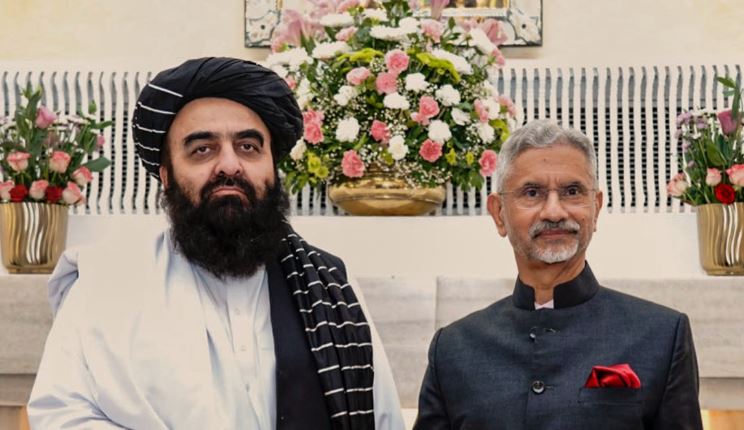

A major controversy has erupted over the decision to bar women journalists from attending a press conference at the Afghanistan Embassy in New Delhi on Friday. The press interaction followed bilateral talks between India’s External Affairs Minister S. Jaishankar and Afghanistan’s Foreign Minister Amir Khan Muttaqi.
The move has drawn strong condemnation from the Opposition, media bodies, and press organizations, who are demanding an explanation from the central government for what they term a “shocking” allowance of gender discrimination on Indian soil.
Government and BJP Responses
Facing intense backlash, the Ministry of External Affairs (MEA) released a statement on Saturday asserting it had “no involvement” in the press interaction organized by the Afghan Foreign Minister.
The ruling BJP echoed this defense, stating that the press conference took place inside the Embassy of Afghanistan, where the Indian government has no jurisdiction. A BJP worker, in response to criticism from Congress MP Rahul Gandhi, argued that blaming the Indian government for an act committed within the embassy’s premises was unfair.
Rahul Gandhi had slammed Prime Minister Narendra Modi, saying that by allowing the exclusion of women journalists, the government was signaling a failure to stand up for women in India.
Diplomatic Immunity and the Vienna Convention
Media bodies, including the Editors Guild of India and the Indian Women Press Corps, have condemned the ban, arguing that diplomatic immunity does not justify blatant gender discrimination.
The heart of the controversy lies in the interpretation of the Vienna Convention on Diplomatic Relations (1961).
- Inviolability of Mission Premises (Article 22): The Convention confirms that a diplomatic mission’s premises are inviolable. This grants the mission immunity from physical entry or enforcement of local laws by the host country’s law enforcement, unless consent is given. This concept is often mistakenly believed to mean embassies are “foreign soil,” but the embassy legally remains part of the host country’s territory (India, in this case).
- Duty to Respect Local Laws (Article 41): Critics of the ban point to Article 41, which explicitly states that it is the duty of all persons enjoying diplomatic privileges and immunities “to respect the laws and regulations of the receiving State” and not to interfere in its internal affairs.
The Opposition argues that the ban on women journalists flouts India’s Constitution, which enshrines gender equality, and that diplomatic immunity should not be used as a shield to ignore the fundamental principles of the host country.