

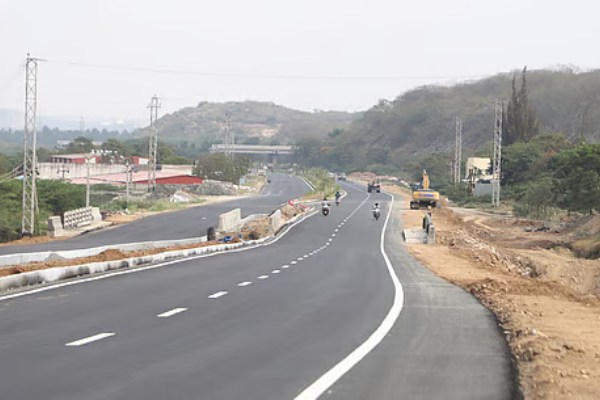

NEW DELHI — In a major push to streamline one of the capital’s busiest arterial corridors, the Public Works Department (PWD) announced on Thursday, February 5, 2026, a trial project to make the Rajghat and Shanti Van intersections on Ring Road entirely signal-free. The initiative aims to eliminate long idling times at red lights by redirecting turning traffic through redesigned U-turns.
1. The Plan: U-Turns Over Traffic Lights
The trial focuses on “channelling” traffic rather than stopping it. The core changes include:
- Intersection Closure: The existing signal-controlled crossings at Rajghat and Shanti Van will be closed using sliding, retractable safety barriers.
- Strategic U-Turns: Extended U-turns will be provided at least 100 to 150 metres away from the current intersections to allow for continuous vehicle flow.
- Infrastructure Upgrades: To support the high volume of heavy transport and private vehicles, the PWD will install:
- “Cat Eyes” (Reflective Pavement Markers): For better lane visibility at night.
- Flexible Median Markers: To prevent unsafe lane cutting near turning points.
- Advanced Signage: Providing clear directions to motorists well before they reach the turning zones.
2. Project Costs & Objectives
| Feature | Details |
| Estimated Cost | ₹49.02 Lakh |
| Primary Goal | Reducing signal dependency and “crossing conflicts.” |
| Affected Areas | Commuters travelling between North, Central, and East Delhi. |
| Trial Basis | Expansion to other Ring Road junctions depends on on-ground performance. |
3. Expert View: A Cautious Optimism
While the move is welcomed by traffic police, urban transport experts suggest the impact might be nuanced.
- The “Crawling” Factor: S. Velmurugan, Chief Scientist at CSIR-CRRI, noted that while the road is wide enough for U-turns (four lanes in each direction), it may lead to vehicles “crawling” through turns rather than moving at high speeds.
- The Speed-Safety Paradox: Experts warn that making a stretch signal-free often increases vehicle speeds, which could pose a significant risk to pedestrians visiting the Rajghat and Shanti Van memorials.
- Staggered Congestion: Some planners argue that signal-free models simply shift the traffic queue to the next available bottleneck rather than eliminating the total volume of cars.
4. Why This Stretch Matters
Ring Road remains Delhi’s most vital transport spine. The Rajghat-Shanti Van node is unique because it handles a heavy mix of inter-state buses, commercial trucks, and private cars. PWD officials believe that even a marginal reduction in waiting time here will have a “cascading effect,” easing pressure on adjoining routes like Vikas Marg and the DND Flyway.