

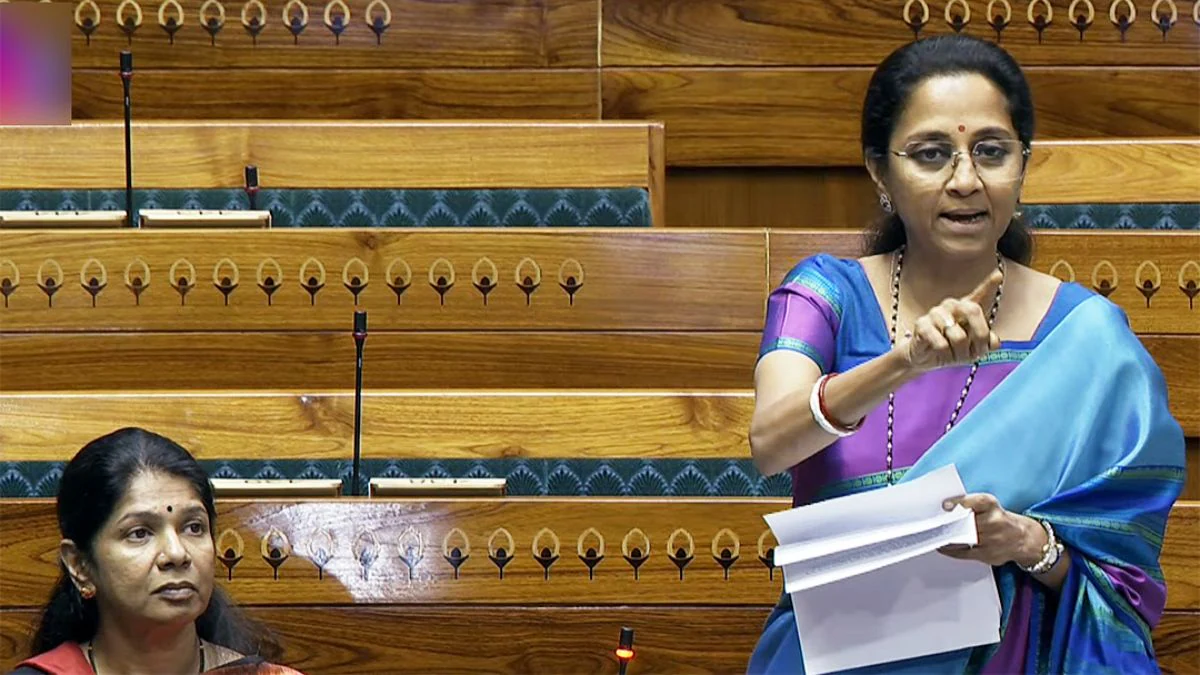

The Right to Disconnect Bill, 2025 was introduced in the Lok Sabha on Friday, the fifth day of Parliament’s winter session which began on December 1. Supriya Sule, Member of Parliament from the Nationalist Congress Party (Sharadchandra Pawar), tabled the private member’s bill seeking to legally allow employees to disconnect from work-related communication after office hours.
The proposed legislation aims to give workers the right to ignore emails, calls, messages, or any other form of work-related electronic communication outside their official working hours or during holidays. Sule said the bill “fosters a better quality of life and a healthier work-life balance by reducing the burnout caused by today’s digital culture.”
According to the bill’s text, the Right to Disconnect Bill, 2025 seeks to establish an employees’ welfare authority to oversee and protect the rights granted under the proposed law. This would ensure workers are not punished, penalised, or held legally accountable for refusing to respond to after-hours work communication.
What the Right to Disconnect Bill Proposes
As per Supriya Sule’s statement while tabling the bill, the primary objective is to “confer the right on every employee to disconnect from work-related telephone calls and emails beyond work hours and on holidays.” She also shared a video clip of her presentation on X (formerly Twitter), emphasising that the bill is designed to address growing burnout in India’s digital work culture.
Other Bills Introduced by Supriya Sule
Alongside the Right to Disconnect Bill, Sule introduced two additional private member’s bills on Friday:
- Paternity and Paternal Benefits Bill, 2025 – This bill seeks to introduce paid paternal leave, giving fathers the legal right to participate in their child’s early development.
- Code on Social Security (Amendment) Bill, 2025 – This bill aims to formally recognise platform-based gig workers as a distinct employment category. It proposes minimum wages, regulated working hours, social security, fair contractual conditions, and overall protection to ensure a more sustainable working environment for gig economy workers.
Shashi Tharoor’s Employee Welfare Bill
On the same day, Congress MP Shashi Tharoor also presented a private member’s bill focused on preventing employee burnout. His proposal seeks amendments to the Occupational Safety, Health and Working Conditions Code, 2020, with the goal of limiting working hours, establishing the right to disconnect, and introducing mental health support systems.
Tharoor pointed out alarming statistics in his post on X:
“With 51% of India’s workforce clocking over 49 hours per week and 78% experiencing burnout—tragically highlighted by the death of young Anna Sebastian Perayil—it is clear that overwork is harming our professionals’ physical and mental health.”
Will the Right to Disconnect Bill Pass?
The Right to Disconnect Bill, 2025 is a private member’s bill. Such bills, introduced by MPs who are not ministers, rarely become law unless they receive explicit support from the government. In contrast, government bills—introduced by ministers—have a significantly higher likelihood of passage.
For now, the bill has sparked important discussions about workplace rights, digital overload, and mental health—issues increasingly relevant in India’s rapidly evolving work environment.