

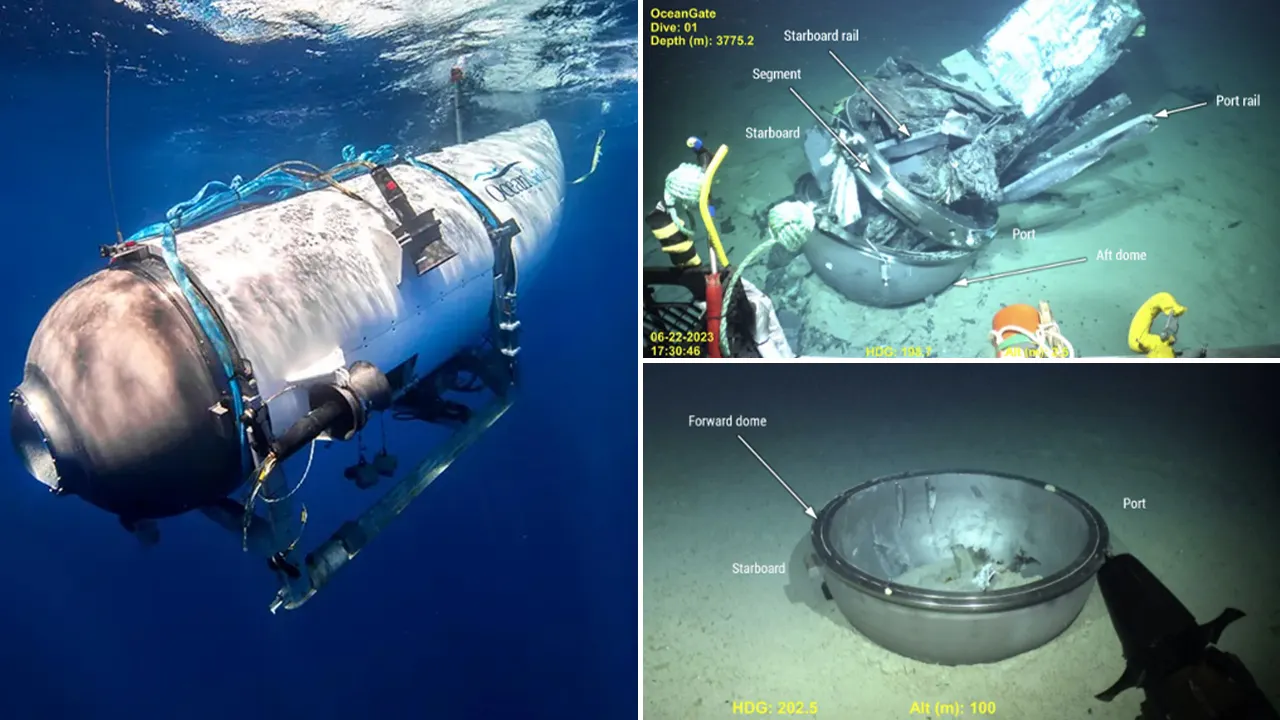

The National Transportation Safety Board (NTSB) has published its final report on the Titan submersible implosion that killed all five people on board during a Titanic excursion in June 2023.
OceanGate owns the Titan, which went missing on its way to the Titanic wreck. This led to a high-profile search and worldwide attention.
Main Points
Engineering Failures: The NTSB found that OceanGate’s poor engineering practices and failure to properly evaluate the Titan’s strength and durability were directly responsible for the accident.
Carbon Fiber Hull Defects: The ship’s carbon fiber hull included flaws like wrinkles, holes, and voids. These flaws made the structure weaker and caused delamination, which is when layers of material come apart. This eventually led to the hull failing.
Previous Dive Damage: The pressure vessel probably got damaged after surfacing from dive 80, however this was not fixed before the deadly dive.
The local buckling failure of the pressure vessel led to the implosion that killed OceanGate CEO Stockton Rush, British billionaire Hamish Harding, French marine specialist Paul-Henri Nargeolet, and Pakistani industrialist Shahzada Dawood and his 19-year-old son Suleman Dawood.
Concerns about regulation
The incident showed that there are big holes in the rules that regulate submersible operations and new vessel designs, both in the US and around the world.
In response, the NTSB made 17 safety suggestions, such as
Making rules for submersible vessels stricter
Improving the collaboration of government entities in charge of safety supervision
This terrible tragedy is a clear example of how dangerous it is to use unproven engineering on deep-sea expeditions with a lot of pressure. It also shows how important it is to have tougher rules.