

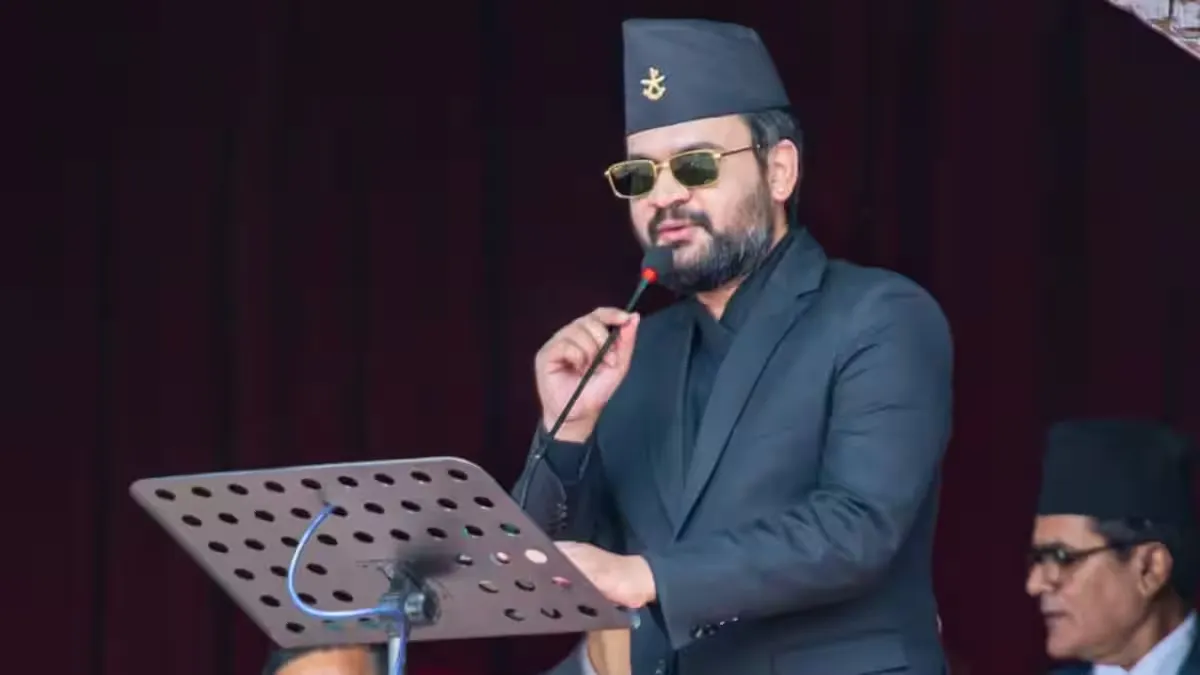

Nepal’s political landscape is witnessing a generational shift as rapper-turned-politician Balendra Shah, popularly known as Balen, has emerged as a leading contender for the prime minister’s post in the country’s latest general elections. The 35-year-old leader has gained massive support among Gen-Z voters following a youth-driven uprising that forced former Prime Minister K. P. Sharma Oli to resign in September 2025.
From Kathmandu Mayor to National Leader
Balendra Shah rose to prominence after winning the Kathmandu mayoral election as an independent candidate on a reform-focused platform. His campaign slogan, “Time for change,” resonated strongly with young voters frustrated by decades of dominance by veteran politicians.
After serving three years as mayor of Kathmandu, Shah entered national politics and is now contesting the prime ministerial race with the support of the Rastriya Swatantra Party (RSP), led by former television presenter turned politician Rabi Lamichhane.
A Rapper Who Spoke Against the System
Before entering politics, Shah built a strong reputation in Nepal’s music scene as a rapper whose songs often criticised corruption and inequality. One of his most popular tracks, “Balidan” (Sacrifice) released in 2019, gained millions of views online and strengthened his appeal among young Nepalis.
His music was inspired by American hip-hop legends like Tupac Shakur and 50 Cent. Through his lyrics, Shah addressed issues such as poverty, governance failures, and the struggles of ordinary citizens.
Education and Early Life
Born to a father who practised Ayurvedic medicine and a homemaker mother, Shah developed an early interest in poetry before transitioning to rap music. He completed a degree in civil engineering in Nepal and later pursued a master’s degree in structural engineering at Visvesvaraya Technological University in India.
A Digital-First Political Strategy
Unlike many traditional leaders in Nepal, Shah avoids mainstream media and instead communicates directly with supporters through social media. With more than 3.5 million followers online, he has built a powerful digital presence that connects strongly with younger voters.
Policy Promises and Vision
The RSP’s election manifesto promises major economic reforms, including:
- Creating 1.2 million jobs
- Reducing migration of Nepali workers abroad
- Increasing per-capita income from $1,447 to $3,000
- Expanding universal healthcare insurance
- Doubling Nepal’s GDP to $100 billion
Criticism and Controversies
Despite his popularity, Shah has also faced criticism during his tenure as Kathmandu mayor, particularly over strict actions against street vendors and unlicensed businesses. He also recently drew backlash after a campaign video showed him driving a luxury Land Rover Defender, which critics said contradicted his image as a leader of the common people.
A Symbol of Nepal’s Youth Politics
As Nepal heads into a crucial election following last year’s youth-led protests, Balendra Shah represents a broader generational shift in the country’s politics. If elected, he could become one of the youngest prime ministers in Nepal’s history and a powerful symbol of Gen-Z’s rising influence in South Asian politics.